
Skim plastering is a thin finish coat of plaster, about 2 to 3 mm, over a wall or plasterboard. In Ireland it costs about €10 to €30 per m² in 2026, or roughly €200 to €600 per room for the walls. Leave it to dry, then apply a mist coat before painting.
Paint, not plaster, is now driving price rises. CSO data shows wholesale paint prices rose 9.2% in the 12 months to August 2026. Plaster rose just 0.5% over the same period. So the decorating that follows a skim is where budgets are moving.
Key Findings for 2026
What Is Skim Plastering?
Skim plastering, or skimming, is the final thin coat of plaster on a wall or ceiling. A plasterer trowels on a finish plaster in two passes, usually 2 to 3 mm thick in total. Then they polish it smooth as it sets. The result is a flat, even surface ready for paint.
Skimming does not fix the wall underneath. It covers what is already there: tired plaster, filled cracks, old wallpaper marks or new plasterboard joints. If the plaster below is loose, hollow or damp, a skim coat will crack or blow with it.
In Irish homes, most skimming happens in three situations. First, over sound but uneven old plaster during a redecoration. Second, over new plasterboard in an extension, attic or partition. Third, over artex or textured ceilings to get a flat modern finish. In each case, the same finish coat goes on. Only the preparation changes.
Skim, Replaster or Plasterboard: Which Does Your Wall Need?
The right job depends on what is under the surface. A skim only works on a sound background. A replaster strips back to the block and starts again. Plasterboard, also called dry lining, fixes new boards over the wall and then skims them.
| Option | What it involves | Typical price per m² | Best for |
|---|---|---|---|
| Skim coat | 2 to 3 mm finish coat over sound plaster or board | €10 to €30 | Sound but tired, patched or uneven walls |
| Two-coat replaster | Hack off old plaster, apply an undercoat, then a finish coat | €25 to €40 | Blown, crumbling or rewired walls |
| Plasterboard and skim | Fix new boards (dot and dab or on battens), then skim | €25 to €50 | Very uneven walls, new partitions, insulated dry lining |
Source: ShamFix (September 2026), Tradesmen Ireland (May 2026), TradeSource Ireland (2026). Ranges combine the three guides.
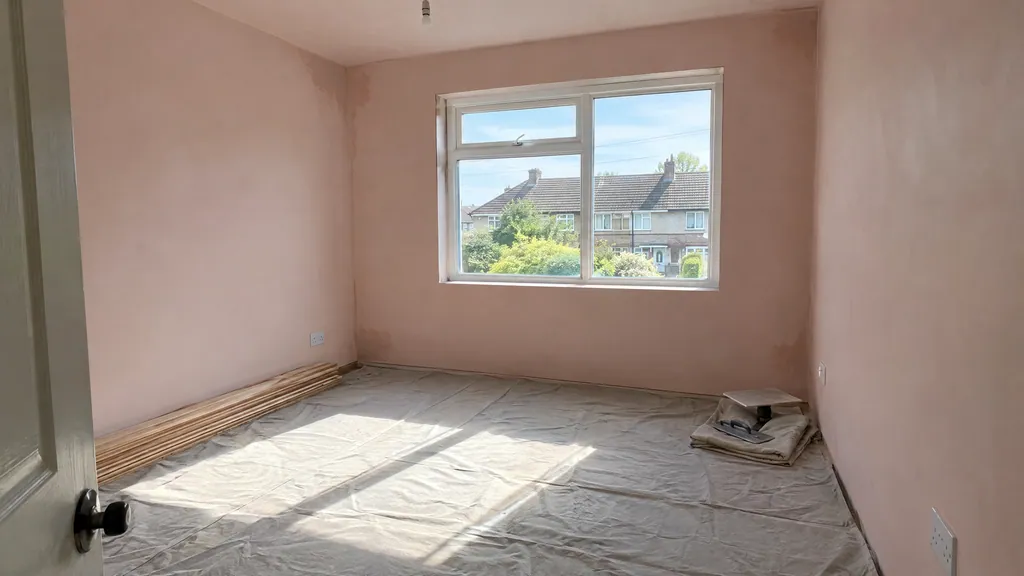
In practice, many jobs mix all three. A 1960s semi might need only a skim in the bedrooms. The kitchen wall that was chased for a rewire may need a patch replaster first. A cold gable wall may suit insulated plasterboard instead.
By comparison, a full replaster of a 3-bed semi costs €8,000 to €14,000, according to Tradesmen Ireland. ShamFix puts a full 3-bed re-plaster at €3,000 to €6,000. The gap shows how much depends on how much old plaster comes off. Ask every plasterer to say which method they price.
When Do Walls Need Skimming?
Most walls give clear signs. Tap them, run a hand along them and shine a torch across them at a low angle. That shows you dips, bumps and hollow patches that paint will never hide.
- Patchy repairs: filled cracks, old wall plugs and sanded patches show through every new coat of paint.
- Wallpaper removed: stripping paper often tears the plaster face and leaves a rough, uneven surface.
- Textured ceilings: artex or stippled finishes can be skimmed flat once tested and sealed.
- New plasterboard: boards in an extension, attic or partition need a skim for a smooth finish.
- After a rewire or replumb: chased walls are patched, then the whole wall is skimmed so the repairs disappear.
- Fine crazing: hairline cracks across a sound surface usually come back unless skimmed.
Skimming is the wrong fix in some cases. Wider ceiling cracks, sagging boards or cracks that keep reopening need the cause found first. Our guide on repairing ceiling cracks explains how to tell cosmetic cracks from structural ones.
Do not skim over damp. Fix the leak, rising damp or condensation first, or the new plaster will stain and blow. Older textured coatings can contain asbestos, so test them before sanding or scraping. Period homes with lime plaster need a breathable lime finish, not gypsum skim.
How Much Does Skim Plastering Cost in Ireland?
Irish price guides published in 2026 put skimming at €10 to €30 per m². ShamFix gives €10 to €30 per m² (September 2026). Tradesmen Ireland gives €12 to €20 per m² (May 2026). TradeSource Ireland gives €10 to €20 per m². These are installed prices for the finished surface, not quotes.
The price per m² falls on larger jobs. Setting up, protecting floors and cleaning down take the same time whether you skim one wall or a whole floor. That is why a single wall often costs more per m² than a whole house.
Location matters too. ShamFix reports that Dublin prices typically run 10% to 20% higher than elsewhere in the country. Expect the top of each range in south Dublin and north Wicklow, and for period homes with high ceilings.
Materials are a small part of the bill. B&Q Ireland sells a 25 kg bag of Gyproc Skimcoat for €20.95. It covers 9.4 m² over a plaster undercoat or 11.25 m² over plasterboard. That works out at about €1.86 to €2.23 per m². Most of what you pay for is preparation, skill and time.
Skim Plastering Cost per Room
Tradesmen Ireland's May 2026 guide puts the walls of a double bedroom at €250 to €350. A living room costs €350 to €500. A bathroom costs €150 to €250, because tiles cover much of the wall. Halls and landings cost more than their floor area suggests, as stair walls need scaffold boards or a platform.
| Room | Typical floor area | Skim walls | Skim ceiling |
|---|---|---|---|
| Small bedroom | About 10 m² | €200 to €300 | €150 to €250 |
| Double bedroom | 12 to 14 m² | €250 to €350 | €200 to €300 |
| Master bedroom | 16 to 18 m² | €300 to €450 | €250 to €400 |
| Living room | 18 to 22 m² | €350 to €500 | €250 to €500 |
| Kitchen | 12 to 16 m² | €250 to €400 | €200 to €400 |
| Bathroom | 6 to 8 m² | €150 to €250 | €150 to €250 |
| Hallway | Varies | €200 to €400 | €150 to €250 |
| Landing and stairs | Varies | €250 to €450 | €150 to €250 |
Source: Tradesmen Ireland, Plasterer Cost in Ireland 2026, updated 22 May 2026. Ceiling prices use its ceiling size bands. Other guides run higher: TradeSource Ireland gives €300 to €800 for a standard room's walls.
How Much Does It Cost to Skim a Ceiling?
A ceiling is slower to skim than a wall of the same size. The plasterer works overhead from a platform, and gravity fights every pass. Tradesmen Ireland puts a ceiling of up to 10 m² at €150 to €250. A ceiling over 20 m² costs €350 to €500. TradeSource Ireland gives €200 to €400 for one ceiling.
Textured ceilings add cost. Artex needs testing, scraping back any loose high points and a bonding coat before the skim. Expect the upper end of these ranges, or a little more, for a heavy stipple.
Old lath and plaster ceilings in Victorian and Edwardian homes are a different job. If the plaster has lost its grip on the laths, skimming will not hold it up. The usual fix is to overboard with plasterboard, or take the ceiling down, then skim. That moves the price into the plasterboard and skim range of €25 to €50 per m².
How Much Does It Cost to Skim a Whole House?
TradeSource Ireland puts a re-skim of a three-bedroom house at €2,500 to €5,500 in 2026. Tradesmen Ireland gives €4,000 to €6,500 to skim a new 3-bed semi on plasterboard. Whole-house jobs are cheaper per room than single rooms, because set-up and protection are shared.
The worked example below adds up Tradesmen Ireland's per-room prices for a typical 3-bed semi. It assumes sound walls that need a skim only, not a replaster. It is a calculation, not a Build Me quote.
| Area | Walls | Ceiling |
|---|---|---|
| Living room | €350 to €500 | €250 to €500 |
| Kitchen | €250 to €400 | €200 to €400 |
| Master bedroom | €300 to €450 | €250 to €400 |
| Double bedroom | €250 to €350 | €200 to €300 |
| Small bedroom | €200 to €300 | €150 to €250 |
| Bathroom | €150 to €250 | €150 to €250 |
| Hall | €200 to €400 | €150 to €250 |
| Landing and stairs | €250 to €450 | €150 to €250 |
| Total, national guide prices | €3,450 to €5,700 | |
| Total with a 10% to 20% Dublin premium | About €3,800 to €6,800 | |
Build Me estimate, calculated from Tradesmen Ireland per-room prices (May 2026) and the Dublin premium reported by ShamFix (September 2026). Excludes replastering, plasterboard, painting and making good after other trades.
A whole-house skim is rarely a job on its own. It usually sits inside a wider home renovation, after a rewire, new windows or a new heating system. Skimming comes after all first-fix work and before second fix, flooring and decoration. Our guide to the order of a home renovation sets out that sequence.

What Affects the Price of Skimming?
Two rooms of the same size can be priced hundreds of euro apart. The difference is almost always in the preparation and access, not the plaster itself.
Blown, hollow or damp plaster must be cut out and patched first. Wallpaper residue and gloss paint need a bonding coat. Bad walls can tip a skim into a replaster.
Stairwells, high period ceilings and vaulted rooms need platforms or scaffold towers. Furniture left in the room slows the work and adds cost.
Several rooms at once share set-up and clean-down. Skimming during a wider renovation, before floors go down, is cheapest per m².
Other items add to a quote. These include new metal angle beads, scrim tape over cracks and artex testing. Removing and refitting radiators adds cost too. Ask for these to be listed separately. That way you can compare quotes line by line.
VAT matters too. ShamFix notes that domestic plastering is generally charged at 13.5% VAT. Check whether each quote includes it, as a difference of 13.5% can make a cheaper quote look better than it is.
How Is a Wall Skimmed, Step by Step?
A skim looks simple but has a short working window. Gyproc Skimcoat sets in about 2 to 3 hours, according to its B&Q Ireland product listing. Every pass has to land in that window. Here is how a professional skim usually runs, from an empty room to a wall ready for paint.
- Before day 1Clear the room and finish first-fix work.Move furniture out, finish any electrical or plumbing chases, and take down curtain poles, shelves and wall plugs.
- Day 1, morningProtect floors and prepare the surface.The plasterer lays dust sheets and scrapes off loose material. Deep holes are filled, cracks taped with scrim and damaged corners beaded.
- Day 1, morningApply a bonding or PVA coat where needed.Painted, very dry or patchy walls get a bonding coat. It helps the skim grip evenly and stops it drying too fast.
- Day 1Trowel on the first coat of skim.A thin coat of about 1 to 2 mm goes on evenly, working from one corner across the whole wall.
- Day 1Apply the second coat and polish.Once the first coat firms up, a second thin coat flattens any marks. The plasterer then trowels it repeatedly as it sets.
- Days 2 to 7 or moreLet the plaster dry fully.Keep the room warm and ventilated, and wait until the plaster turns an even light colour before any paint goes on.
- After dryingApply a mist coat, then the top coats.A watered-down matt emulsion seals the new plaster, followed by two full coats of the chosen paint.
A plasterer can usually skim the walls and ceiling of an average room in a day (Build Me estimate). A whole 3-bed house takes about one to two weeks on site, depending on the number of rooms and the prep needed.
How Long Does Skim Plaster Take to Dry Before Painting?
Skim plaster sets in hours but dries in days. Tradesmen Ireland gives 2 to 3 days before painting a skim coat. A full two-coat replaster needs at least a week, and longer in winter. New-build plaster on block can need 4 to 6 weeks.
| Surface | Sets in | Dry enough to mist coat |
|---|---|---|
| Skim coat on plasterboard | 2 to 3 hours | About 2 to 3 days |
| Skim coat over old plaster | 2 to 3 hours | About 3 to 7 days |
| Full two-coat replaster | Same day | At least 1 week, longer in winter |
| New-build plaster on block | Same day | 4 to 6 weeks |
Source: setting time from the B&Q Ireland listing for Gyproc Skimcoat; drying times from Tradesmen Ireland (May 2026). Skim over old plaster is a Build Me estimate, as the wall below holds more moisture.
"Plaster takes up to 4 weeks to dry completely."
Dulux, Dr Dulux guide to painting on new plaster
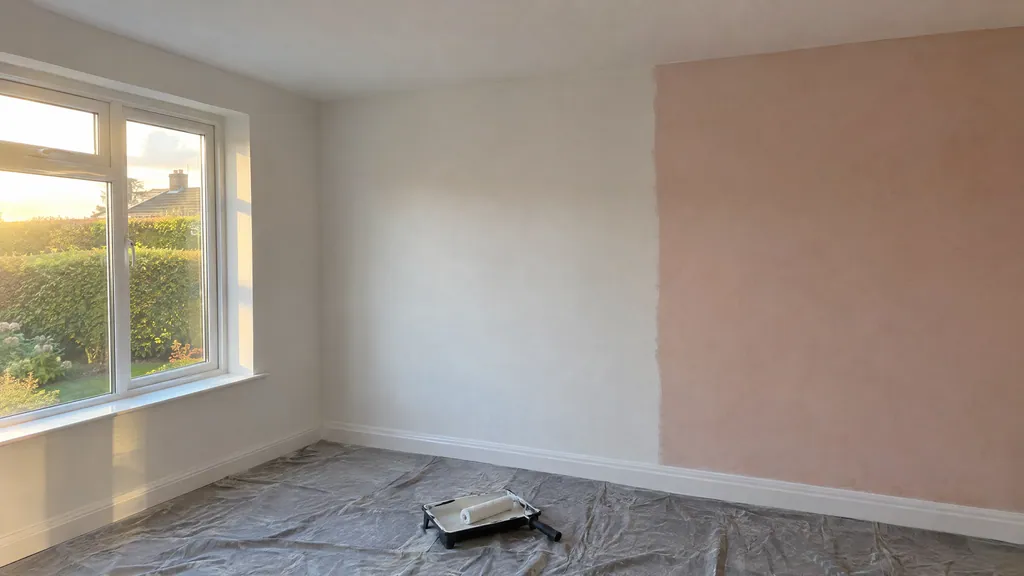
The safe test is colour. Fresh skim is dark pink or brown. It is dry when the whole surface turns an even pale pink, with no darker patches. In a cold Irish winter, run the heating gently and crack a window open. Do not blast it with heaters, as fast drying can cause cracks.
What Is a Mist Coat and Why Does New Plaster Need One?
A mist coat is a thinned coat of matt emulsion that acts as the primer for new plaster. Bare plaster is very absorbent. Full-strength paint dries on the surface before it can grip, then peels or flakes later.
Dulux suggests a mix of about ten parts paint to one part water for the mist coat. Some decorators thin it more. Use a plain matt emulsion, not a vinyl silk. Vinyl and wipeable paints seal the surface and trap moisture. Dulux also makes a dedicated sealer for plaster as an alternative.
Let the mist coat dry overnight. Then apply two full coats of your chosen paint. Fine hairline marks and pinholes show up after the mist coat, so this is the moment to fill and sand them. A professional painting and decorating crew normally plans the skim, mist coat and top coats as one sequence.
Can You Skim Plaster Yourself?
You can, but skimming is one of the hardest trades for a beginner. The plaster gives you about 2 to 3 hours of working time. Ridges, trowel marks and dry spots all show once painted, especially with low winter sun across the wall.
The materials are cheap. A bag of skim covers about 9 to 11 m² for under €21 at B&Q Ireland. Add a trowel, hawk, mixing paddle, buckets, PVA and corner beads. The bigger cost is a failed attempt, which a plasterer then has to sand back or overskim.
- Materials cost about €2 per m²
- Fine for a small patch or a garage wall
- No waiting for a plasterer's schedule
- Hard to get a flat, mark-free finish on a large wall
- Ceilings are very difficult without experience
- Mistakes cost more to fix than a skim in the first place
For feature walls, panelling can be an alternative to skimming a damaged surface. Our guide to wall panelling costs compares prices per m².
Will Skim Plastering Prices Rise in 2027?
Recent data points to steady prices for plaster, with bigger rises in what comes after it. These trends are based on CSO and Irish market figures, checked in October 2026.
- Plaster prices are flat. The CSO wholesale price index for plaster rose 0.5% in the 12 months to August 2026. After a 61% rise since January 2021, the material cost has levelled off.
- Paint is rising faster. CSO data shows wholesale paints, oils and varnishes up 9.2% in the 12 months to August 2026. Budget more for the mist coat and decorating than for the skim.
- Building materials overall are up 3.3%. The CSO index for all building and construction materials rose 3.3% in the year to August 2026. Expect quotes for wider renovations to keep creeping up.
- More plasterboard and skim work. The 2026 exempted development regulations (S.I. 338 to 344 of 2026) allow garden dwellings of 32 m² to 45 m² and house subdivisions. Each new space needs boarding and skimming inside.
Energy upgrades also drive skimming. Internal insulation is fitted as insulated plasterboard and then skimmed. Build Me offers SEAI grant work through our SEAI-registered partner contractor, with the grant approved before work starts. See seai.ie for current amounts.
Build Me takes on skim plastering and painting as mid-to-large jobs in Dublin and north Wicklow. That means whole-house interiors, multi-room jobs of roughly four rooms or more, and commercial interiors. We don't take single walls or one-room jobs. We price each job after a site visit.
FAQ
How much does skim plastering cost per m² in Ireland?
Irish price guides from 2026 put skimming at about €10 to €30 per m², with most quotes around €12 to €20. Dublin typically runs 10% to 20% higher than the rest of the country.
How much does it cost to skim a room?
Skimming the walls of one room costs about €200 to €600, depending on size and condition. Add about €150 to €500 for the ceiling.
Is it better to skim or replaster a wall?
Skim if the existing plaster is sound and firmly attached. Replaster if it sounds hollow when tapped, crumbles or has been badly damaged by damp or chasing.
How long after skimming can I paint?
Skim on plasterboard is usually dry enough for a mist coat in 2 to 3 days. Skim over old plaster can take up to a week. Dulux says plaster can take up to 4 weeks to dry completely.
Can you skim over painted walls?
Yes, if the paint is sound. The plasterer applies a bonding coat or PVA first so the skim grips, and scrapes off any flaking paint or gloss.
Can you skim over artex?
Yes, once it has been tested for asbestos and sealed. Loose high points are knocked back, a bonding coat goes on, and then two coats of skim flatten it.
Do you need a mist coat on new plaster?
Yes. A mist coat of thinned matt emulsion seals the porous plaster so the top coats grip and do not peel.
Next Steps
- This week: check each wall with a torch and by tapping. Note hollow areas, damp patches and textured ceilings.
- Within 2 weeks: get any damp or cracks investigated, and test artex for asbestos if you plan to skim it.
- Within a month: get two or three written quotes priced per room or per m², with VAT and preparation listed.
- Before work starts: finish rewiring, plumbing and window work so nothing is chased after the skim.
- After the skim: allow 2 to 7 days of drying, then mist coat and paint.
Useful Tools and Resources
- Build Me renovation calculator: estimate the full cost of a renovation that includes plastering and decorating.
- Home renovation checklist: plan each stage so plastering happens at the right time.
- Home renovation costs in Ireland: see where plastering sits within a whole-house budget.
- CSO table WPM39: monthly wholesale price index for plaster, paint and other building materials.
- Health and Safety Authority: asbestos: guidance before disturbing older textured coatings.
- Dulux guide to painting new plaster: mist coat mix and drying advice from the paint maker.
How We Checked These Figures
We checked all prices on 26 October 2026. Sources were three Irish 2026 plastering price guides: ShamFix, Tradesmen Ireland and TradeSource Ireland. We also used the B&Q Ireland listing for Gyproc Skimcoat and CSO table WPM39 to August 2026. Where guides disagreed, we show the full range and name each source. The whole-house example and the skim-over-old-plaster drying time are Build Me estimates. All prices are installed prices per m² or per room, not quotes. We re-check these figures quarterly.
Sources
- Tradesmen Ireland, How Much Does a Plasterer Cost in Ireland in 2026?, published 9 March 2026, updated 22 May 2026.
- ShamFix, Plastering Cost Ireland: Real 2026 Prices Per M², 5 September 2026.
- TradeSource Ireland, Plastering Costs Ireland 2026, 2026, accessed 26 October 2026.
- B&Q Ireland, Gyproc Skimcoat Plaster 25 kg, price checked 26 October 2026.
- Central Statistics Office, Wholesale Price Index (table WPM39), data to August 2026, updated 22 September 2026.
- Dulux, Dr Dulux: Painting on New Plaster, accessed 26 October 2026.