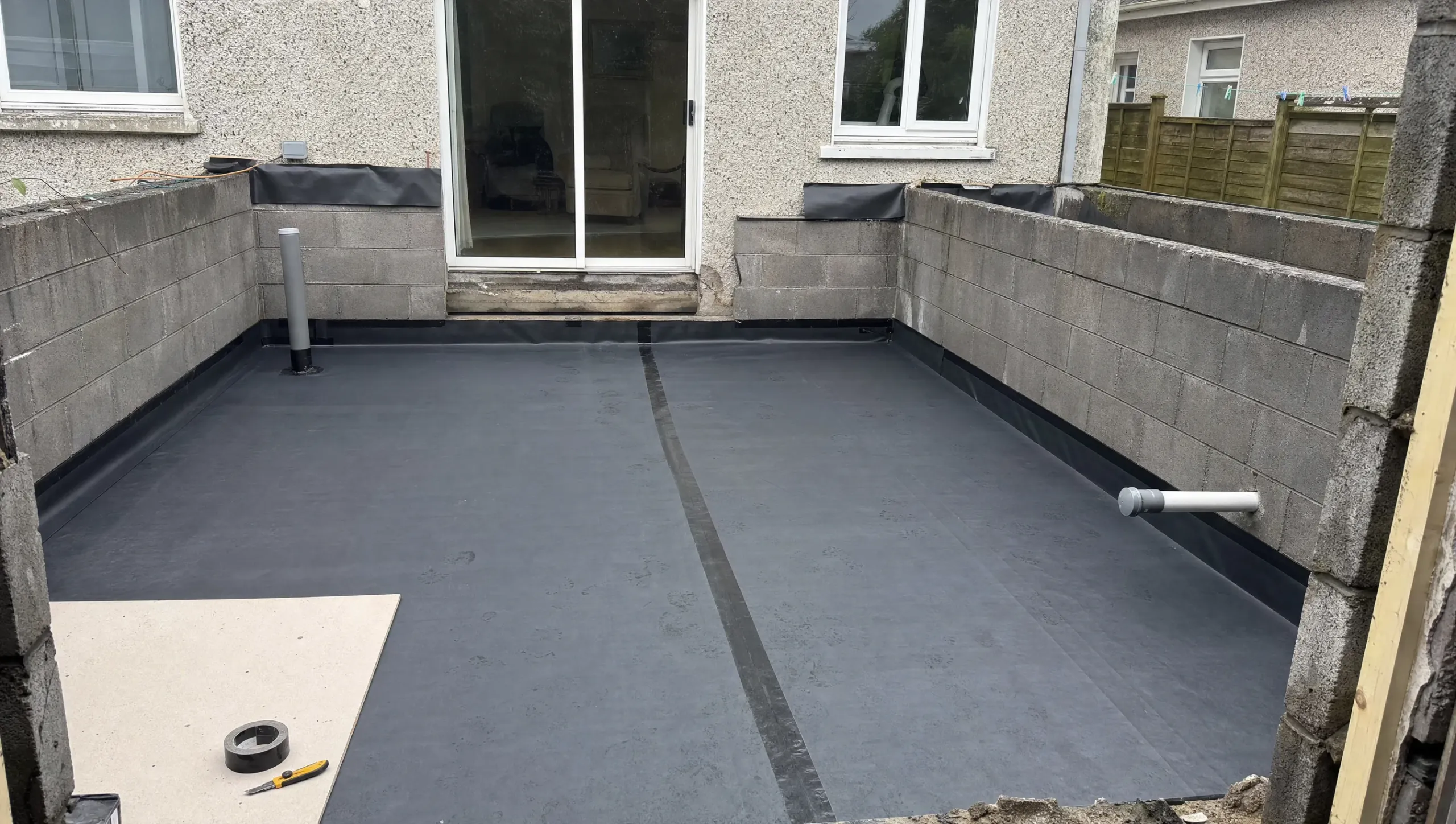

A home renovation in Dublin costs €950 to €1,600 per m² for a mid-range job and €1,600 to €2,400 per m² for a full renovation, including VAT. For a 110m² three-bed semi, that is about €105,000 to €176,000 for mid-range work. Add 15% contingency and 8 to 12% for professional fees.
Last updated: 13 October 2026. Rates match the Build Me renovation calculator.
Home Renovation Cost Calculator
estimated cost range
€95,000 to €160,000
€950 to €1,600 per m²
contingency (15%)
€14,250 to €24,000
add to your total budget
total budget to set aside
€109,250 to €184,000
including contingency
A mid-range renovation at 100 m² in Dublin typically includes some rewiring, updated plumbing, a new kitchen, a bathroom upgrade, and layout changes where needed. This is the most common scope for a three-bed semi in good structural condition. Always set your contingency before work starts, not after problems are found.
Rates are Build Me’s 2026 per m² rates for Dublin and the rest of Ireland, the same rates used in our renovation calculator. They include labour, materials and VAT at 13.5%, but exclude professional fees and contingency (shown separately above). Professional fees typically add 8 to 12% with a full architectural service. The budget breakdown is a Build Me estimate. A written quote from a contractor who has visited your property is the only accurate figure for your home.
Why Do Home Renovation Costs Vary So Much in Ireland?
This is the question we get asked more than any other when we first meet someone about a home renovation. Someone's neighbour spent €40,000 renovating and it looked brilliant. Someone else they know spent €80,000 and was still disappointed. Same type of house, different results.
The honest answer is that renovation costs in Ireland swing dramatically based on four things.
The condition of the house
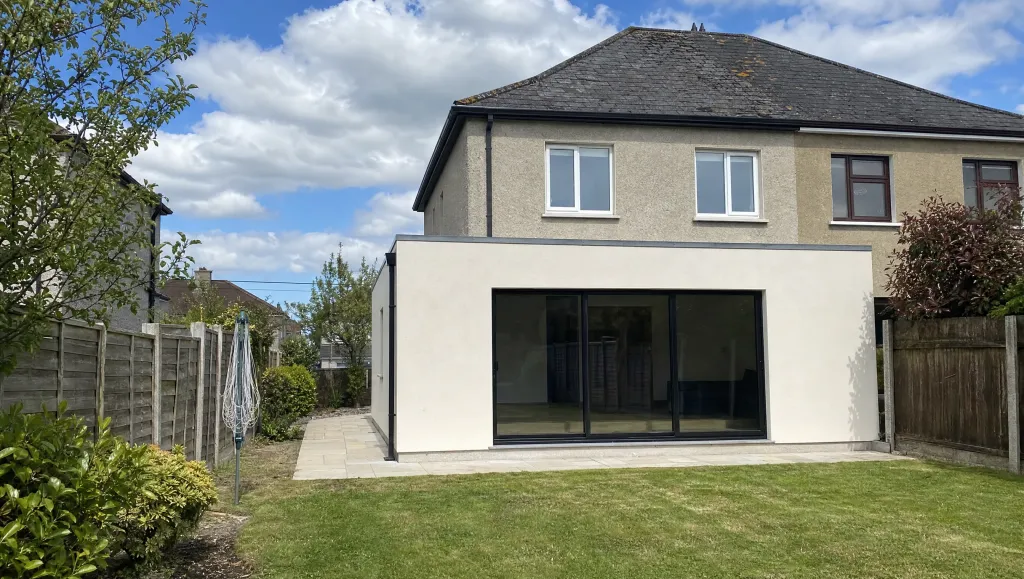
This is the big one. A house with solid walls, good joists, working electrics, and no damp is a completely different project to a house that hasn't been touched since the 1970s. Opening up walls and floors in older homes regularly turns up surprises: rotten timber, outdated wiring that needs replacing, plumbing that hasn't seen a wrench in thirty years. You cannot know what's behind the tiles until someone removes them.
The scope of the work
A cosmetic refresh, new floors, fresh paint, a couple of new light fittings, is very different from a project that involves knocking walls, moving plumbing, rewiring, and re-plastering. Both are called 'renovations'. They have very little else in common.
Location
Renovation rates in Dublin run roughly 15 to 20% higher than the rest of the country, based on Build Me's 2026 pricing. Tradespeople are in high demand across the city, parking and access add time and cost, and skip hire in central Dublin areas costs noticeably more than in rural counties.
The materials you choose
The difference between standard laminate flooring and solid oak is about €50 per m². Multiply that across a whole house and it adds up quickly. The same logic applies to tiles, kitchen units, bathroom suites, windows, and doors.
What Are the Typical Home Renovation Costs Per Square Metre in Ireland?
The most useful way to think about renovation costs is in bands, not single figures. Here is how the numbers work for Irish homes in 2026, using the same rates as our home renovation calculator.
| Renovation level | Dublin per m² | Rest of Ireland per m² | What it typically includes |
|---|---|---|---|
| Light refresh | €550 to €950 | €450 to €800 | New flooring, painting throughout, light fittings, minor carpentry. No plumbing or electrical work. |
| Mid-range renovation | €950 to €1,600 | €800 to €1,400 | New kitchen, bathroom upgrade, some rewiring, insulation, new windows and doors. |
| Full renovation | €1,600 to €2,400 | €1,400 to €2,100 | Full rewire, new plumbing runs, replastering, new kitchen and bathrooms throughout, some layout changes. |
| Major structural or deep retrofit | €2,400 to €3,500 | €2,100 to €3,000 | Structural alterations, deep energy retrofit, period or heritage works, specialist trades. |
Build Me 2026 rates, including labour, materials and VAT at 13.5%. Excludes professional fees and contingency.
A quick way to do a rough sense-check on your project: take the floor area you plan to renovate, multiply by the band that fits your scope, then add 15% contingency and your fees on top. It will not be exact, but it will tell you immediately whether the quotes you are getting are in the right universe.
Home Renovation Cost Breakdown by Room
Looking at renovation costs room by room is usually more useful than thinking per square metre, because some rooms cost far more per square metre than others. A kitchen or bathroom involves trades that a living room does not.
Sources: Build Me 2026 project pricing, Build Me attic conversion cost guide, and OnlineTradesmen Dublin extension rates (August 2026). All figures are for supply and installation. Kitchen and bathroom costs depend heavily on layout changes and material specification. Extension costs are per m² of new floor area. Rewire and re-plumbing costs are for a standard three-bed semi. Insulation costs are for a typical semi-detached, before SEAI grants. Add 15% contingency and 8 to 12% professional fees for larger projects.
Kitchens
A kitchen renovation in Ireland typically costs between €15,000 and €40,000, depending on the size of the space and the quality of units and appliances you choose. A basic upgrade with flat-pack units and mid-market worktops comes in at the lower end. A bespoke fitted kitchen with quartz worktops and integrated appliances sits at the top.
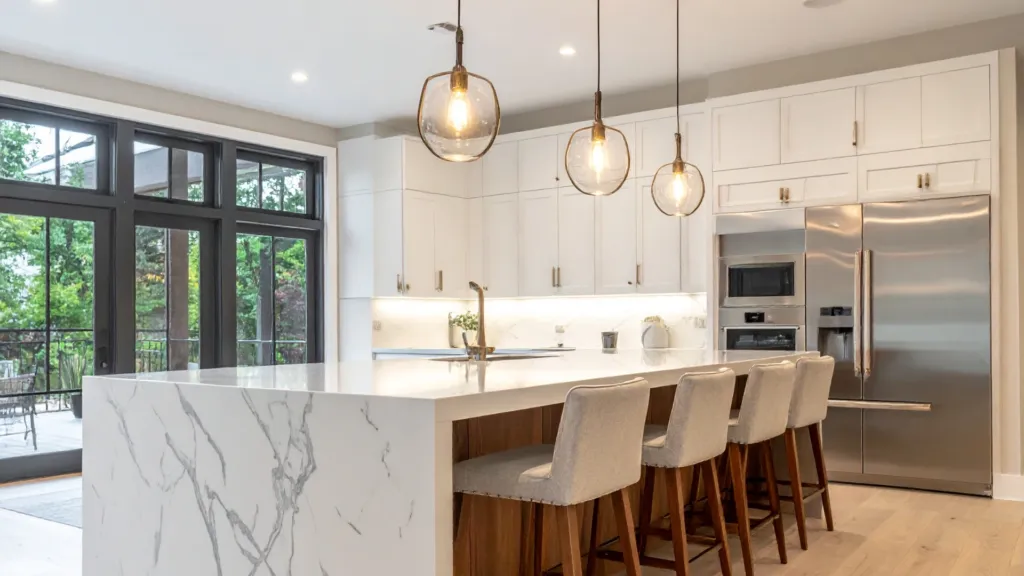
Keep the existing layout and you keep costs down. Moving the sink or the cooker means moving plumbing or gas pipework, which adds significantly to the bill. It is not always avoidable, but it is always worth asking whether it is necessary.
Buy your kitchen units directly from a trade supplier rather than through your contractor and you will typically save 10 to 15% on materials. Agree this arrangement upfront. Some contractors build their margin into the supply, so it is worth having the conversation before quotes are finalised.
Bathrooms
A full bathroom renovation in Ireland costs between €5,000 and €15,000 for a standard bathroom, with Dublin prices typically 15 to 20% above the national average. A small bathroom refurbishment (under 4m²) in Dublin runs to around €5,500 to €6,500 on average. Wet rooms and luxury refits can push past €12,000.
The same rule applies here as in the kitchen: do not move the plumbing unless you have to. Repositioning even one outlet adds €800 to €1,500 to the cost. If you are also thinking about a full bathroom renovation, our detailed bathroom renovation cost guide for Dublin covers every cost factor in depth.
Have your suite dimensions confirmed and on paper before you brief the tiler. The tiler prices based on the finished wall and floor area. If the suite changes after tiling starts, cuts get wasted and you pay again. This is one of the most avoidable cost increases we see on bathroom jobs.
House Extension
A single-storey rear extension in Dublin costs between €36,000 and €75,000 for a standard 20m² to 30m² kitchen-diner build, based on OnlineTradesmen's Dublin rate of €1,800 to €2,500 per m² (August 2026). Two-storey extensions start at around €70,000 and can go significantly higher depending on structural complexity and finish. Dublin prices reflect the higher labour and access costs in the city relative to the rest of the country.
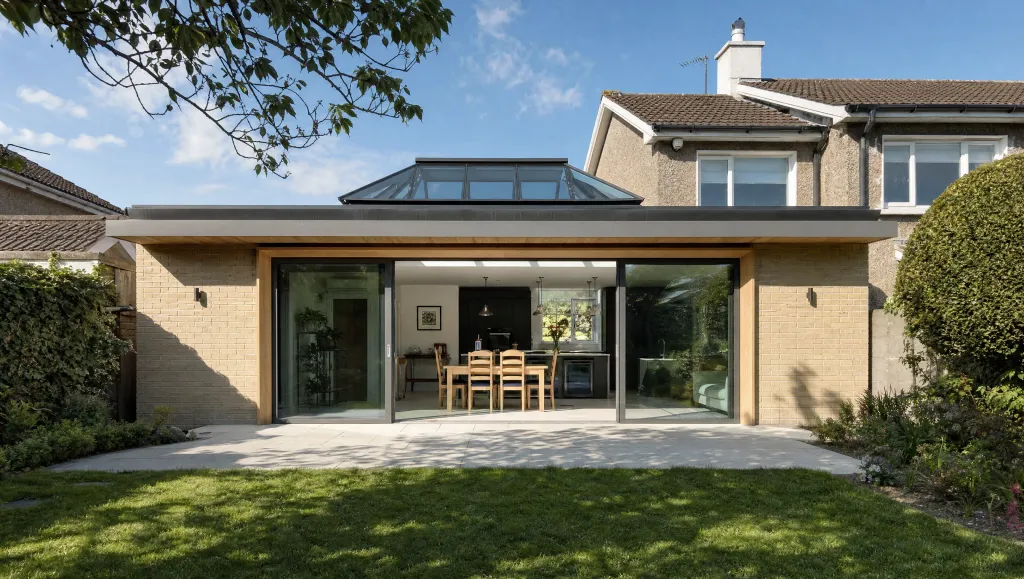
Since 27 July 2026, rear extensions of up to 45m² are usually exempt from planning permission, as long as height and garden-size conditions are met. Side extensions and most larger builds still need permission, so check the exempted development rules before work starts.
The cheapest time to add underfloor heating to an extension is during the initial build, when the floor is already being formed. Retrofitting it afterwards means lifting a finished floor. If you are even 50% likely to want it eventually, spec it in now. The cost difference is significant.
Full Rewire
A complete rewire of a standard three-bed semi in Ireland costs between €7,000 and €20,000, including making good walls and ceilings where cables have been chased in. All electrical work must be carried out by an RECI-registered electrician. This is a legal requirement in Ireland, not a preference.
If your house has not been rewired since before 2000, it is worth getting an electrical inspection done as part of your renovation planning. Old wiring does not always fail visibly. It just fails.
Re-Plumbing
Replacing the plumbing in a three-bed semi typically costs between €6,000 and €12,000, depending on how much pipework needs replacing and whether the layout is changing. If you are adding a bathroom or extending, the cost will be higher. All gas work must be carried out by an RGI-registered plumber.
Insulation and Energy Upgrades
Insulating a home properly is one of the highest-return renovation investments you can make in Ireland, both for comfort and for the effect it has on your energy bills and BER rating. Attic insulation typically costs €1,000 to €2,000 installed. External wall insulation runs from €8,000 to €18,000 for a standard semi, depending on the size and the product used.
The good news is that SEAI grants cover a significant portion of these costs. A full retrofit completed through the SEAI One Stop Shop scheme can attract grants of €25,000 or more depending on the works involved and your home's current BER rating. Since 2019, Government funding of over €1.7 billion has supported more than 257,000 home energy upgrades, according to Department of Climate figures from April 2026. Worth investigating before you budget for these works without grants.
What SEAI Grants Are Available for Home Renovation in Ireland?
If your renovation includes any energy efficiency work, you should be applying for SEAI grants. The Better Energy Homes scheme, administered by the Sustainable Energy Authority of Ireland, covers a range of common renovation upgrades (SEAI, 2026).
| Upgrade type | Maximum SEAI grant (October 2026) |
|---|---|
| Attic insulation | Up to €2,000 (€2,500 enhanced rate) |
| Cavity wall insulation | Up to €1,800 (€2,300 enhanced rate) |
| External wall insulation | Up to €8,000 (detached) |
| Internal wall insulation | Up to €4,500 (detached) |
| Heat pump system | Up to €14,500, including €2,000 boiler scrappage |
| Solar PV panels and battery | €1,800, plus €600 for a battery |
| Windows and doors | Up to €4,000 for windows, €800 per door (max 2) |
Source: SEAI individual grant pages, checked October 2026. Amounts vary by house type.
Grant amounts vary depending on your property type (detached, semi-detached, terraced, apartment) and whether you are applying through the Better Energy Homes scheme or the One Stop Shop scheme. Always check current amounts at seai.ie before you budget, as grant values are updated regularly. SEAI raised several grants in February 2026, and a €2,000 boiler scrappage grant was added in September 2026.
If your renovation is a full deep retrofit bringing the home to a BER of B2 or better, the One Stop Shop scheme manages the whole process for you and deducts the grant from the cost upfront. You can also access the Home Energy Upgrade Loan, a government-backed scheme offering rates from 2.99% through PTSB, AIB, Bank of Ireland, and others.
What Actually Pushes Home Renovation Costs Up in Ireland?
In our experience, this is what tends to move a renovation budget significantly above the initial estimate.
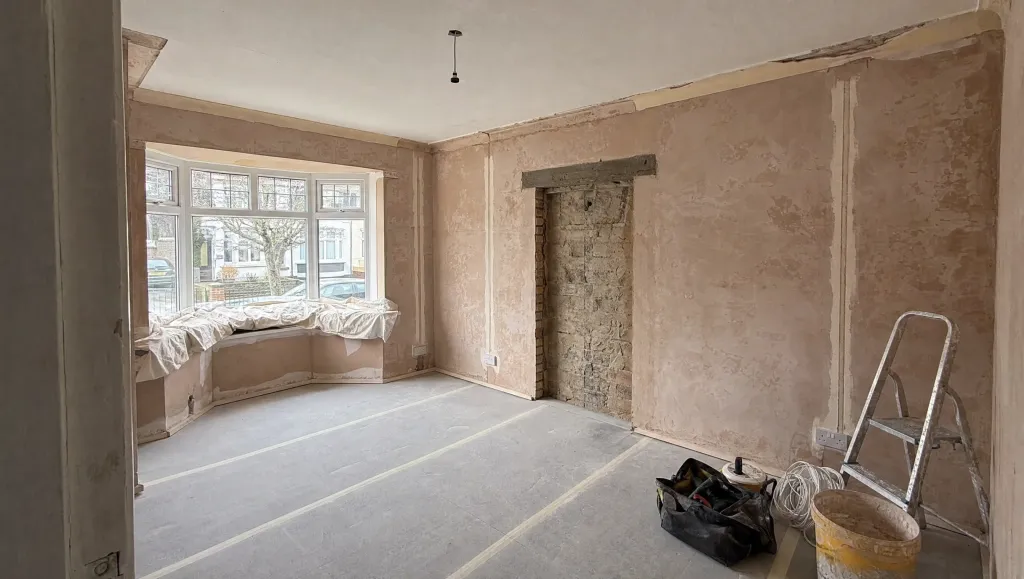
- Discovering damp or structural damage. Once walls and floors come up, issues that were invisible before become unavoidable. Old houses in particular carry risk here.
- Moving plumbing or structural walls. These are multiplier costs. Moving a soil stack in an older Dublin terrace can add €3,000 to €5,000 to the plumbing bill alone.
- Upgrading outdated systems to meet building regulations. Current Part L regulations (energy efficiency) and Part M (accessibility) requirements apply to renovation work in Ireland. This is not optional, and compliance costs money.
- Underestimating professional fees. Architects, engineers, and project managers typically charge 8 to 12% of the total project cost for a full service. On a €200,000 renovation, that is €16,000 to €24,000 in fees before a single wall comes down.
- Not having materials on site before work starts. Trades sitting idle waiting for a delivery is one of the most avoidable costs in any renovation. It is also one of the most common.
- Scope creep. You start with a kitchen and bathroom. Then it makes sense to do the floors while the house is already disrupted. Then the roof needs pointing while the scaffolding is up. Each decision is logical in isolation. Collectively, they can double your original budget.
How Do You Manage a Home Renovation Budget in Ireland?
Here is what actually works, based on our experience:
- Get a building survey before you finalise your budget. A qualified surveyor will identify structural issues, damp, wiring condition, and anything else that could affect your costs. This costs a few hundred euro and could save you tens of thousands.
- Get at least three written quotes. Make sure each contractor has visited the property and is quoting for the same scope of work. A quote without a site visit is not a quote.
- Set your contingency at 15%, not 10%. The 10% rule is fine for a new build. For an existing house, 15% is more realistic. In a house built before 1970, some contractors would go to 20%.
- Do not pay large sums upfront. Stage payments tied to project milestones are standard practice in Ireland. A reasonable deposit to secure materials and schedule is normal. Paying half the job before anyone arrives is not.
- Prioritise structural and essential work first. Fix what is broken before you make things beautiful. There is no point tiling a bathroom that will need to be ripped out in two years because the plumbing underneath was not addressed.
- Separate your wants from your needs. Write down everything you want to do. Then mark what is genuinely necessary for the house to function properly, and what is cosmetic or aspirational. When the budget gets tight, you know what to cut.
The Bottom Line
Home renovation costs in Ireland vary enormously, but they are not a mystery if you approach the project with a clear scope, realistic numbers, and a proper contingency. Know what condition your house is in before you commit to a budget. Get written quotes from contractors who have actually seen the property. Apply for whatever SEAI grants are relevant before you start any energy upgrade work.
Build Me has 16+ years of experience renovating homes across Dublin. From kitchens and bathrooms to extensions and full refurbishments, we handle the whole job. Send us a few photos and your plans for a free quote.
Frequently Asked Questions
How much does a full home renovation cost in Ireland?
A full renovation costs €1,600 to €2,400 per m² in Dublin and €1,400 to €2,100 per m² elsewhere, including VAT. For a 100m² house in Dublin, that is €160,000 to €240,000 before fees and contingency.
What is the average cost to renovate a 3-bedroom house in Ireland?
For a 110m² three-bed semi in Dublin, a mid-range renovation costs about €105,000 to €176,000. A light refresh starts around €60,000, and a full renovation runs €175,000 to €265,000.
What factors affect home renovation costs in Ireland?
The biggest factors are the condition and age of the house, the scope of work, location, and the materials you choose. Older homes often need extra work to meet modern building and energy standards.
Are there grants available for home renovations in Ireland?
Yes. SEAI grants cover insulation, heat pumps, solar, windows and doors. The Vacant Property Refurbishment Grant pays up to €50,000, or €70,000 for a derelict home.
Is renovating a house cheaper than building an extension?
Usually, yes. A mid-range renovation costs €950 to €1,600 per m² in Dublin. A single-storey rear extension costs €1,800 to €2,500 per m², according to OnlineTradesmen (August 2026).
How much contingency should I add to a renovation budget?
Add 15% for most existing Irish homes, and 20% for houses built before 1970. Older homes often hide damp, rot and outdated wiring that only shows once work starts.
How We Checked These Figures
The per m² rates in this guide are Build Me's 2026 rates, the same ones used in our renovation calculator. They come from our own quotes and completed projects across Dublin, and include VAT at 13.5%. Room and trade costs are also Build Me pricing, unless a source is named.
Extension rates come from OnlineTradesmen's August 2026 data, and grant amounts were checked against SEAI on 13 October 2026. We re-check these figures every quarter, and whenever SEAI or the planning rules change.
Sources
- Build Me, Home renovation calculator, 2026 per m² rates
- OnlineTradesmen, House extension cost Ireland 2026 (August 2026)
- Dublin City Council, S.I. No. 338 of 2026 summary (July 2026)
- SEAI, Individual energy upgrade grants (checked October 2026)
- SEAI, Heat pump grant and boiler scrappage (October 2026)
- MyHome.ie, Home energy upgrades almost double in Q1 2026 (April 2026)
- Croí Cónaithe, Vacant Property Refurbishment Grant scheme outline (March 2026)