
A new kitchen in Ireland typically costs €15,000 to €40,000 supplied and fitted in 2026, including VAT. A budget refit in the same layout costs €8,000 to €15,000. An island adds €3,000 to €6,000. Expect 2 to 4 weeks on site once the units arrive. All are Build Me estimates for Dublin.
Here is the surprise: the worktop alone can swing your budget more than the units. Bark's November 2026 data puts laminate at about €75 per linear metre. Natural granite averages €475 per metre, over six times more. On a 6 m run, that gap is about €2,400 before VAT.
Key Findings for 2026
How Much Does a New Kitchen Cost in Ireland in 2026?
A new kitchen in Ireland costs about €15,000 to €40,000 for supply and fit in 2026, including VAT. That is the Build Me estimate for a Dublin kitchen renovation, units and building work included. A budget refit, with new units in the same layout, costs €8,000 to €15,000. A bespoke kitchen with structural work can go beyond €40,000.
Independent data tells a similar story. According to Bark's November 2026 guide, based on over 545 Irish kitchen quotes, a budget refresh averages €7,500. A mid-range fitted kitchen averages €18,500, and a large or premium kitchen €37,500. Bark's figures exclude VAT, so add 13.5% or more to compare them with ours.
In practice, the level you choose decides most of the cost of a new kitchen in Ireland. The table below shows what each level usually includes. It also sets our Dublin estimates beside the national averages.
| Level | What you usually get | Build Me estimate, Dublin, incl. VAT | Bark 2026 average, Ireland, ex VAT |
|---|---|---|---|
| Budget refit | Flat-pack units, laminate worktop, freestanding appliances, same layout | €8,000 to €15,000 | €7,500 |
| Mid-range | Rigid units, mid-market worktop, some integrated appliances, light layout changes | Lower half of €15,000 to €40,000 | €18,500 |
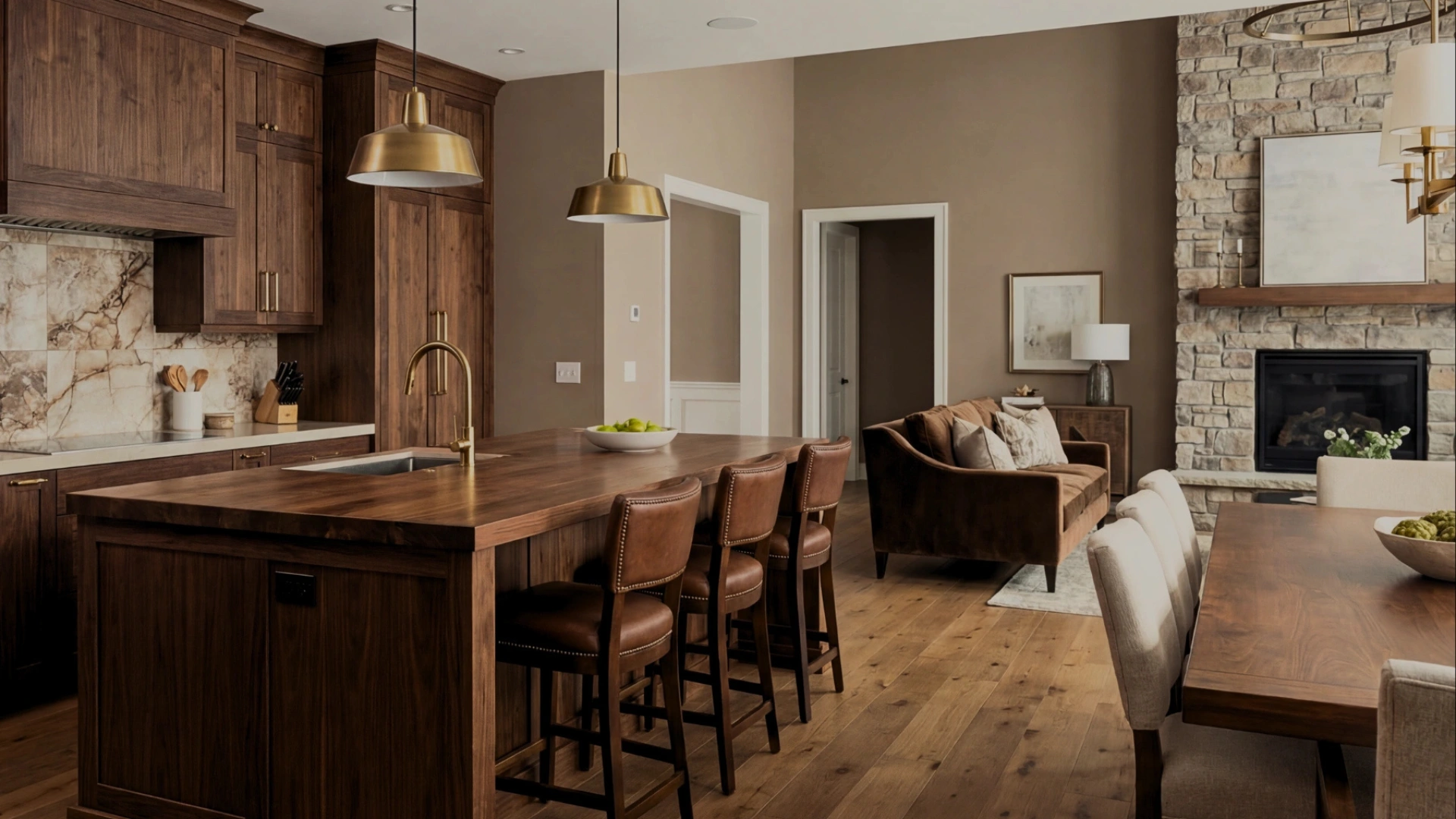
| High-end bespoke | Made-to-measure cabinetry, quartz or granite, integrated appliances, often an island | Towards €40,000, more with structural work | €37,500 |
| Island (add-on) | 2 m island with seating for three | €3,000 to €6,000 | Included in premium average |
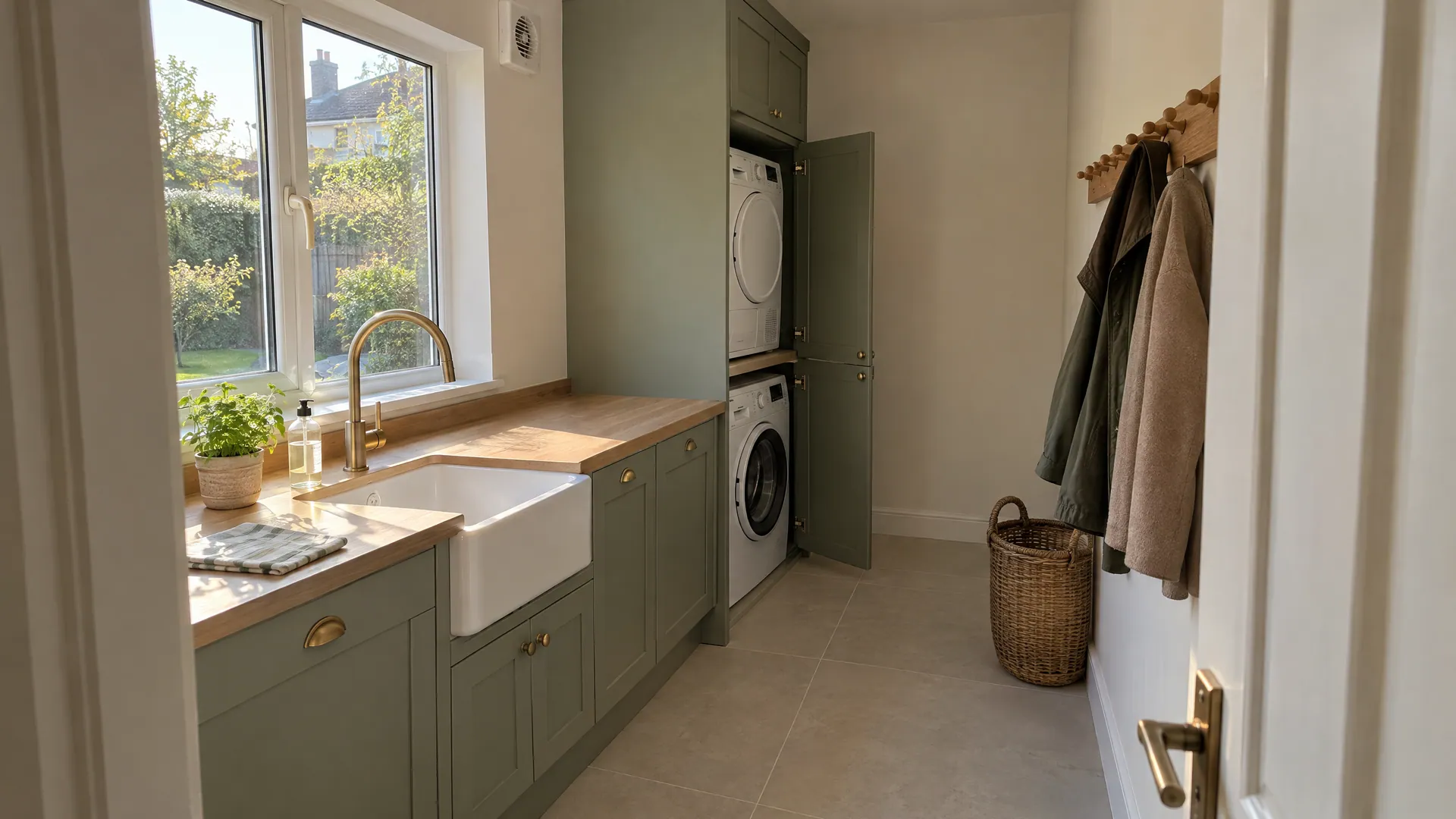
| Utility room (add-on) | Units, sink and appliance space | €8,000 to €12,000 | Not covered |
Sources: Build Me estimates, November 2026, incl. VAT at 13.5%. Bark Ireland, How much do kitchen projects cost in Ireland?, updated 2 November 2026, ex VAT.
Does a Kitchen Cost More in Dublin?
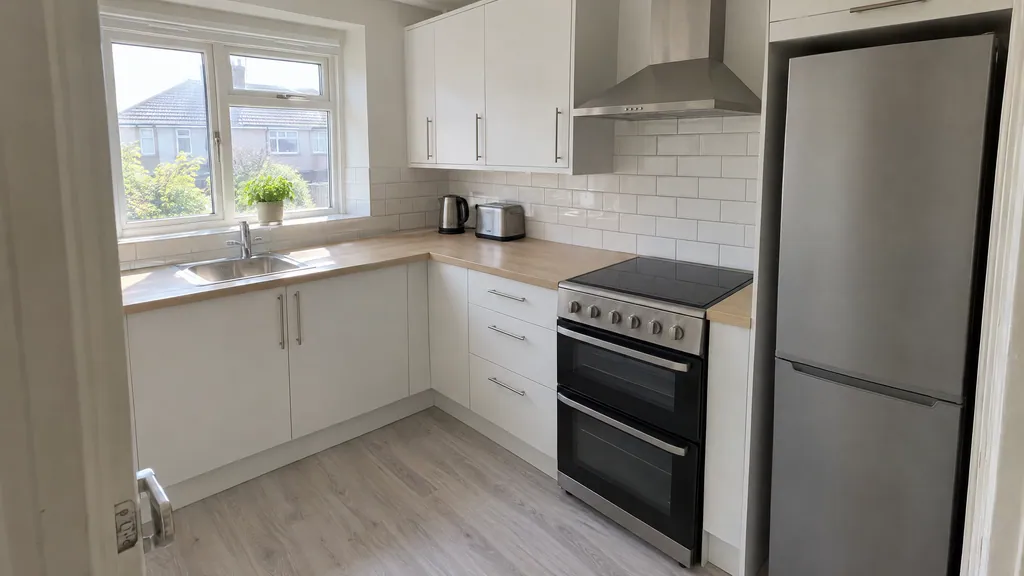
Yes. Bark's November 2026 data shows a typical Dublin kitchen project at just over €21,800 before VAT. That is about 18% above its €18,500 national mid-range average. Higher labour costs, parking, access and waste removal in the city all add to the bill.
By comparison, the gap between levels is far bigger than the gap between counties. A premium kitchen averages €37,500 nationally, five times the €7,500 budget refresh. So your choice of units, worktops and appliances matters more than your postcode. Our own Build Me figures in this guide are Dublin prices, including VAT.
Source: Bark Ireland, based on over 545 kitchen quotes in 2026, ex VAT, updated 2 November 2026. Chart: Build Me.
What Drives the Cost of a Kitchen Renovation?
Five things set the price of a kitchen renovation. They are the units, worktops, appliances, layout changes and building work. The first three are the kitchen itself. The last two are what turn a refit into a renovation. Here is how each one moves the bill.
Units: Flat-Pack, Rigid or Bespoke
Kitchen units come three ways, and each sits at a different price point. Flat-pack units, from IKEA or a builder's merchant, are assembled on site and cost least. Rigid units arrive ready-built from a supplier or showroom, in set widths with a choice of doors. Bespoke cabinetry is made to your room's measurements by a kitchen maker, and costs most.
Flat-pack does not have to mean flimsy. IKEA Ireland offers up to a 25-year guarantee on its kitchens. Its fitting service needs a €100 non-refundable pre-installation visit, though. It also leaves out stone worktops and the electrical, gas and plumbing connections. Those still need a builder, an electrician and a gas installer.
In practice, flat-pack units with mid-market worktops sit near the €15,000 end of our range. A bespoke kitchen with quartz and integrated appliances sits near €40,000. Whichever you choose, ask what the carcasses are made of. Check whether the hinges and drawers are soft-close, and who fits them.
Appliances: Freestanding or Integrated
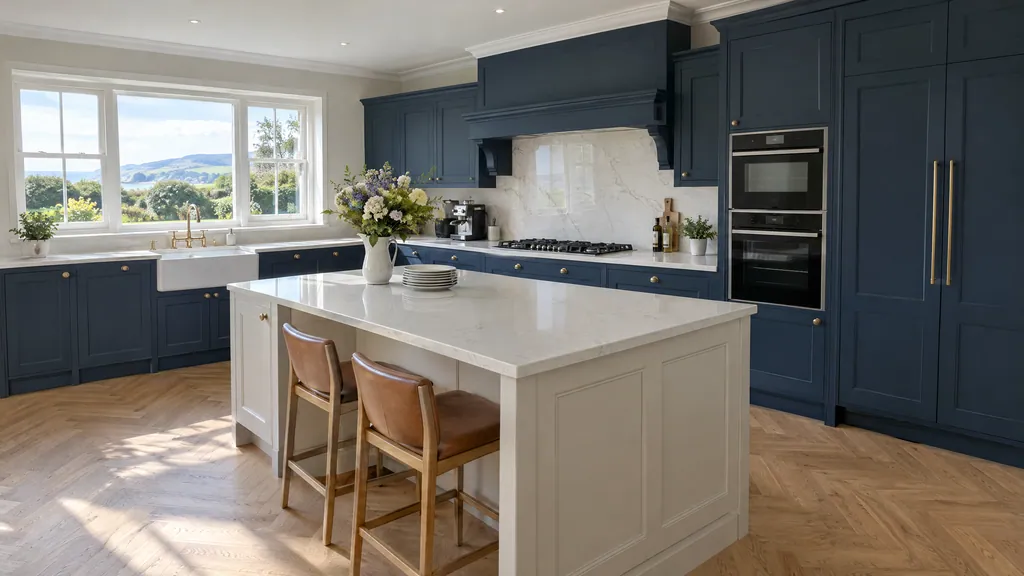
Appliances can add a few hundred euro or several thousand. According to Bark's 2026 guide, a basic built-in single oven starts at about €200. Premium oven models cost over €900. Multiply that across an oven, hob, hood, fridge-freezer and dishwasher, and the range gets wide quickly.
Integrated appliances cost more than freestanding ones, and they also change the units. An integrated fridge or dishwasher needs a matching housing and a door. Choose your appliances at the design stage, because they set the size of the units around them.
VAT matters here too. Revenue lists cookers, hobs, ovens, dishwashers and fridges as fittings, not fixtures. So appliances carry the standard 23% VAT rate, whoever supplies them. The VAT section below explains why the units themselves can be different.
Layout Changes, Plumbing and Gas
Keeping the existing layout is the biggest single saving in any kitchen. Moving the sink means new waste and water pipes. Moving a gas hob means new gas pipework, which a Registered Gas Installer must fit and certify. Both add trades, days and making good.
Pipework is also getting dearer. CSO wholesale data shows copper pipes and fittings up 5.3% in the year to September 2026. PVC pipes and fittings rose 5.4%. By comparison, plumbing materials including sanitary ware fell 0.5%.
The rule on gas is strict. Any new or moved gas connection must be done by a registered installer, by law. They give you a certificate when the work is finished. Keep it with your house papers, because a buyer's solicitor will ask for it.
"All RGIs must provide their customers with a Declaration of Conformance Certificate."
Commission for Regulation of Utilities (CRU), Gas works in your home
Electrics and the Safe Electric Certificate
Most kitchen renovations need new circuits. A modern kitchen has a dedicated cooker circuit, more sockets, under-cabinet lights and often an island with power. Under-cabinet lighting alone costs about €200 to €400 for a typical kitchen (Build Me estimate).
New electrical work must be done by a Registered Electrical Contractor, registered with Safe Electric. According to the CRU, the contractor must give you a Completion Certificate when the work is done. That is a legal requirement, not an optional extra. Kitchen fitters' quotes often leave it out, so ask who certifies the electrics.
There is some good news on materials. CSO data shows wholesale prices for electrical fittings fell 1.4% in the year to September 2026. Lighting equipment fell 3.3%. The cost of electrics in a new kitchen now comes mainly from the amount of work, not the parts.
"You should always use a Registered Electrical Contractor (REC) to carry out electrical work..."
Commission for Regulation of Utilities (CRU), Electrical works in your home
Knock-Through, Steel Beam and Island
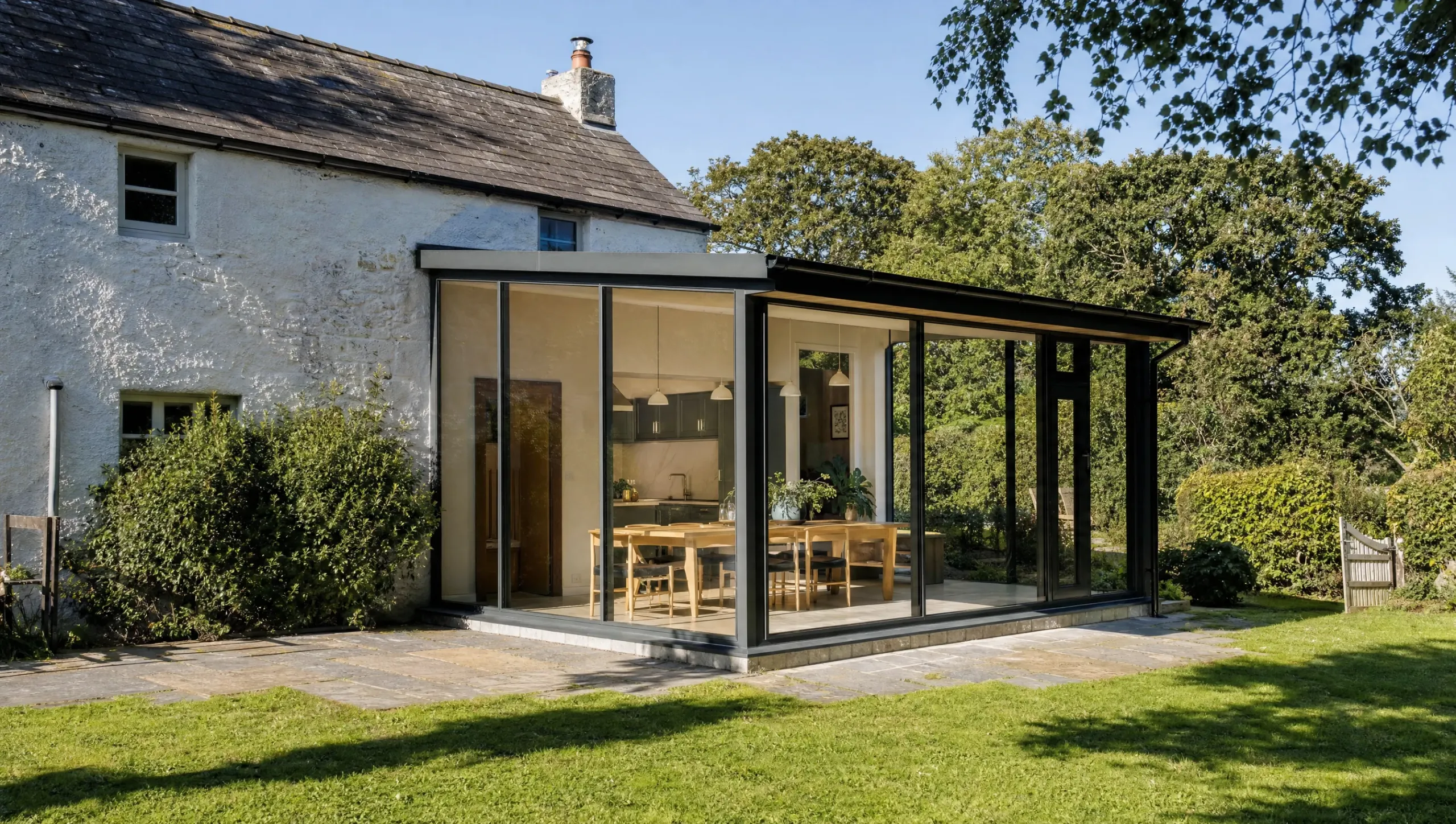
Opening the kitchen to the dining room is a common upgrade in older Dublin houses. Most of those walls are load-bearing. A structural engineer designs a steel beam before anything is knocked. The beam costs €800 to €2,500 supplied and fitted, plus the engineer's design (Build Me estimate).
Bark's 2026 guide puts the average RSJ installation to open a wall at €3,000 before VAT. Its figure may include the engineer's assessment, which explains part of the gap. Structural steel prices rose 2.0% in the year to September 2026, according to the CSO.
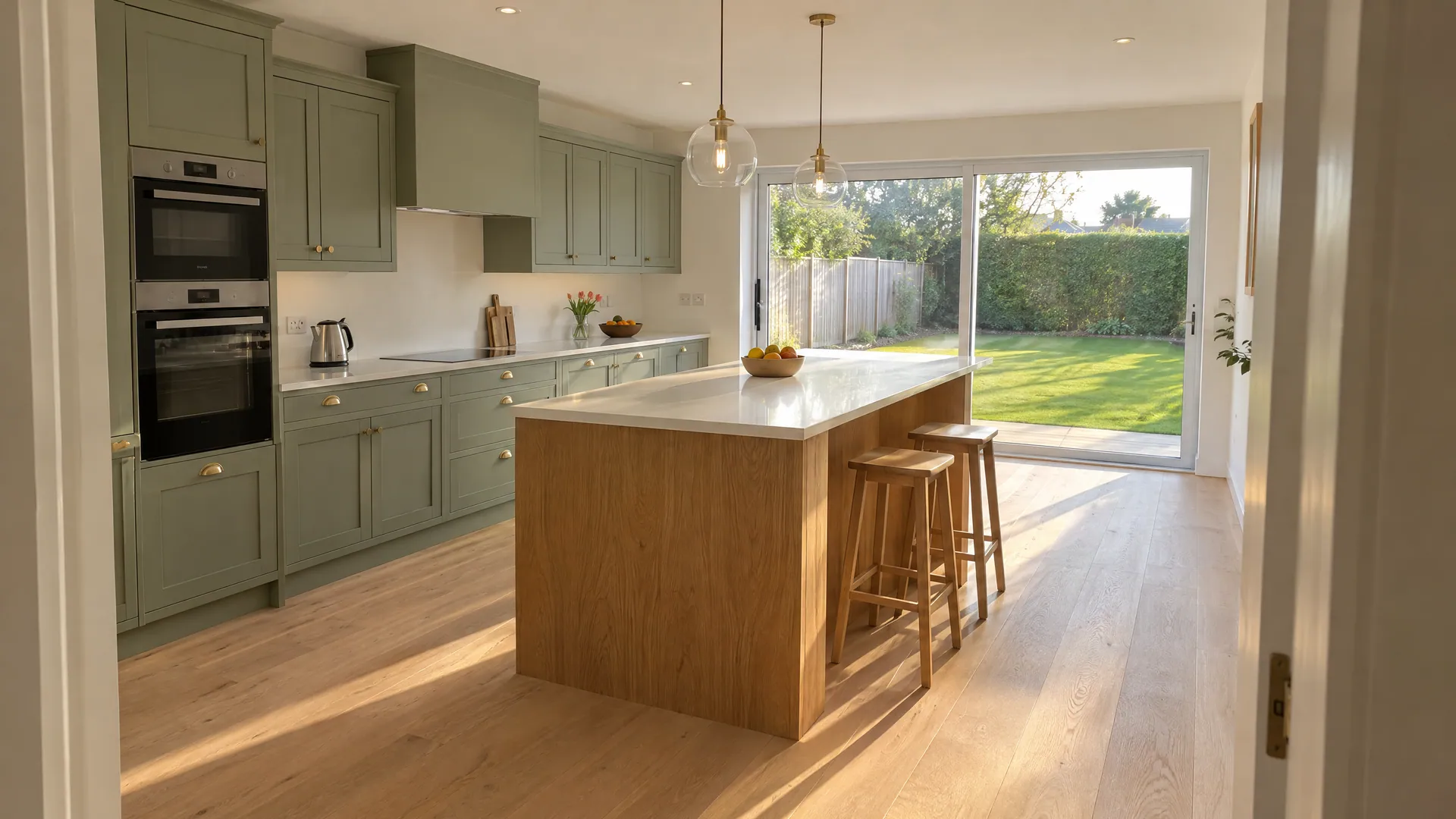
An island usually comes with a knock-through, because it needs room to walk around it. A 2 m island with seating for three costs €3,000 to €6,000, depending on materials. A sink or hob in the island adds plumbing or ducting under the floor. So plan the island before you fix the plumbing and electrics.
Flooring and Finishes
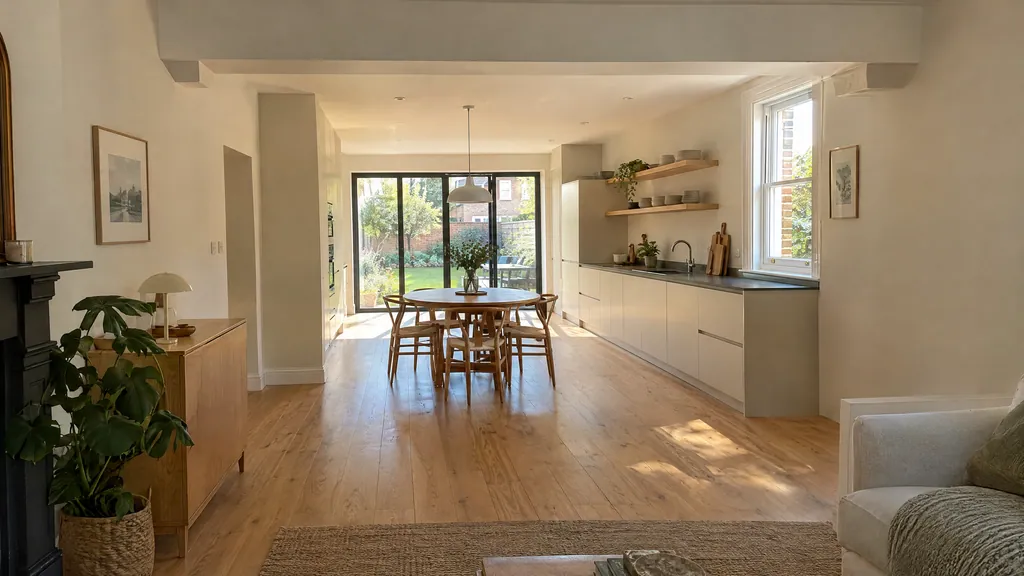
Flooring is easy to forget in a kitchen budget. Hard floors go in after the kitchen and before the skirting boards. If you are opening up two rooms, one continuous floor across both looks best, but it doubles the area.
The material makes a real difference. The gap between standard laminate flooring and solid oak is about €50 per m² (Build Me estimate). Across a 30 m² kitchen-diner, that is about €1,500. Luxury vinyl plank and porcelain tiles sit between the two, and both handle spills well.
Plastering and painting come last. CSO data shows plaster prices up 5.0% in the year to September 2026. Paints, oils and varnishes rose 9.2%, one of the fastest rises in the index.
What Does a Kitchen Cost per Linear Metre?
No reliable Irish source publishes a full kitchen price per linear metre for 2026. Units, appliances and building work vary too much for one figure to mean much. Worktops are the exception. They are priced per linear metre, and that is where the per-metre comparison is most useful.
According to Bark's November 2026 guide, laminate worktops average about €75 per linear metre. Solid wood averages €225, quartz or engineered stone €400, and natural granite €475. Porcelain slab starts from about €400. All of these exclude VAT.
Stone and quartz worktops are templated from the fitted units, not from drawings. They take one to two weeks to make once the units are in. So a quartz worktop adds time as well as money to your kitchen renovation cost.
| Worktop material | Average per linear metre, ex VAT | 6 m run, ex VAT | Best for |
|---|---|---|---|
| Laminate | €75 | About €450 | Budget refits, rentals |
| Solid wood | €225 | About €1,350 | Warm look, needs oiling |
| Quartz or engineered stone | €400 | About €2,400 | Most mid to high-end kitchens |
| Porcelain slab | From €400 | From about €2,400 | Heat and stain resistance |
| Natural granite | €475 | About €2,850 | Premium, natural stone look |
Source: Bark Ireland, average worktop material prices per linear metre, updated 2 November 2026, ex VAT. 6 m run is a Build Me calculation from those averages.
Where Does the Money Go in a Kitchen Budget?
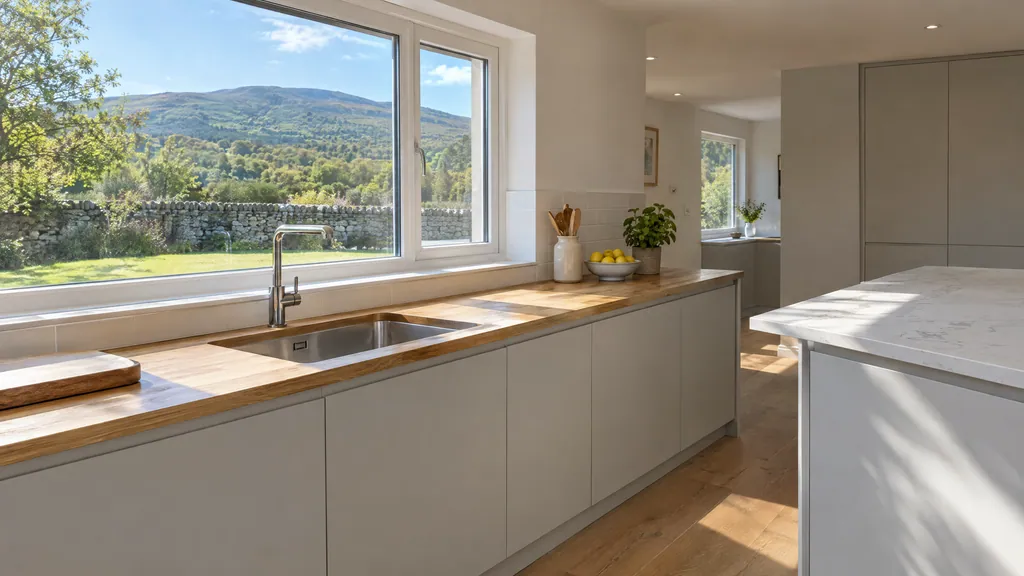
The kitchen itself, meaning units, worktops and appliances, is the largest share of any budget. The trades and building work around it come next. A typical Dublin kitchen renovation at €15,000 to €40,000 includes these lines (Build Me estimates, incl. VAT):
- Units, worktops and appliances: the largest share. Flat-pack and laminate keep you near €15,000, while bespoke and quartz push towards €40,000.
- Strip-out and waste: Bark's 2026 average for skip hire, delivery and old unit removal is €750 before VAT.
- Plumbing, gas and electrics: new circuits, a Safe Electric certificate, and gas work by a registered installer.
- Steel beam for a knock-through: €800 to €2,500 supplied and fitted, plus the engineer's design.
- Island: €3,000 to €6,000 for a 2 m island with seating for three.
- Plastering, flooring and decorating: making good after the old kitchen comes out.
- Contingency: 15% of the budget, or 20% in a house built before 1970.
Bark suggests a contingency of around 9%. We recommend more. Older Irish houses often hide old wiring, uneven floors or a wall that is not what it seems. Is your kitchen part of a bigger project? Our guide to home renovation costs shows how it fits a whole-house budget.
Is VAT 13.5% or 23% on a New Kitchen?
It depends on who supplies the units and who fits them. Revenue's Tax and Duty Manual on fixtures and fittings, last updated in February 2026, lists built-in units as fixtures. That includes "kitchen units and counters". Supplied and fitted together, a fixture is taxed at the reduced 13.5% rate, subject to the two-thirds rule.
The two-thirds rule works like this. Say the goods cost more than two-thirds of the total price. Then the whole job counts as a supply of goods. It is then taxed at 23%. A supply-only kitchen is also a supply of goods at 23%. That covers units you buy and have fitted separately.
Appliances are different. Revenue lists cookers, hobs, ovens, dishwashers and fridges as fittings. A fitting is taxed at 23%, whether it is supplied alone or supplied and fitted. On €10,000 of goods before VAT, the gap between 13.5% and 23% is €950. All Build Me prices include VAT at 13.5%.
| What you buy | Revenue treatment | VAT rate |
|---|---|---|
| Kitchen units, supply only | Supply of movable goods | 23% |
| Kitchen units, supplied and fitted | Fixture, work on immovable goods | 13.5%, if the goods are not over two-thirds of the price |
| Fitting only, units you supply | Installation of a fixture | 13.5% |
| Cooker, hob, oven, dishwasher, fridge | Fitting | 23%, supplied or supplied and fitted |
Sources: Revenue Tax and Duty Manual on fixtures and fittings (February 2026); Revenue, Fixtures and fittings (August 2026). This is general guidance, not tax advice.
"The installation of fittings is taxable at the standard rate of VAT."
Revenue Commissioners, VAT Treatment of Fixtures and Fittings, 2026
Will Kitchen Prices Rise in 2027?
Kitchen prices are likely to keep rising slowly into 2027, but not evenly. The CSO's wholesale price index shows building material prices up 3.8% in the year to September 2026. That rise has picked up through the year, from 0.9% in December 2025. Here is what the data points to:
- Building work costs more than the parts. Plaster rose 5.0%, paints 9.2% and copper pipes 5.3% in the year to September 2026 (CSO). Layout changes and knock-throughs feel this most.
- Electrics are steady. Electrical fittings fell 1.4% and lighting equipment 3.3% over the same period (CSO).
- Dublin keeps its premium. Bark's 2026 data shows Dublin projects about 18% above the national mid-range figure. Any national rise starts from that higher Dublin base.
- Bespoke lead times stay long. Made-to-measure kitchens already take 4 to 8 weeks. Booking your design early protects your start date and your price.
In practice, fixing your design and ordering units early is the best protection against price moves.
Send us a few photos of your kitchen and the look you like. We will price the units, building work and certificates together in one written quote.
FAQ
How much does a new kitchen cost in Ireland?
A new kitchen typically costs €15,000 to €40,000 supplied and fitted, including VAT. A budget refit in the same layout costs €8,000 to €15,000. Both are Build Me estimates for Dublin in 2026.
What is the average cost of a kitchen remodel in Ireland?
Bark's November 2026 data puts the average mid-range fitted kitchen at €18,500 before VAT. A budget refresh averages €7,500 and a premium kitchen €37,500.
Is a kitchen dearer in Dublin?
Yes. Bark's 2026 data shows a typical Dublin kitchen project at just over €21,800 before VAT. That is about 18% above the national mid-range average.
How much does a kitchen island cost?
A 2 m island with seating for three costs €3,000 to €6,000, depending on materials (Build Me estimate). A sink or hob in the island adds plumbing or ducting.
Do I pay 13.5% or 23% VAT on a kitchen?
Revenue treats built-in kitchen units as fixtures, so supply and fit is usually 13.5%, subject to the two-thirds rule. Units bought supply only, and all appliances, carry 23%.
Next Steps
- This week: decide whether you need a refit in the same layout or a full renovation with layout changes.
- Within 1 to 2 weeks: set a budget and add 15% contingency, or 20% in a pre-1970 house.
- Within 2 to 3 weeks: visit two or three showrooms and choose your appliances to fix the unit sizes.
- Within 3 to 4 weeks: get itemised written quotes that list structure, electrics, gas, plumbing, flooring and certificates.
- Once the layout is fixed: order the units straight away, since bespoke kitchens take 4 to 8 weeks.
Useful Tools and Resources
- Build Me renovation calculator: estimates the cost of a wider renovation that includes a new kitchen.
- Build Me cost calculators: extension, attic, garage and bathroom calculators in one place.
- Revenue, Fixtures and fittings: the official VAT rules for supply, installation and fittings.
- CRU, RGI and Safe Electric schemes: how to find a registered gas installer or electrical contractor.
- CSO Wholesale Price Index for building materials: monthly price changes for plaster, pipes, steel and electrical fittings.
- IKEA Ireland kitchen installation: what a flat-pack fitting service includes and leaves out.
How We Checked These Figures
We checked these figures on 9 November 2026. Build Me prices come from our own 2026 Dublin pricing and include VAT at 13.5%. They are estimates, not quotes. National averages and worktop prices come from Bark's Irish kitchen cost guide, updated 2 November 2026, which excludes VAT.
VAT rules were checked against Revenue's Tax and Duty Manual on fixtures and fittings. Material price trends come from the CSO WPM39 index for September 2026. Where sources disagreed, such as on contingency or steel beam costs, we show both and say why. We re-check these figures every quarter.
Sources
- Bark Ireland, How much do kitchen projects cost in Ireland? (updated 2 November 2026)
- Revenue, Tax and Duty Manual, VAT Treatment of Fixtures and Fittings (updated February 2026)
- Revenue, Fixtures and fittings (published 10 August 2026)
- CSO, WPM39 Wholesale Price Index for Building and Construction Materials (September 2026)
- CRU, Electrical works in your home (accessed 9 November 2026)
- CRU, Gas works in your home (accessed 9 November 2026)
- IKEA Ireland, Kitchen installation service (accessed 9 November 2026)
- IKEA Ireland, How much does IKEA kitchen installation service cost? (accessed 9 November 2026)
- Build Me, 2026 kitchen, renovation and extension pricing for Dublin, incl. VAT (November 2026)