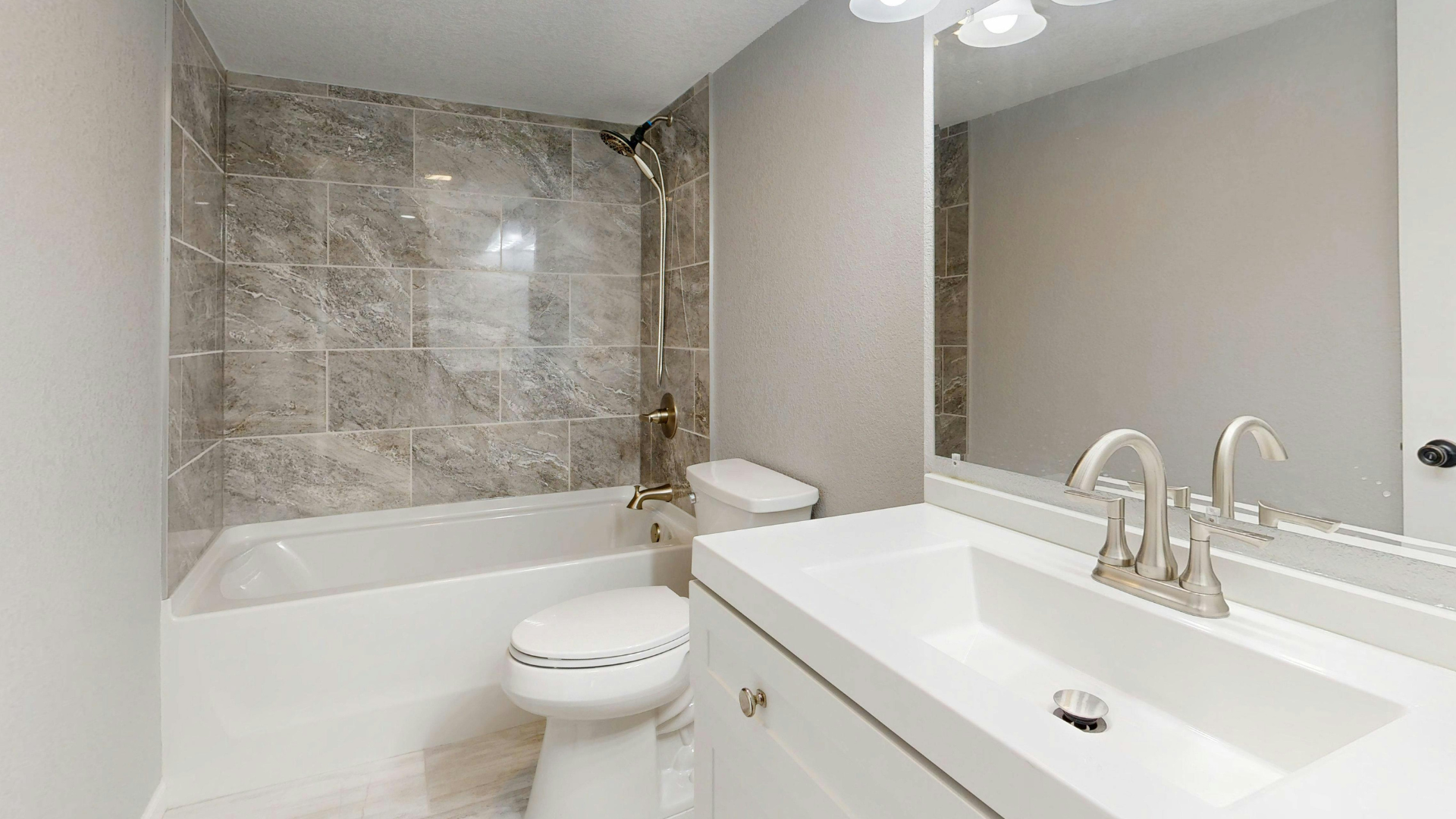

Renovating a small bathroom in Ireland typically costs between €4,000 and €8,000, depending on whether you keep the existing layout, the quality of materials you choose, and the tradespeople you hire. In Dublin, a full small bathroom refurbishment costs €5,000 to €10,000, including labour, tiling, a new suite, all plumbing and electrical work, and VAT. This guide walks you through every stage of the process, the decisions that actually move the price up or down, and the mistakes we see most often on jobs like this.
What Makes Renovating a Small Bathroom Different to a Standard Renovation?
A small bathroom in an Irish home, typically under 4 square metres, presents a specific set of challenges that a larger bathroom does not. Every decision compounds quickly: the wrong tile size makes the room feel tighter, a poorly positioned shower eats the only usable floor space, and a vanity unit that is two inches too wide means the door will not open properly.
The upside is that small bathrooms are faster to tile, cheaper to heat, and easier to keep on budget if the planning is tight. The downside is that there is almost no margin for error. A layout mistake in a large bathroom is inconvenient. The same mistake in a 3m2 ensuite makes the room nearly unusable.
What we find in practice. From our experience, the single biggest driver of small bathroom renovation costs is whether the homeowner wants to move the plumbing. Keeping fixtures in their existing positions is by far the most cost-effective approach, typically saving €1,500 to €4,000 compared to moving the toilet, shower or basin.
How Much Does It Cost to Renovate a Small Bathroom in Ireland?
A small bathroom renovation in Dublin costs between €5,000 and €10,000 for a full refurbishment in the existing layout. Dublin labour rates run higher than the national average due to demand, access constraints, and trade availability, so the same job in Cork or Galway might come in at €4,000 to €8,000. A cosmetic refresh that keeps the existing suite positions and pipework costs €4,000 to €7,000 in Dublin (€3,000 to €6,000 elsewhere).
| Dublin small bathroom renovation: €5,000 to €10,000, including VAT (up to 4m2, full refurbishment, standard suite and tiling in the existing layout) |
Here is how a typical small bathroom budget breaks down across the main cost categories:
| Cost Category | Typical Cost | Notes |
|---|---|---|
| Labour (all trades) | €2,400 to €4,000 | Plumber, tiler, electrician. Highest cost driver. |
| Bathroom suite (toilet, basin, bath or shower) | €800 to €2,500 | Wide range depending on brand and style. |
| Tiling (supply and fit) | €1,000 to €2,000 | €45 to €80 per m2 for tiling labour alone in Dublin. |
| Waterproofing and tanking | €300 to €600 | Essential for shower enclosures and wet rooms. |
| Electrical (lighting, extraction) | €350 to €600 | Zone 1/2 bathroom regulations apply. |
| Waste removal and skip | €150 to €300 | Higher in central Dublin due to access and permits. |
| Contingency (10 to 15%) | €500 to €1,500 | Budget this from the start, not after problems appear. |
Budget Small Bathroom Renovation: €5,000 to €6,500
Keeps the existing layout. Standard ceramic or porcelain tiles in a limited range. Mid-market suite from a trade supplier. Power shower or electric shower retained in position. No structural changes. This is the right approach if you are selling in the next two to three years and want the bathroom to look clean and modern without over-capitalising.
Mid-Range Small Bathroom Renovation: €6,500 to €10,000
New suite with a walk-in shower replacing the bath, or a quality over-bath shower screen. Better tile selection including a feature wall. New vanity unit and mirror. Underfloor heating is often added at this level, which typically adds €400 to €700 for a small floor area.
High-End Small Bathroom Renovation: €10,000 to €15,000+
Large-format porcelain tiles, wall-hung sanitaryware, bespoke storage, premium finishes throughout. A full wet room conversion sits at the top of this bracket and beyond, typically €12,000 to €22,000 in Dublin. At this level you are likely dealing with a period property where wall preparation alone adds significant time and cost.
How Do You Plan a Small Bathroom Renovation in Ireland?
Good planning is the difference between a bathroom that comes in on budget and one that runs 30% over. The planning stage costs nothing. The mistakes you make because you skipped it cost a lot.
Step 1: Decide Whether to Keep the Existing Layout
This is the most important financial decision in the whole project. Moving the toilet, shower or basin typically adds €1,500 to €4,000 in pipework, drainage and labour. Moving a soil stack in an older Dublin home can cost more. Unless there is a compelling functional reason to reposition, leave the plumbing where it is and spend that money on finishes instead.
Step 2: Choose Your Suite Before You Do Anything Else
Most people make the mistake of starting with tiles and then trying to fit the suite around them. Work in the other direction. Once you know the exact dimensions of your toilet, basin, shower tray, or bath, you can tile to fit rather than cut to fit. This also lets your tiler give you an accurate quote.
Step 3: Sort the Waterproofing
This is the step most DIY renovations skip and most professional ones charge properly for. Any surface that will be directly wetted, including shower walls and the floor of a shower enclosure, needs to be tanked or treated with a waterproof membrane before tiling begins. Skipping this step is the most common cause of damp ingress behind tiles, which we see regularly on second opinions across Dublin. Rectifying a failed waterproof seal after tiling costs far more than doing it properly the first time.
Step 4: Plan Your Storage Before the Walls Go Up
In a small bathroom, storage is a design problem, not a furniture problem. Recessed wall niches for shampoo, a wall-hung vanity unit rather than a floor-standing one, a mirrored cabinet instead of a standard mirror: these decisions need to be made before the tiler arrives, not after.
Step 5: Get Three Written Quotes
For any bathroom renovation in Dublin, get at least three written quotes from contractors who have visited the bathroom in person. A quote provided without a site visit is not a quote. Make sure each quote covers labour, disposal, and all trade coordination. Check that your plumber is RGI registered and your electrician is RECI registered. Both are legal requirements for work that involves gas and electrical systems in an Irish home.
What Are the Best Layout Options for a Small Bathroom in Ireland?
Most small bathrooms in Irish homes, particularly in the pre-1990s housing stock that makes up a large portion of Dublin’s semi-detached and terraced properties, are between 2.5m2 and 4m2. Within that footprint, you have three realistic layout options:
| Layout Option | Best For |
|---|---|
| Shower only (remove bath) | Families with a separate main bathroom. Gains floor space and feels significantly larger. |
| Bath with over-bath shower screen | Homes with young children or where resale value matters. Buyers with families generally prefer a bath. |
| Wet room conversion | Period properties with solid floors and high ceilings. Higher cost but maximises perceived space. |
The bath removal question. We are asked this regularly. Our honest answer: if this is the only bath in the house, removing it will reduce your resale appeal to buyers with young children. If there is a separate family bathroom with a bath, removing the bath from the ensuite and installing a large walk-in shower is almost always the right call for a small space.
Large-format tiles in small bathrooms. Counter-intuitively, larger tiles (600x600mm or bigger) can make a small bathroom feel more spacious by reducing grout lines and visual busyness. The trade-off is more waste during cutting and slightly higher tiling costs. For a 3m2 bathroom floor, the difference is typically €100 to €200 extra in tile cost versus a 300x300mm tile.
What Are the Most Common Mistakes in Small Bathroom Renovations?
Sixteen years of renovation work across Dublin and the surrounding counties has given us a clear picture of where small bathroom jobs go wrong. These are the issues we see most often.
- Skipping the waterproofing membrane. The most common reason a bathroom renovation fails within five years. This is not optional.
- Buying tiles before measuring properly. Always calculate your tile requirement from the actual dimensions of the finished space, including the shower enclosure, with a 10% wastage allowance added on top.
- Not accounting for floor height changes. A new tile bed and underfloor heating mat can raise a floor by 15 to 20mm. If your door opens inward, this becomes a problem.
- Choosing a suite from a photo. Dimensions matter enormously in a small bathroom. A wall-hung basin that looks compact online can project further from the wall than your existing pedestal basin. Always check the projection measurement.
- Ignoring extraction. Inadequate ventilation in a small bathroom leads to mould within 12 to 18 months. A properly sized and correctly zoned extraction fan is not an optional extra.
- Underestimating the contingency. In Dublin’s older housing stock, opening up walls and floors reveals surprises: deteriorated pipework, damp, outdated wiring. Budget 15 to 20% for contingency from the start in a pre-1980 home, not 10%.
How Long Does a Small Bathroom Renovation Take in Ireland?
A standard small bathroom renovation takes 5 to 8 working days from strip-out to handover. This assumes no significant surprises behind the walls and that all materials are on site before work starts. Here is a realistic week-by-week breakdown:
| Day | What Happens |
|---|---|
| Day 1 | Strip-out: remove old suite, tiles, floor covering. Assess walls and floor for damp or damage. |
| Day 2 | First fix plumbing and electrical. Rough in any new positions. Wall preparation and boarding where needed. |
| Day 3 to 4 | Waterproofing, tanking of shower area. Allow to cure. |
| Day 4 to 5 | Tiling walls and floor. |
| Day 6 | Second fix plumbing: install suite, shower, taps, waste fittings. |
| Day 7 | Second fix electrical: lighting, extraction, heated towel rail. Sealant, grout finishing. |
| Day 8 | Snag list, final clean, handover. |
If the job runs into damp remediation, replastering, or structural issues, add two to four days. The most common delay we see is materials arriving late, which is entirely avoidable. Have everything on site before day one.
Can I Get SEAI Grants for a Small Bathroom Renovation in Ireland?
A straightforward bathroom refurbishment, replacing the suite, retiling, and updating plumbing, does not qualify for SEAI funding. However, if your bathroom renovation is part of a wider energy upgrade, there are relevant SEAI schemes to be aware of.
| SEAI GRANTS RELEVANT TO BATHROOM WORK |
| SEAI Heating Controls Upgrade: If your bathroom renovation includes upgrading your heating system controls or adding a thermostatic radiator valve to a heated towel rail, this may qualify for support. |
| SEAI Heat Pump Grant: A bathroom renovation is often a good time to upgrade from an immersion heater to a heat pump for hot water and heating. Since February 2026, SEAI support for a heat pump in a house is up to €12,500 (€6,500 for the heat pump, €2,000 for a central heating system upgrade and a €4,000 renewable heating bonus) for homes built and occupied before 2021, or up to €14,500 with the €2,000 boiler scrappage top-up when you replace an oil, gas or solid fuel boiler (since 6 October 2026); check seai.ie for current amounts. |
| One Stop Shop: If your bathroom is part of a deeper whole-home retrofit, the One Stop Shop scheme coordinates all eligible upgrades with a single contractor. |
| Always check current grant amounts at seai.ie before budgeting, as scheme values are subject to change. SEAI grants must be approved before work starts and the work must be done by an SEAI-registered contractor. |
Build Me offers SEAI grant work through our SEAI-registered partner contractor, so energy upgrades such as insulation, heat pumps and solar panels can be part of your project, with the SEAI grant applied for before work starts.
What Can I Do Myself to Reduce Small Bathroom Renovation Costs?
In Ireland, electrical work and gas work must be carried out by RECI-registered and RGI-registered tradespeople respectively. This is a legal requirement, not a recommendation. But there are legitimate ways to reduce costs on a small bathroom renovation without cutting corners on the technical work.
- Demolition and strip-out. Removing the old suite, tiles, and floor covering yourself can save €200 to €400. Make sure you understand what to do with waste, as skip hire in Dublin typically costs €150 to €300 for a small skip.
- Painting. Once the tiler and plumber are finished, painting any non-tiled areas yourself is straightforward and saves €150 to €300.
- Accessory fitting. Towel rails, toilet roll holders, mirrors, and vanity accessories can usually be fitted without a tradesperson if they do not involve electrical connections.
- Sourcing your own materials. Buying your suite and tiles directly from a supplier rather than through your contractor can save 10 to 20% on materials. Discuss this with your contractor upfront, as some prefer to supply their own materials for warranty reasons.
Frequently Asked Questions About Small Bathroom Renovation in Ireland
How much does it cost to renovate a small bathroom in Dublin?
A full small bathroom renovation in Dublin typically costs between €5,000 and €10,000, including labour, a standard suite, tiling, waterproofing, all plumbing and electrical work, and VAT. The same job in Cork or Galway might come in at €4,000 to €8,000. Set aside an additional 10 to 15% as a contingency for unexpected issues, or 15 to 20% in a pre-1980 property.
How long does a small bathroom renovation take in Ireland?
Most small bathroom renovations, up to 4 square metres, take 5 to 8 working days from strip-out to handover. This assumes no significant structural or damp issues are found once walls and floors are opened up, and that all materials are on site before work begins. Wet room conversions typically take one to two days longer due to the additional waterproofing and drainage work involved.
Do I need planning permission to renovate a small bathroom in Ireland?
In the vast majority of cases, no. Bathroom renovations that do not involve structural changes, changes to the external appearance of the property, or significant changes to the drainage system are classed as exempted development under the Planning and Development Act. If you are in any doubt, Citizens Information provides a straightforward guide to exempted development at citizensinformation.ie, or contact your local authority directly.
What is the cheapest way to renovate a small bathroom in Ireland?
The cheapest full renovation that delivers a genuinely improved bathroom is to keep the existing layout, choose mid-market tiles from a trade supplier, and select a standard bathroom suite rather than a designer brand. Doing this consistently, you can complete a presentable small bathroom refurbishment for €4,000 to €5,000 outside Dublin and €5,000 to €6,000 in the Dublin area. Avoid the temptation to cut corners on waterproofing or extraction, as these create far more expensive problems down the line.
Should I remove the bath in my small bathroom?
If this bathroom is the only one in the house, think carefully before removing the bath, as it can affect resale value for buyers with young children. If there is a separate family bathroom with a bath, replacing the bath in a small ensuite with a walk-in shower almost always makes better use of the space and is usually worth the additional cost. A plumber in Dublin will typically charge €600 to €1,000 to remove a bath and fit a shower tray and enclosure in its place.
What is the most important thing to get right in a small bathroom renovation?
Waterproofing. Every other decision affects how the bathroom looks. Waterproofing affects whether the bathroom is still standing in ten years. Any surface within the shower zone must be tanked or treated with a waterproof membrane before tiling begins. This is not an area to negotiate on cost. A failed waterproof seal behind tiles means stripping everything out and starting again.
The Bottom Line
A small bathroom renovation done well, with good waterproofing, honest contractor relationships, and a clear layout plan, delivers one of the best returns of any home improvement you can make. For most Dublin homeowners, that means a budget of €5,000 to €10,000 for a properly specified job that will last fifteen to twenty years without issues. If you are weighing up your options for a bathroom project, our bathroom renovation service in Dublin covers everything from initial survey through to final handover, with fixed-price packages including VAT: Essential €9,307, Standard €14,301 and Premium €24,176.