
In 2026, councils pay three adaptation grants for private homes. The Housing Adaptation Grant pays up to €40,000 for disability works. Housing Aid for Older People pays up to €10,700 for people aged 66+. The Mobility Aids Grant pays up to €8,000. All are means tested, with no grant above €75,000 household income. Approval must come before work starts.
Here is the catch most families miss. South Dublin County Council prices a level-access shower at €13,000 before VAT. That figure comes from its own June 2026 cost schedule. That is well above the €8,000 Mobility Aids Grant cap. So picking the right grant matters as much as qualifying for one.
Key Findings for 2026
What Is the Housing Adaptation Grant?
The Housing Adaptation Grant is a means-tested council grant that adapts a private home for a disabled person. It is one of three linked grants. The Department of Housing funds 85% and your local council funds 15%. One application form covers all three, so you can apply for more than one at once.
The scheme is not new, but the amounts are. Among the housing grants in Ireland, these three are the only ones built around age and disability. The Department raised their maximum grants and income limits from 1 December 2024. No further increase had been announced as of 9 November 2026. The 2026 money is larger, though. The Department announced €129.5 million in Exchequer funding on 9 March 2026, up €30 million on 2025.
| Grant | Maximum | Income limit | Who it is for | VAT covered? |
|---|---|---|---|---|
| Housing Adaptation Grant for Disabled People | €40,000 | €75,000 | Physical, sensory, mental health or intellectual disability | No |
| Mobility Aids Grant | €8,000 | €37,500 | Older or disabled people with mobility problems | No |
| Housing Aid for Older People | €10,700 | €75,000 | Aged 66 or over (younger only in hardship) | Yes |
Source: Department of Housing application form, 2024 revision, checked 9 November 2026. Income limits apply after disregards and deductions.
Who Qualifies for a Housing Adaptation Grant?
Homeowners and Private Tenants
The Housing Adaptation Grant and the Mobility Aids Grant cover more than owner-occupied homes. According to the Department's application form, your home qualifies if you or your family own it. It also qualifies if you rent privately with a current tenancy registered with the Residential Tenancies Board. In that case you need the landlord's written permission.
Homes from an Approved Housing Body and communal residences also qualify. Council tenants do not, because councils run a separate Disabled Persons Grant for their own homes. When you rent, the council assesses the tenant's income, not the landlord's.
Every applicant must also meet the same basic rules, set out in the Department's form.
- Approval first: the council approves the application before any work starts.
- Living there: the person the grant is for lives in the home when the work is finished.
- Tax in order: your tax affairs are up to date, with tax clearance for grants over €10,000.
- Local Property Tax: LPT on the home is paid, deferred or exempt.
- Doctor's Certificate: your GP completes it for the disability and mobility grants.
Housing Aid for Older People: Age 66 and Over
Housing Aid for Older People is narrower. It is for people aged 66 or over. They must own the home or hold a right of residence in it. Councils can pay it to younger people only in cases of hardship. South Dublin County Council's 2026 FAQ confirms it does not cover private rented homes.
This grant is about the condition of the house, not the person's health. No medical certificate is needed unless the case is urgent for medical reasons. It pays for essential repairs: roofs, rewiring, windows and doors, and broken or missing heating. Since 1 January 2025 it no longer funds new oil or gas boilers, as Dún Laoghaire-Rathdown County Council explains.
Each repair needs evidence. A roof repair needs a letter from your insurer saying the policy does not cover it. Rewiring needs a Periodic Inspection Report from a Safe Electric registered electrician. Heating needs a report from a heating contractor. If a heat pump could replace the old heating, compare SEAI and other home renovation grants first.
How Much Is the Housing Adaptation Grant in 2026?
The grant pays a share of the approved cost, and the share falls as household income rises. Up to €37,500, you get 100% of approved costs, up to €40,000. Between €62,501 and €75,000 you get 30%, up to €12,000. Above €75,000, no grant is paid. Homes built in the last 12 months get half the maximum.
| Household income (after deductions) | Share of cost | Max grant: home over 12 months old | Max grant: home built in last 12 months |
|---|---|---|---|
| Up to €37,500 | 100% | €40,000 | €20,000 |
| €37,501 to €43,750 | 85% | €34,000 | €17,000 |
| €43,751 to €50,000 | 75% | €30,000 | €15,000 |
| €50,001 to €62,500 | 50% | €20,000 | €10,000 |
| €62,501 to €75,000 | 30% | €12,000 | €6,000 |
| Over €75,000 | No grant | No grant | No grant |
Housing Adaptation Grant for Disabled People. Source: Department of Housing application form, 2024 revision, checked 9 November 2026.
Housing Aid for Older People and Mobility Aids Amounts
Housing Aid for Older People uses the same five income bands. The maximum is €10,700 at 100% and €9,095 at 85%. It then drops to €8,025, €5,350 and €3,210 at 75%, 50% and 30%. Unlike the disability grant, it can go towards the full cost including VAT.
The Mobility Aids Grant is simpler. It covers 100% of the approved cost up to €8,000. There is no sliding scale. Instead, there is a hard cut-off: no grant if household income is above €37,500 after deductions.
The Department's form gives a worked example for the older people's grant. A household on €45,000 after deductions gets 75%, capped at €8,025. If the work costs €15,000 including VAT, the grant is €8,025, not €11,250. The household pays the remaining €6,975.
"Housing Adaptation Grants help to support independent living for people in their own homes"
James Browne TD, Minister for Housing, Local Government and Heritage, 9 March 2026
How Does the Means Test Work?
Councils assess the gross income of the registered owner and their spouse for the previous tax year. In some special cases they use the current year instead. That applies after a sudden, long-term drop in income from illness, injury or disability.
Two things shrink the figure the council counts. First, certain social welfare payments are ignored entirely. These include Carer's Allowance and Benefit, Child Benefit and Domiciliary Care Allowance. Fuel Allowance, the Household Benefits Package and Working Family Payment are ignored too.
Second, five deductions come off what remains. You deduct €6,250 for each child under 18, or under 23 in full-time education. You deduct €6,250 if a relative cares for the applicant full time. Rent or mortgage costs on the home take off up to €6,250. Residential care fees for a spouse or co-owner take off up to €12,500. Homecare fees take off up to €12,500, or €6,250 if the carer deduction is also claimed. In practice, a family with a gross income well over €37,500 can still land in the 100% band.
Worked Example From the Official Form
The Department's application form works through one family's figures. The Ryan family earns €60,000 a year, including €1,680 in Child Benefit. They have a 12-year-old and a 20-year-old in full-time education. A relative cares for the applicant full time, and they pay €8,000 a year on their mortgage.
| Step | Adjustment | Income counted |
|---|---|---|
| Gross household income | None | €60,000 |
| Disregard Child Benefit | minus €1,680 | €58,320 |
| Two dependants | minus €12,500 | €45,820 |
| Full-time relative carer | minus €6,250 | €39,570 |
| Mortgage repayments (capped) | minus €6,250 | €33,320 |
| Result | Under €37,500 | 100% grant band |
Source: Department of Housing application form, pages 8 and 9 (2024 revision). The family is the Department's own illustration.
What Work Does the Housing Adaptation Grant Cover?
Accessible Bathroom or Wet Room
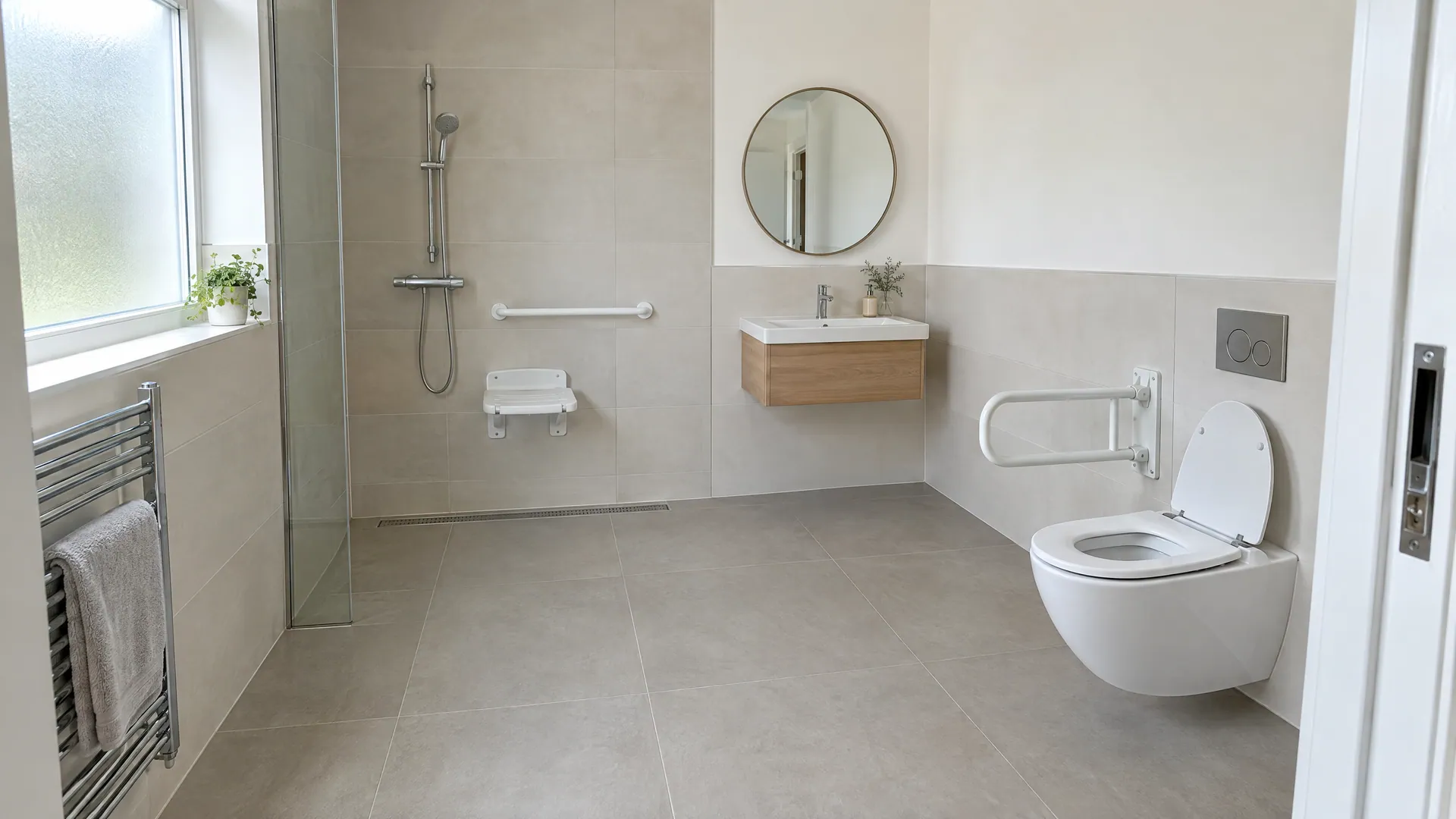
Bathroom work is the most common reason families apply. The Housing Adaptation Grant covers bathroom facilities such as an accessible shower or a downstairs toilet. The Mobility Aids Grant covers an accessible shower and grab rails too, but only up to €8,000.
That gap matters. South Dublin County Council prices a level-access shower at €13,000 before VAT, where the existing room is big enough. Enlarging a small bathroom into the next bedroom adds €1,144. A downstairs toilet under the stairs is €8,200. These are the council's own June 2026 standard costs, not contractor prices.
So a full level-access bathroom often fits the larger disability grant better than the Mobility Aids Grant. The OT's report usually decides the layout.
Rail heights, seat position and door width all follow the person's needs. The same thinking applies to an accessible bathroom for an older parent, grant or no grant.
Ramps, Stairlifts and Hoists
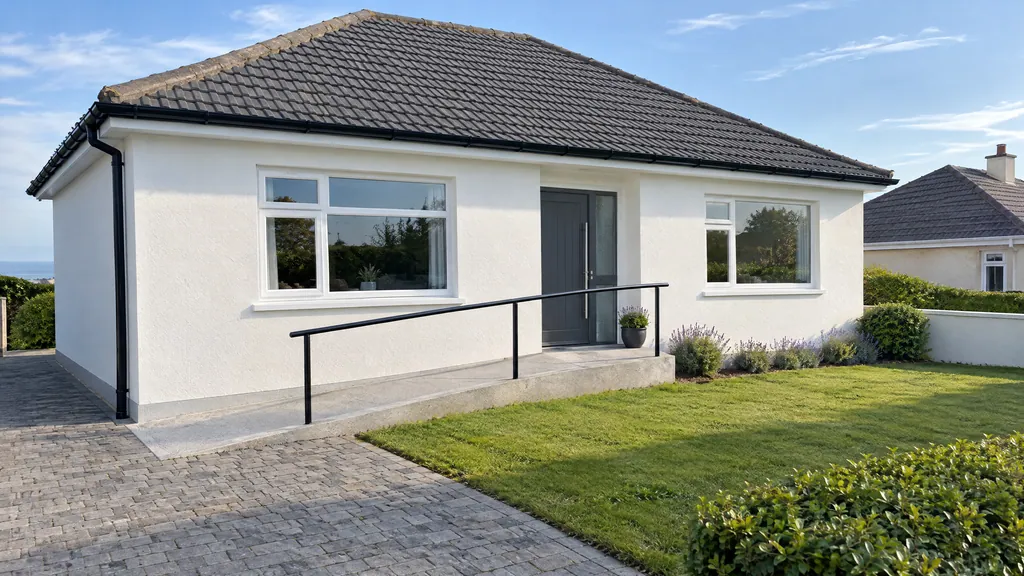
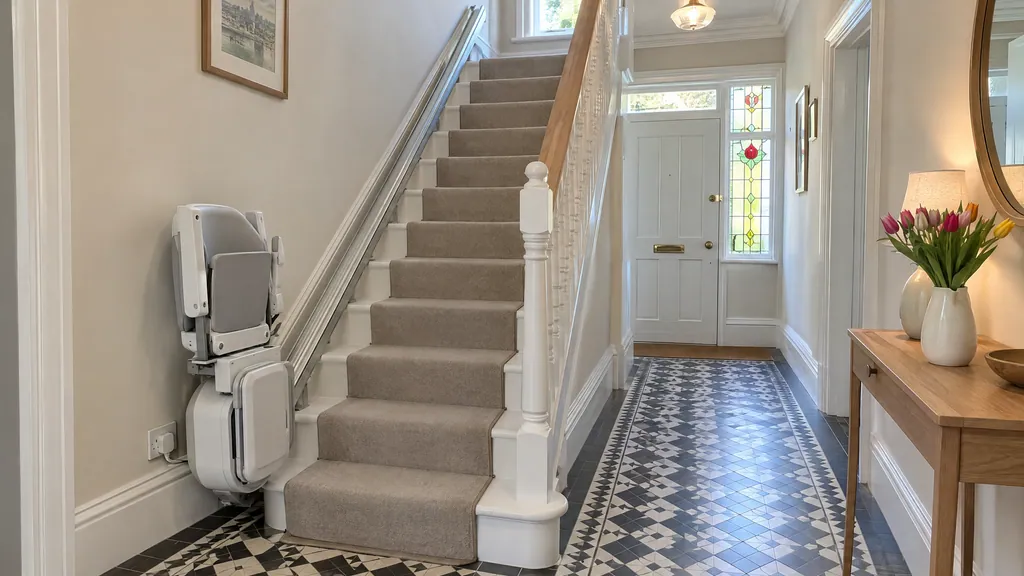
Access works are the next biggest group. Both disability grants cover ramps, grab rails, stairlifts and fixed track hoists. The Housing Adaptation Grant also covers through-floor lifts, wider doors and space for a wheelchair.
Hoist servicing, maintenance and training are excluded. South Dublin's 2026 FAQ confirms the grant can pay for strengthening a ceiling to carry a hoist track, though. A straight stairlift is often the cheapest big item on the list.
| Work | SDCC standard cost (ex VAT) |
|---|---|
| Level-access shower (room big enough) | €13,000 |
| Ramp and handrails | €9,155 |
| Downstairs toilet under the stairs | €8,200 |
| Curved stairlift with powered swivel | €7,511 |
| Straight stairlift with powered swivel | €3,379 |
| Widen an internal door, with door and frame | €1,040 |
| Grab rail (plastic) | €313 |
| Extension or conversion, hoist, through-floor lift | Quotes required |
Source: South Dublin County Council, Private Housing Grants Standardised Costs, June 2026. Other councils set their own figures.
Ground-Floor Bedroom or Bathroom Extension
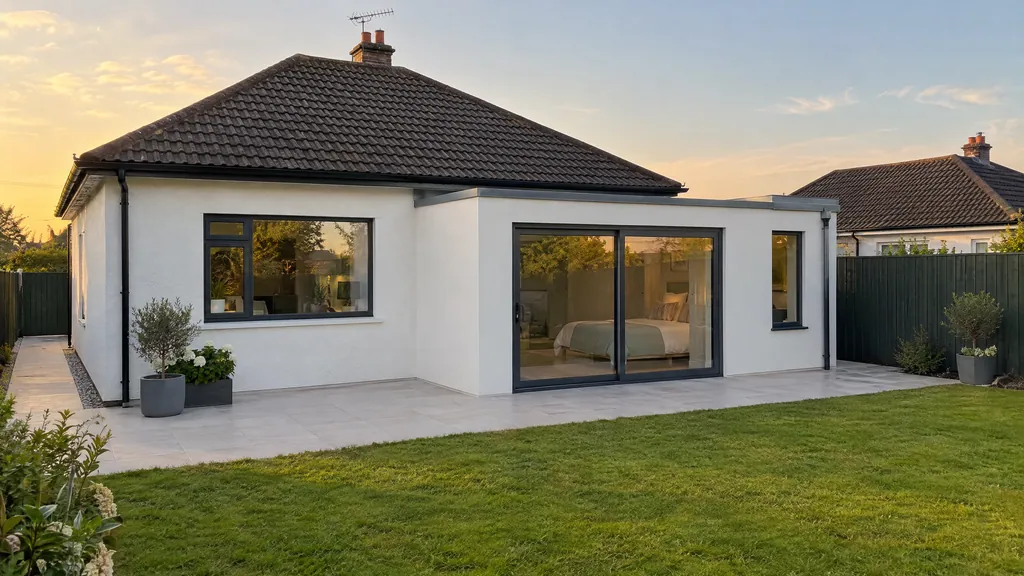
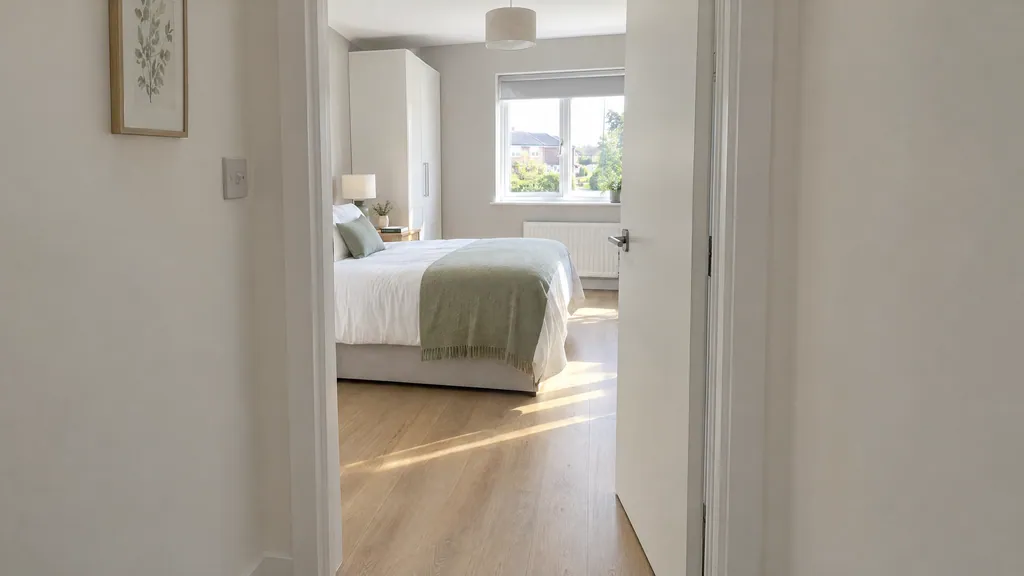
The Housing Adaptation Grant can fund an extension, typically a bedroom or bathroom for the disabled person. South Dublin's FAQ says other rooms can be considered if the OT asks for them. Modular extensions qualify too, once they are structurally connected to the house.
Extensions need more paperwork. You must send drawings with the application. The council technician then checks whether an unused room could be converted instead. If an extension is needed, the council prices it from quotes or a standard cost. Designing it and getting any planning permission is your job, not the council's.
The €40,000 cap rarely covers a full extension on its own. Build Me's Dublin estimate for a 20 m² single-storey rear extension is €54,000 to €69,000 including VAT. Plan the funding gap early. A rear ground-floor bedroom extension can avoid planning permission if it meets the conditions. Under the 2026 exempted development regulations (S.I. 338 to 344 of 2026), the limit is 45 m² of extensions in total.
Do You Need an Occupational Therapist Assessment?
It depends on the grant and the work. For the Housing Adaptation Grant, the national form requires an OT assessment for four things. These are a big change in a room's use, a stairlift or through-floor lift, a hoist and an extension. For the Mobility Aids Grant, only stairlifts and hoists need one. Housing Aid for Older People never needs one.
Councils can ask for more. South Dublin requires an OT report for its disability grants generally. It drops that requirement for replacing or repairing a stairlift and for fitting grab rails. It counts an OT report as recent if it is under 12 months old.
You can use a private OT or wait for one. If your grant is approved, the council pays up to €300 towards a private OT report. That €300 comes out of the grant maximum, not on top of it. If you cannot get a report, the council can arrange an assessment after it receives your application.
Extensions, stairlifts, through-floor lifts, fixed track hoists and big changes to a room's use.
Accessible showers, ramps and grab rails. Check your council's page before you apply.
Roofs, rewiring, windows, doors and heating under Housing Aid for Older People.
How Do You Apply for a Housing Adaptation Grant?
You apply to your own local council, using the national application form. Build Me does not apply for these grants for clients. The homeowner, or someone helping them, fills in and sends the form. The council, not the builder, decides what is approved. Here is the order the form and council pages set out.
- Week 1Download the form and check which grant fits.Get the national form from gov.ie or your council. Tick each grant you want on the one form.
- Weeks 1 to 4Gather your proof of income and tax documents.Get last year's Revenue Statement of Liability or tax assessment. Add proof of Local Property Tax and school letters for dependants.
- Weeks 1 to 4Get the Doctor's Certificate and any OT report.Ask your GP to complete pages 17 and 18 for the disability or mobility grants. Book an OT if the works need one.
- Week 4 or laterSend the completed form to your council.Include every document on the checklist. Councils return incomplete forms and process grants in date order.
- After submissionAllow the council technician to inspect the home.The council checks the work is possible and suits the person's needs. It then writes to say what is approved and how much.
- After approvalSend your contractor's quote and tax details.The council asks for the contractor's quote and tax reference number. Grants over €10,000 also need your own tax clearance.
- Within 6 monthsComplete the work and claim payment.Send the final invoice, electrical certificates and bank details. The council inspects the finished work, then pays the grant.
The Department's form is clear. The application must be approved before any work begins on the home. Work done first is not grant aided.
How Long Does Approval Take?
No national processing time exists. Councils set their own targets, and few publish one. South Dublin County Council is the clearest of the Dublin councils. Its 2026 FAQ describes a 6-week approval window. That clock starts only once it has a fully complete application, with income proof, LPT proof and any drawings.
After approval, the clock runs the other way. South Dublin gives you 6 months from the approval letter to finish the work and send the payment claim. You must tell the council if you will run over. Fingal, Dublin City, Dún Laoghaire-Rathdown and Wicklow do not state a processing time on their grant pages.
Priority depends on medical need. Your doctor ticks one of three priority levels on the form. Priority 1 covers terminal illness, dependence on a carer, or works needed to leave hospital. Priority 3 is for people who are independent now but want to future-proof the home. South Dublin says it cannot prioritise on personal request alone.
If you are refused, you can appeal. You must write to the council within 3 weeks of the decision. An official who was not involved reviews it, and that can take up to 6 weeks.
"In 2025, some 15,700 grant claims were processed across the 31 local authorities."
John Cummins TD, Minister of State for Local Government and Planning, 9 March 2026
What Rules Apply to Contractors, VAT and Payment?
You choose and hire your own contractor. South Dublin's FAQ says the council does not recommend contractors and advises you to compare a few. After approval, the council needs your contractor's quote and tax reference number to check their tax clearance. Fingal also asks for written confirmation that contractors will follow the OT's or HSE's specifications.
Many councils now price work from standard costs rather than your quote. South Dublin pays the lower of its approved amount and your final invoice, at your income percentage. Its example is an 85% grant on a €10,000 invoice, paying €8,500. If a genuine quote is higher than the standard cost, you can appeal with the quote.
VAT is the other gap. The disability and mobility grants do not cover VAT. Revenue's aids and appliances scheme can refund VAT on specially adapted walk-in showers, stairlifts, handrails and ramps. Services and general renovations usually do not qualify, and claims must be made within four years. Keep the OT report and approval letter for that claim.
Councils add safety conditions too. If approved, the home needs at least two 10-year-battery smoke or heat alarms. You also need a carbon monoxide alarm if you burn gas, oil or solid fuel.
Build Me does not apply for these grants or handle the application. You apply to your council. Once you are approved, we can quote for the works. We can also supply the tax details the council needs.
How Much Grant Funding Does Each Dublin Council Have in 2026?
Funding is set council by council. Dublin City Council has the largest budget in the country, at €15.4 million. That figure includes its own contribution, per the Department's 9 March 2026 allocation. The four Dublin councils together have about €36 million for 2026. Nationally, that is about 24% of the €152.4 million total.
Source: Department of Housing, Funding by Local Authority for 2026, 9 March 2026. Figures are projected combined totals.
What Could Change for Adaptation Grants After 2026?
Three trends are already visible in official documents. None of them changes the grant amounts for now, but each affects how applications work.
- Funding keeps rising. The Department says the grant has had year-on-year funding increases since 2014. The 2026 Exchequer allocation rose by €30 million, to €129.5 million.
- More councils use standard costs. South Dublin published a new standard cost schedule in June 2026, and Wicklow publishes one too. Expect fixed council prices for common works, with quotes only for extensions, hoists and roofs.
- Heating repairs move away from fossil fuels. New oil and gas boilers have been excluded from Housing Aid for Older People since 1 January 2025. Councils now fund repairs, electric heaters or biomass instead.
- Limits are not index-linked. The last increase followed the Department's 2024 review. No new maximums or income limits had been announced as of 9 November 2026.
"These Housing Adaption Grants have a really positive impact on the home life"
Kieran O'Donnell TD, Minister of State with responsibility for Older People, 9 March 2026
Send us your council's approval letter and OT report. We will price the approved accessible bathroom, ramp or extension work in Dublin or north Wicklow.
FAQ
What is the maximum housing adaptation grant in 2026?
The maximum is €40,000, or 100% of the approved cost if lower. That applies to households with income up to €37,500 after deductions, in a home more than 12 months old.
Can I get a housing adaptation grant if I rent?
Yes, for the Housing Adaptation Grant and the Mobility Aids Grant. You need a current tenancy registered with the RTB and the landlord's written permission. Housing Aid for Older People does not cover private rented homes.
Who can get the Housing Aid for Older People grant?
People aged 66 or over who own the home or have a right of residence in it. Councils pay it to younger people only in hardship cases.
Does the housing adaptation grant cover VAT?
No. The disability and mobility grants exclude VAT. Revenue may refund VAT on specially adapted showers, stairlifts, ramps and handrails. Housing Aid for Older People can cover VAT.
Can I start the work before the grant is approved?
No. The Department's form says the application must be approved before any work begins. Work started before approval is not grant aided.
Does Build Me apply for the grant for me?
No. Build Me does not apply for these grants for clients. You apply to your local council, and we can quote for the works once they are approved.
How long does a housing adaptation grant take?
There is no national timeline. South Dublin County Council aims to decide within 6 weeks of a complete application. It then gives you 6 months to finish the work.
Next Steps
- This week: download the national application form and decide which grant, or grants, fit the works.
- Within 2 weeks: book the GP for the Doctor's Certificate and an OT if the works need one.
- Within 4 weeks: gather proof of income, LPT proof and any drawings. Then send the full form to your council.
- After approval: get quotes for the approved works and send your contractor's tax details. Arrange tax clearance if the grant tops €10,000.
- Within 6 months of approval: finish the work and send the final invoice and certificates. Keep the paperwork for any VAT refund.
Useful Tools and Resources
- Department of Housing application form: the single form for all three grants, with income tables and the document checklist.
- Dublin City Council grants for homeowners: contact details and grant pages for Dublin City applicants.
- South Dublin standard costs, June 2026: the council's fixed prices for common adaptation works.
- Healthy Age Friendly Homes Programme: a local coordinator can carry out a free home-based assessment for older people.
- Revenue VAT refund on aids and appliances: how to claim back VAT on qualifying adapted equipment.
- Build Me bathroom renovation calculator: a Dublin estimate for a bathroom or wet room, including VAT.
How We Checked These Figures
We checked every grant figure on 9 November 2026. Our sources were the Department of Housing's scheme pages, its application form and its 9 March 2026 press release. We then compared them with the grant pages of Dublin City, Fingal, South Dublin, Dún Laoghaire-Rathdown and Wicklow councils.
Where sources disagreed, we used the Department's form. Dublin City Council's disability grant page shows only the new-build column of maximums, starting at €20,000. Its older people's page also repeats an old €8,000 maximum beside the current €10,700. Council standard costs are South Dublin's own and are labelled as such. The extension price is a Build Me estimate. We re-check these figures every quarter.
Sources
- Department of Housing: Housing Adaptation Grant for Disabled People (updated 17 December 2024)
- Department of Housing: Housing Adaptation Grants for Older People and Disabled People (Private Houses) (updated 17 December 2024)
- Department of Housing: Application Form, Housing Adaptation Grants for Older People and Disabled People (2024 revision, accessed 9 November 2026)
- Department of Housing: Increased funding of almost €130m announced (9 March 2026)
- South Dublin County Council: Housing Grants (accessed 9 November 2026)
- South Dublin County Council: Private Housing Grants 2026 FAQ (2026)
- South Dublin County Council: Private Housing Grants Standardised Costs (June 2026)
- Dublin City Council: Housing Adaptation Grant for Disabled People (accessed 9 November 2026)
- Dublin City Council: Housing Aid for Older People (accessed 9 November 2026)
- Dublin City Council: Mobility Aids Housing Grant (accessed 9 November 2026)
- Fingal County Council: Housing Adaptation Grants for Older People and People with a Disability (additional documents list July 2026, accessed 9 November 2026)
- Dún Laoghaire-Rathdown County Council: Adaptation Grants for Privately Owned Homes (accessed 9 November 2026)
- Wicklow County Council: Housing Grants (revised scheme from 1 December 2024, accessed 9 November 2026)
- Revenue: How to reclaim VAT on aids and appliances for persons with disabilities (published 20 December 2024)