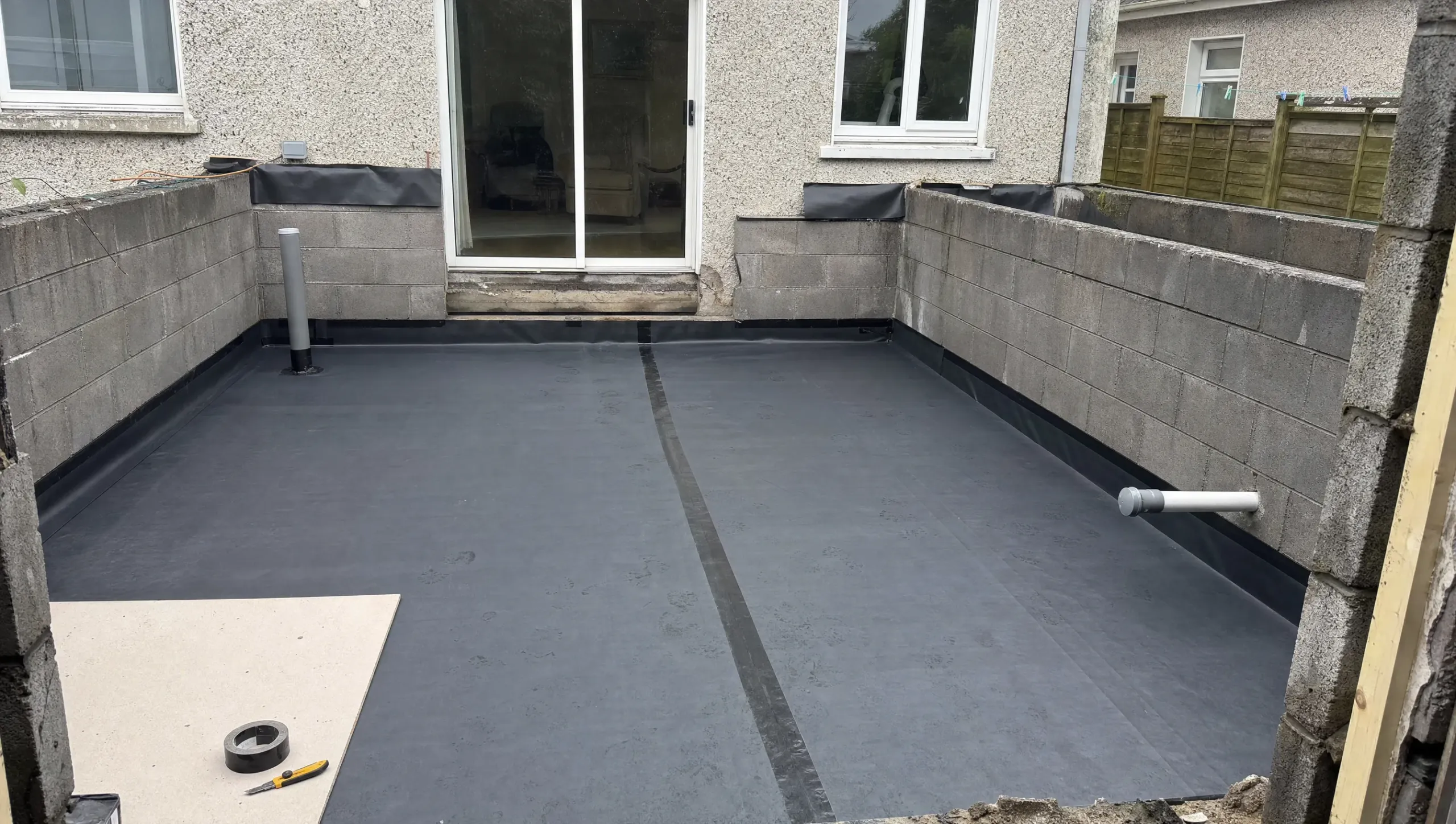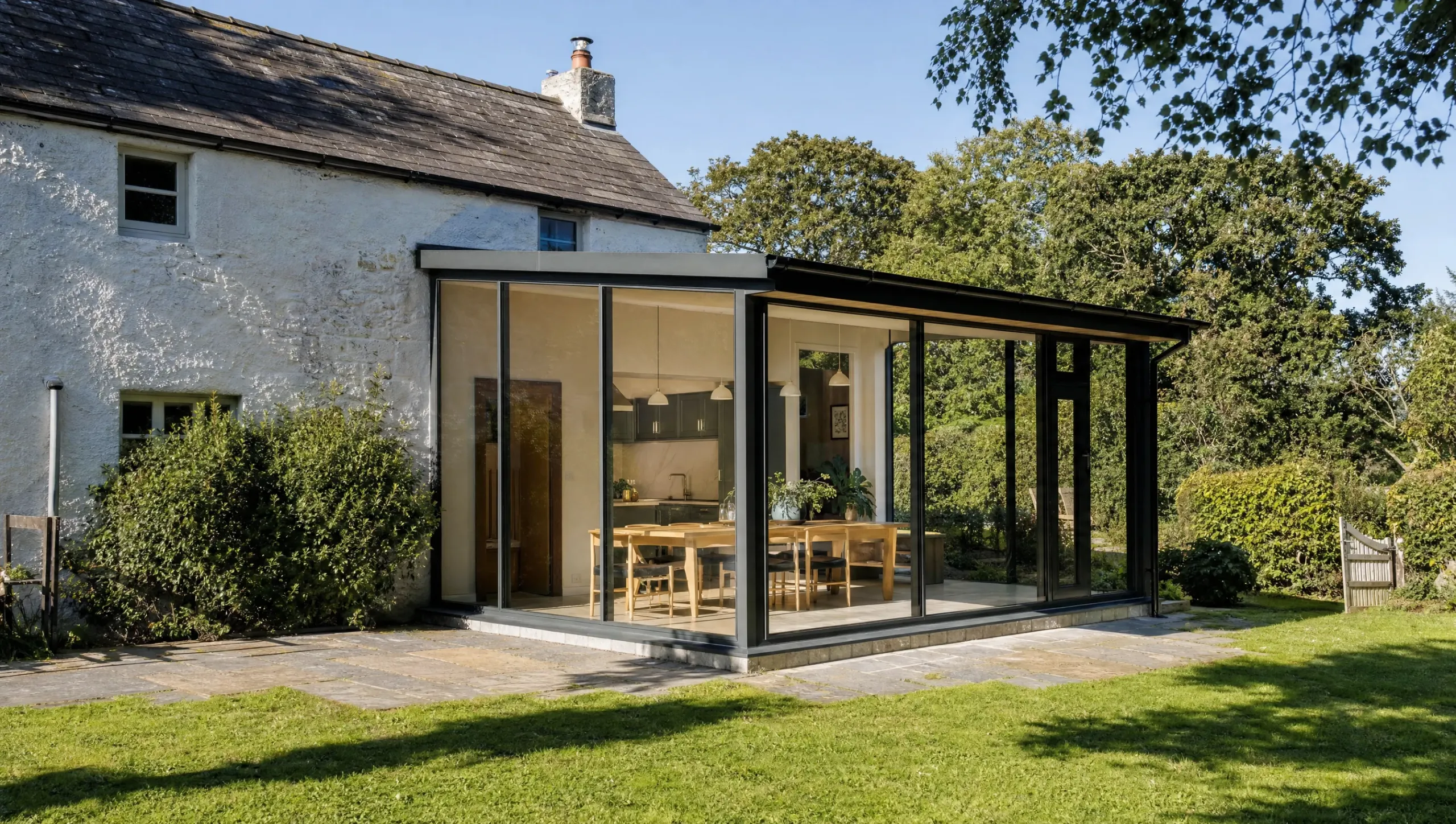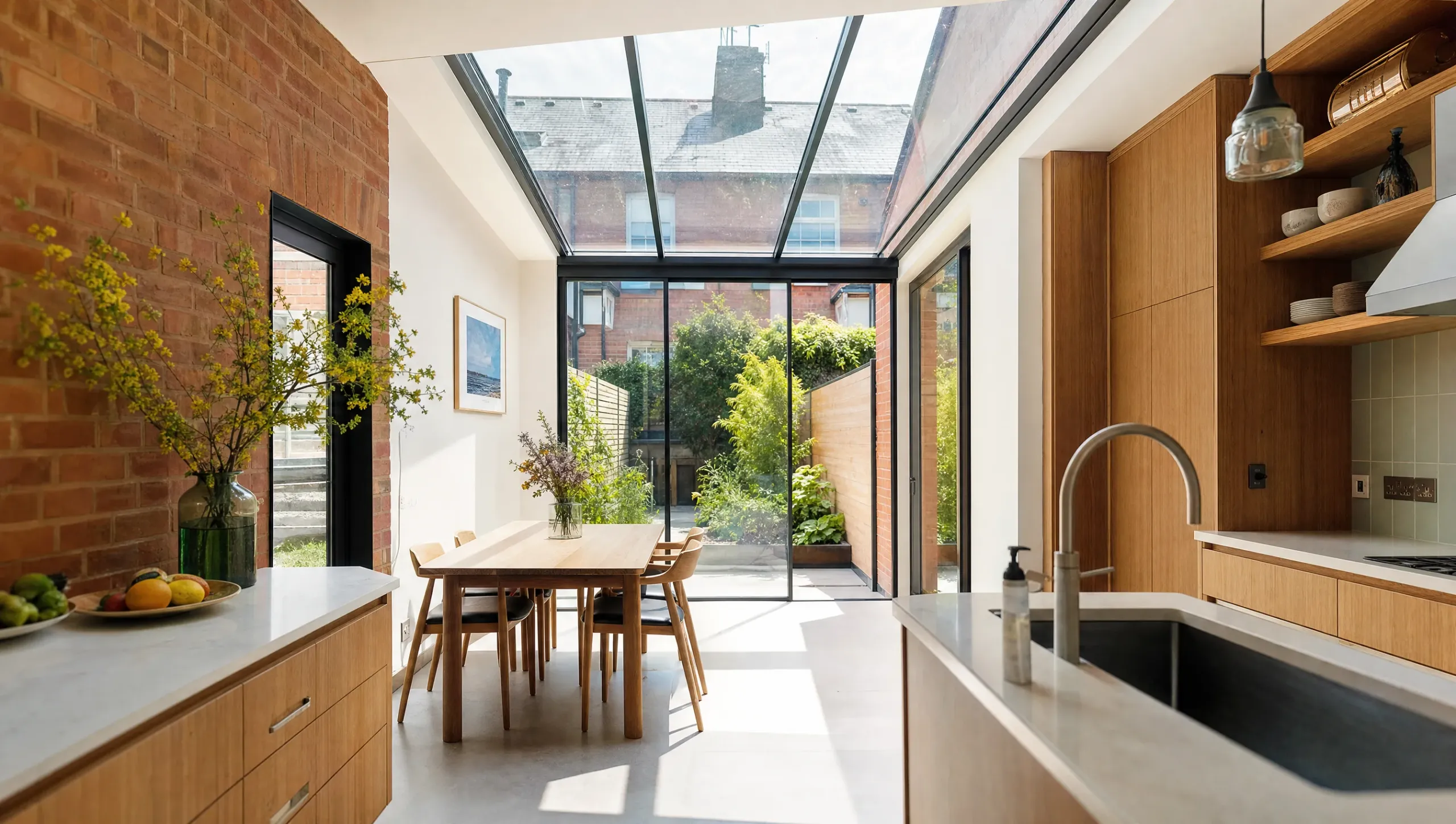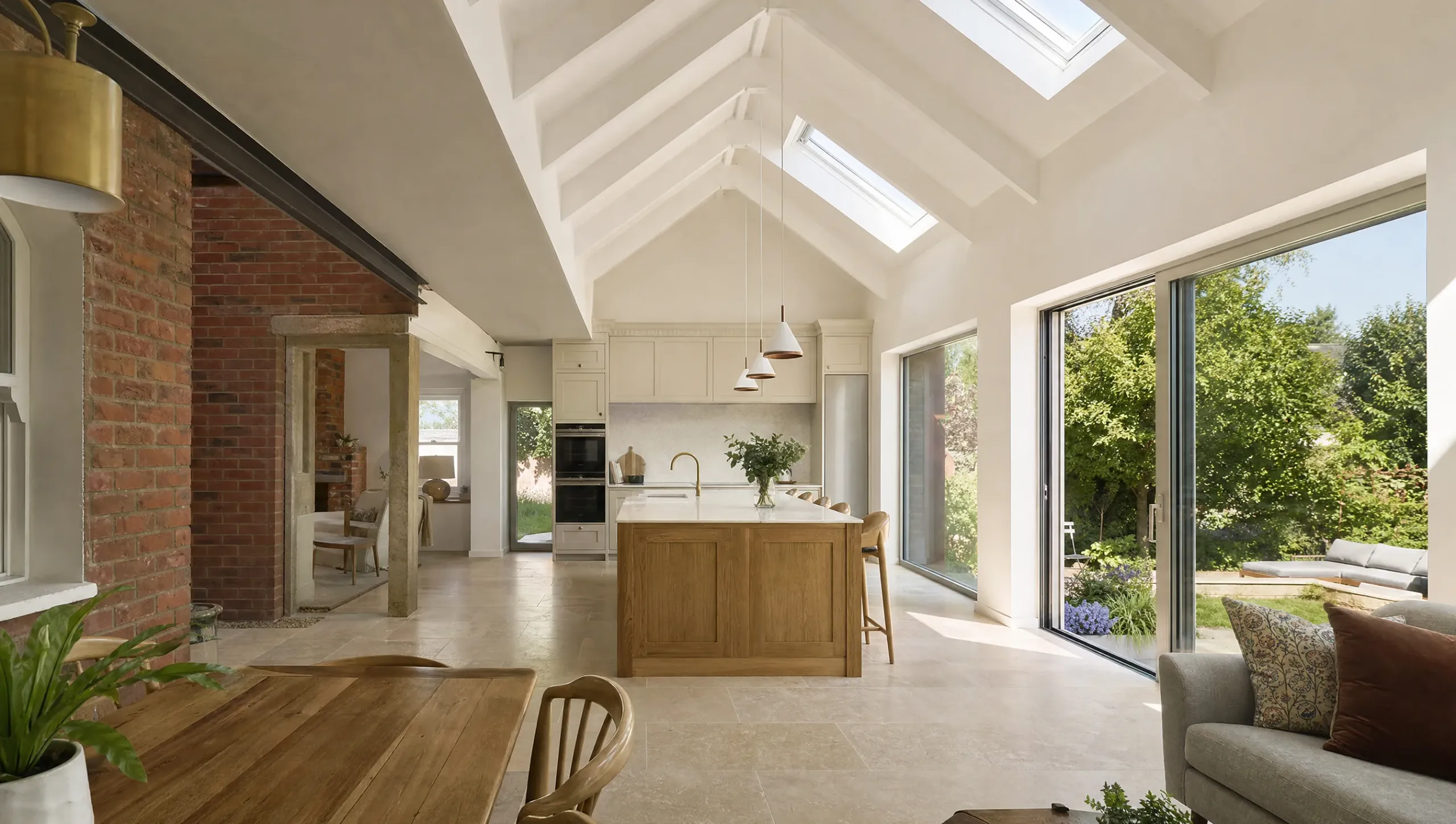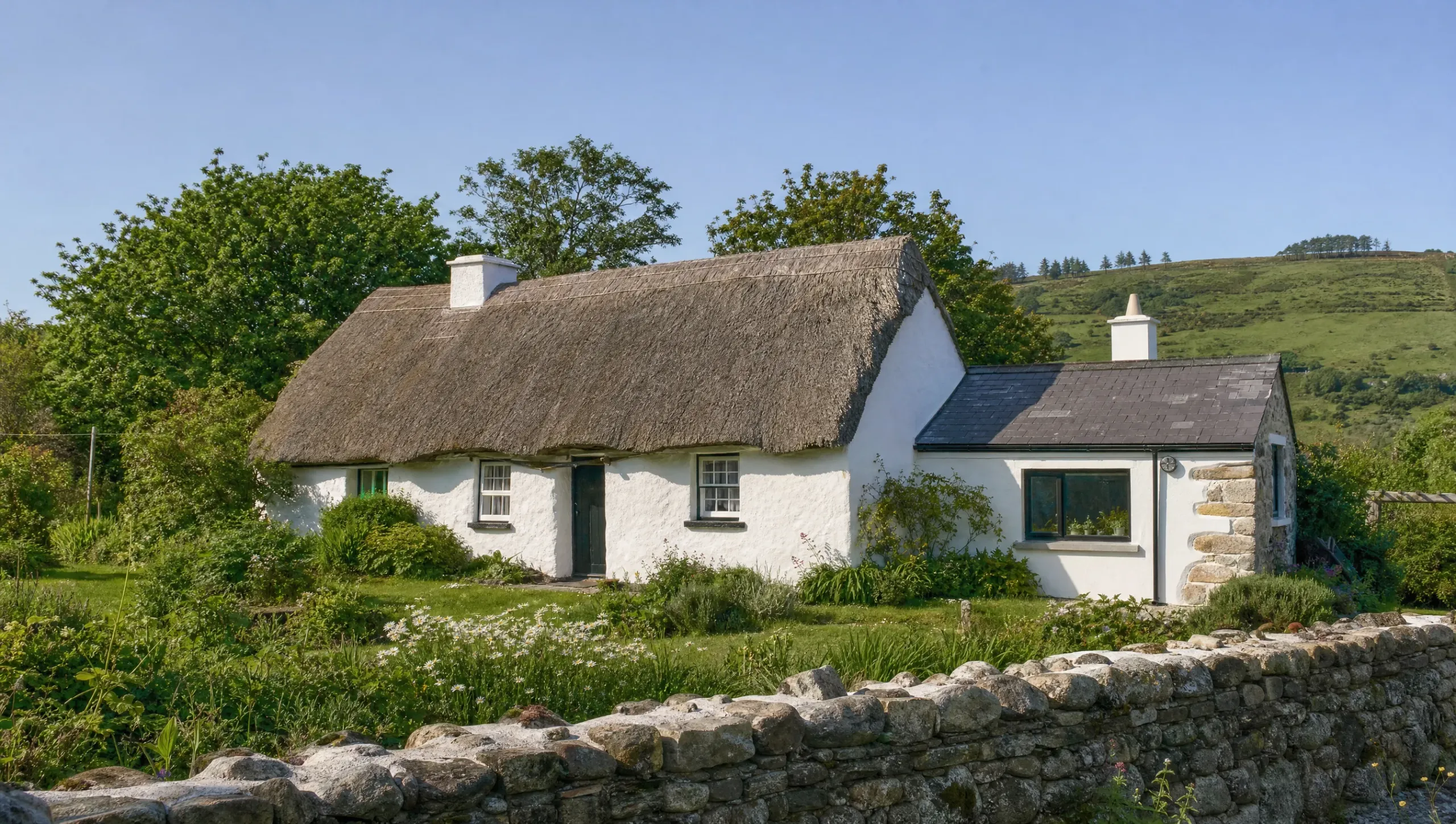

The Vacant Property Refurbishment Grant pays up to €50,000 to renovate an empty home. It must be vacant for two years or more and built before 2008. Derelict properties can get up to €70,000. You apply to your local council before work starts. The grant is paid after the works are finished, with a 10-year clawback.
Approval is the easy part. Department of Housing figures show 16,607 applications from July 2022 to December 2025. By then, only 4,514 grants had been paid. That is just 27% of applications. Most owners stall on the same problem: paying for the works before the grant arrives.
Key Findings for 2026
What Is the Vacant Property Refurbishment Grant?
The Vacant Property Refurbishment Grant is a Government grant for bringing empty homes back into use. It pays up to €50,000 towards refurbishing a property vacant for two years or more. Derelict properties can get up to €70,000. You must live in the home or rent it out afterwards.
The grant is funded through the Croí Cónaithe (Towns) Fund and run by your local council. It launched in July 2022. At first, it paid up to €30,000 for vacant homes and €50,000 for derelict ones. From May 2023, those limits rose to today’s €50,000 and €70,000, according to the Department of Housing’s scheme outline.
It covers the core of a full renovation of an older home. That includes structural repairs, a new roof, rewiring, plumbing, windows, kitchens and even an extension. Since 31 March 2026, extra top-ups also apply to empty commercial buildings. They kick in when one becomes two or more homes.
| Property type | Maximum grant (incl. VAT) | On a qualifying island |
|---|---|---|
| Vacant home | €50,000 | €60,000 |
| Derelict home | €70,000 | €84,000 |
| Vacant commercial building to 2 homes | €70,000 | 20% higher |
| Vacant commercial building to 3+ homes | €90,000 | 20% higher |
| Derelict commercial building to 2 homes | €90,000 | 20% higher |
| Derelict commercial building to 3+ homes | €110,000 | 20% higher |
Source: Department of Housing, Vacant Property Refurbishment Grant scheme outline, March 2026. Commercial top-ups apply to applications made on or after 31 March 2026.
Who Qualifies for the Vacant Property Grant?
You qualify if you own, or are buying, a home built before 2008 that has been empty for two years. You must then live in it or rent it out. Companies and developers cannot apply, according to the March 2026 scheme outline.
Each person can get a maximum of two grants. One can be for a home you live in, and one for a home you rent out. You also need tax clearance from Revenue and your Local Property Tax paid.
- Who applies: named individuals or sole traders, not companies, developers or undertakings.
- Age of building: built before 2008, with evidence of the build date.
- Vacancy: empty for two years or more when you apply. Utility bills showing little or no use are the usual proof.
- Ownership: you own it, or you are actively buying it. Councils can give approval in principle before the sale closes.
- Use afterwards: your main home, or a rental with a tenancy registered with the Residential Tenancies Board (RTB).
- Tax: Revenue tax clearance and Local Property Tax paid, where it applies.
- Not eligible: agricultural buildings, and demolish-and-rebuild projects classed as new builds.
The scheme outline says you cannot leave a property “unreasonably and purposely vacant” to qualify. Councils verify vacancy before approval, so plan around the property’s real history.
How Much Can You Get? Grant Caps by Type of Work
The headline €50,000 or €70,000 is a ceiling, not a payment. Your council sets the grant after a “reasonable cost assessment” of your quote. It also applies a cap to each type of work, based on a typical two-storey, three-bed semi-detached house.
Here is why that matters. Structural work, services and extensions have no individual cap. They only count towards the overall €50,000 or €70,000 limit. Finishes and fittings do have caps. For example, kitchen units are capped at €7,700 and bathroom fittings at €2,800.
In practice, a full refurbishment usually hits the overall limit long before any category cap. A lighter job, like new windows, a kitchen and decorating, is more likely to be squeezed by category caps. Professional fees count too, capped at 10% plus VAT of the net construction cost, or €14,000.
| Type of work | Cap (incl. VAT) |
|---|---|
| Demolition, strip-out, substructure, superstructure, services, extension | No separate cap (overall limit applies) |
| External doors, windows, cills and railings | €21,000 |
| Roof finishes | €14,000 |
| Fascias, soffits and rainwater goods | €4,200 |
| External wall finishes and painting | €2,500 |
| Roof lights and flashings | €1,000 |
| Internal painting and decorating | €8,000 |
| Internal doors, frames and ironmongery | €7,000 |
| Floor finishes | €5,000 |
| Skirtings | €3,500 |
| Wet area tiling and waterproofing | €2,800 |
| Kitchen units | €7,700 |
| Sanitary ware and bathroom fittings | €2,800 |
| External site works | €7,000 |
| Professional fees and surveys | 10% + VAT of net construction cost, max €14,000 |
Source: Department of Housing scheme outline, March 2026, Table 1. Island caps are 20% higher. Stand-alone fossil fuel boilers have not been funded since 1 December 2024.
Vacant Property Grant Calculator
Enter the figures from your builder’s quote, including VAT. You will see your estimated grant and what you need to fund yourself. The calculator applies the March 2026 caps, the derelict top-up and the 20% island uplift. The example figures are placeholders, so replace them with your own.
All figures in euro, including VAT. Leave a box at 0 if the work is not needed.
Build Me estimate based on the Department of Housing’s March 2026 scheme outline. Your council decides the actual grant after a reasonable cost assessment and inspection, and may approve less. The derelict top-up needs Derelict Sites Register listing or a registered professional’s report. Work funded by SEAI grants cannot also be claimed. Skirtings and roof lights are not shown separately. The grant is paid after completion.
What Does Refurbishing a Vacant House Really Cost?
A full refurbishment of a vacant Irish house usually costs three to seven times the grant. The best independent data comes from the Society of Chartered Surveyors Ireland (SCSI). Its Real Cost of Renovation report costed 20 real vacant and derelict properties at 2022 prices.
The cheapest owner-occupier project was a 79 m² 1970s three-bed in Askeaton, Co Limerick. It cost €161,477 including VAT. A former shop converted to a two-bed home in Dún Laoghaire cost €176,203. A 1900s cottage with an extension in Dundrum, Dublin 14, came to €338,256.
By comparison, a €50,000 grant covers 15% to 31% of these budgets. That is Build Me's calculation from the SCSI figures. Even with the full €50,000, the Askeaton house was still €11,477 short of breaking even, according to the SCSI. Construction prices have also risen since 2022, so treat these figures as a floor.
Source: SCSI Real Cost of Renovation report (2023), Table 1. Costs include VAT and professional fees but exclude the purchase price.
Case Studies: Real Vacant Property Grant Projects
Real projects show where the grant helps and where it falls short. The clearest costed example is the SCSI's Askeaton case study. It was a vacant 1970s three-bed of 79 m², in poor condition, refurbished to an A3 BER rating. Works included new windows and doors, a new heating system, a full rewire and structural repairs.
The result: the house rose in value from €40,000 to €140,000. But purchase plus works cost more than the finished value. With no grant, the owner was €61,477 behind. A €50,000 grant cut the gap to €11,477. Adding an average €21,500 SEAI grant made the project €10,023 viable, according to the SCSI.
| Askeaton, Co Limerick | Before | After |
|---|---|---|
| Market value | €40,000 | €140,000 |
| Floor area and beds | 79 m², 3 beds, poor condition | 79 m², 3 beds, A3 BER |
| Total refurbishment cost (incl. VAT) | n/a | €161,477 |
| Financial position with no grant | n/a | −€61,477 |
| With the €50,000 vacant grant | n/a | −€11,477 |
| With €50,000 grant plus €21,500 SEAI grant | n/a | +€10,023 |
Source: SCSI Real Cost of Renovation report (2023), Case Study 3 and Table 1. 2022 construction prices.
Owners Who Have Used the Grant
Rose Greene and Margaux Dejardin received €70,000 for a 200-year-old farmhouse near the Longford and Westmeath border. They spent about three years restoring it, doing much of the work themselves. In Roscommon, Kevin King secured €70,000 for an inherited derelict cottage he plans to rent. He spent about €2,500 on an engineer's report and solicitor's fees, according to the Irish Farmers Journal in February 2026.
"The beauty of VPRG is it allows you to buy the materials yourself."
Rose Greene, grant recipient, Co Westmeath (Irish Country Living, February 2026)
Louise Shine refurbished her grandfather's derelict house in Kiltoom, Co Roscommon. She went from approval in October 2023 to completion in late 2024. She used second-hand materials where she could and did some of the work herself. She told the Roscommon Herald in July 2026 that the paperwork was "a bit of a minefield".
"The current deadline is 13 months. It is tight."
Louise Shine, grant recipient, Co Roscommon (Roscommon Herald, July 2026)
Vacant Property Grant Statistics: Approvals and Payouts
The scheme is speeding up, but most approved grants have not yet been paid. Department of Housing data to December 2025 shows 16,607 applications, 12,096 approvals and 4,514 payments. Payments reached about €247 million. That means 37% of approved grants had been drawn down.
Payouts are rising fast. According to the Department, 3,066 grants were paid in 2025, up from 1,349 in 2024. That is a 127% increase in one year. By comparison, only 2,096 grants had been paid in total by the end of March 2025.
Dublin vs the Rest of Ireland
Dublin's uptake is small compared with rural counties. South Dublin County Council had received 301 applications by May 2026. It had paid 124 grants worth about €6.2 million. That works out at roughly €50,000 per grant, below the €54,700 national average, based on Build Me's calculation.
In Dún Laoghaire-Rathdown, €5.45 million had been paid out since 2022, according to Dublin People in April 2025. By comparison, Donegal alone had 1,114 applications by March 2025. Drawdown rates also vary widely by county, as the Irish Farmers Journal reported in February 2026.
| Highest drawdown rates | Rate | Lowest drawdown rates | Rate |
|---|---|---|---|
| Kildare | 61% | Galway | 23% |
| Laois | 56% | Cavan | 26% |
| Louth | 45% | Kerry | 27% |
| Meath | 44% | Mayo and Wicklow | 28% |
Source: Irish Farmers Journal analysis of Department of Housing data to December 2025, published 18 February 2026.
How to Apply for the Vacant Property Refurbishment Grant
You apply to the Vacant Homes Officer in your local council, using the correct application form. Never start work before approval, as the council must inspect the property first. The process has six stages, from paperwork to payment.
A word on timing. The March 2026 scheme outline gives 18 months to complete approved works. Older guidance, including Citizens Information, still quotes 13 months. Check the deadline on your own approval letter. It is also worth planning the order of works before you sign, so the deadline does not catch you out.
- Before you applyGather your evidence.Proof of ownership or purchase, vacancy evidence, build date and an itemised quote. Derelict homes also need a professional's report.
- Stage 1Submit the application.Send the form and documents to your council. Say whether the home will be your main residence or a rental.
- Stage 2Council inspection and assessment.The council visits the property, checks vacancy and assesses your costs against the caps.
- Stage 3Approval letter.Sign and return it. Approval in principle becomes full approval once you own the property and have any planning permission.
- Within the approval periodComplete the works.Keep every invoice and receipt. Contractors need tax clearance for work over €650.
- After completionFinal inspection and payment.Sign the charge document. Rental grants are paid once the tenancy is registered with the RTB.
You have three weeks to appeal in writing to the council. A different official reviews the decision, which can take up to six weeks.
Living in the Property vs Renting It Out
You can use the grant for a home you will live in, or one you will rent out. The rules differ in when you are paid and what you must prove. You can hold one of each, but never two grants for homes you live in.
Rental grants are paid only after a tenancy is registered with the RTB. You must then send the council proof of RTB registration every year for 10 years. Short-term letting, including Airbnb, is banned. Rental homes must also meet the 2019 minimum standards for rented housing, according to the March 2026 scheme outline.
| Rule | Your main home | Rental property |
|---|---|---|
| When the grant is paid | After final inspection and signed charge | After final inspection, signed charge and RTB-registered tenancy |
| Ongoing proof | Council may ask yearly that you still live there | Proof of RTB registration every year for 10 years |
| Short-term letting | Not applicable | Not allowed, including Airbnb |
| Extra standards | Building regulations | Rental minimum standards and fire safety rules |
| Grants allowed per person | One | One |
| Local Authority Purchase and Renovation Loan | Available to eligible buyers | Not available |
Source: Department of Housing scheme outline, March 2026; purchaseandrenovationloan.ie.
Clawback Rules: What Happens If You Sell?
The grant comes with a 10-year clawback, secured by a charge on your property. Sell, move out or stop renting within 10 years, and you repay some or all of the grant. Citizens Information sets out the scale shown below for single homes.
The charge ranks behind your mortgage. The Department has agreed priority terms with the main lenders. They are AIB, EBS, Haven, Bank of Ireland, Finance Ireland, Avant and Dilosk. Other lenders must agree to the charge separately. The scheme outline recommends independent advice before you sign.
Selling, moving out or ending the rental within five years means repaying the full grant.
After five years, you repay 75% of the grant if you sell or change use.
The clawback ends 10 years after payment, and the charge can be released.
Combining the Grant With SEAI Grants, Loans and Tax Reliefs
You can combine the vacant property grant with other supports. The rule is that no piece of work is paid for twice. SEAI energy grants are the most common pairing among the other home renovation grants worth stacking. Insulation or a heat pump funded by SEAI cannot also appear on your vacant property grant claim.
Cash grants are now the main help, unlike the old HRI tax credit that ended in 2018. First-time and fresh-start buyers can also use the Local Authority Purchase and Renovation Loan. The property must be eligible for the vacant property grant to qualify.
It is worth comparing loan options for the renovation shortfall early, because the grant arrives only at the end.
| Support | Works with the grant? | Key point |
|---|---|---|
| SEAI home energy grants | Yes | Different works only. Tell your council Grant Officer if you apply to both. |
| Local Authority Purchase and Renovation Loan | Yes | For first-time or fresh-start buyers. Property must be grant-eligible. |
| Living City Initiative | Yes | Tax relief in historic city centres, including Dublin. The grant is deducted from relief. |
| Conservation Advice Grant | Yes | Up to €5,000 for traditional houses. Must be approved before work starts. |
| Vacant Homes Tax | Not a grant | Charged at 7 times the basic LPT rate for 2026. A reason to act on an empty home. |
Sources: Department of Housing scheme outline (March 2026), SEAI, Citizens Information (April 2026), Revenue (July 2026).
For energy upgrades, you will need an SEAI-registered contractor for the SEAI-funded part of the job.
Why Vacant Property Grant Projects Stall
Most projects stall on money and time, not eligibility. The grant is paid only after completion, so you must fund every euro upfront. In October 2025, the SCSI reported that 81% of surveyors found funding harder to get for these properties. The comparison was with habitable homes.
Builder availability and pricing are the next hurdle. One Westmeath homeowner told the Irish Farmers Journal in March 2025 that approved builders had no slots for six months. She also reported quotes rising once builders heard about the grant. That makes comparing builders' itemised quotes essential.
"I think some approved builders are increasing the price of jobs."
Hazel Leahy, homeowner, Co Westmeath (Irish Farmers Journal, March 2025)
Paperwork is the third trap. Councils need itemised quotes they can check against each works category. A single lump-sum price slows assessment. Derelict top-ups also need a professional's report, which adds cost before you know the outcome.
- Funding: secure the full budget, through savings or a loan, before you apply.
- Quotes: ask for itemised quotes that follow the council's works categories.
- Builders: confirm availability and a start date before the approval clock starts.
- Receipts: keep every invoice, including materials you buy yourself.
- Contractor tax: check each contractor has tax clearance for work over €650.
- Overlap: keep SEAI-funded works off your grant claim.
What to Expect Next for the Vacant Property Grant
Policy is moving towards more pressure on empty homes and more support for conversions. Here are four developments to watch, each tied to a published decision or report.
- Derelict Property Tax: Budget 2027 set it at 7% of self-assessed value, with first returns due in June 2028. Owners of derelict homes face a new cost of waiting.
- Commercial conversions: since 31 March 2026, top-ups of up to €40,000 apply when an empty commercial building becomes several homes. Expect more applications above shops in towns.
- Staged payments: the Irish Farmers Journal reported in March 2025 that a Department review of staged payments was under consideration. Any change would ease the upfront funding problem.
- Feasibility support: the SCSI asked the Oireachtas housing committee in October 2025 for a feasibility grant. It would help owners cost a project before committing.
We price vacant and derelict refurbishments line by line, in the same works categories your council uses. That makes your quote faster to assess and easier to approve.
Vacant Property Refurbishment Grant FAQ
How much is the Vacant Property Refurbishment Grant in 2026?
Up to €50,000 for a vacant home and up to €70,000 for a derelict one. On qualifying islands, the limits are €60,000 and €84,000. The amounts include VAT and depend on your council's cost assessment.
How long does a property need to be vacant?
At least two years when you apply. Utility bills showing little or no use are the usual proof. The home must also have been built before 2008.
Is the grant paid before or after the work?
After. The council pays once the works are finished, inspected and invoiced, and you have signed the charge document. You need to fund the works first.
Can I get the grant if I have not bought the property yet?
Yes, in principle. Councils can give approval in principle if you show active negotiations to buy. Full approval follows once ownership transfers to you.
Can I rent out a property refurbished with the grant?
Yes. The grant is paid once the tenancy is registered with the RTB. You must send proof of registration each year for 10 years, and short-term letting is not allowed.
What happens if I sell within 10 years?
You repay the full grant if you sell within five years, and 75% between five and 10 years. After 10 years, there is nothing to repay.
Can I combine the grant with SEAI grants?
Yes, but not for the same work. Energy upgrades funded by SEAI cannot also be claimed under the vacant property grant.
How long do I have to finish the works?
The March 2026 scheme outline gives 18 months from approval. Older guidance quotes 13 months, so check the deadline on your approval letter.
Next Steps
- This week: confirm the property was built before 2008 and gather two years of vacancy evidence.
- Within two weeks: contact your council's Vacant Homes Officer and request the correct application form.
- Within a month: get itemised quotes laid out by works category, plus a professional's report if the home is derelict.
- Before applying: secure funding for the full project, since the grant is paid only after completion.
- After approval: book your builder and plan to finish well inside your approval period.
How We Checked These Figures
We checked grant amounts, works caps, clawback and rental rules against official sources. These were the Department of Housing's March 2026 scheme outline, gov.ie and Citizens Information. Where they differed, we used the newer scheme outline and flagged it. The 13 versus 18 month completion period is one example. Cost data comes from the SCSI's Real Cost of Renovation report at 2022 prices. Statistics come from Department of Housing figures reported in the press, and council replies. Averages and percentages are Build Me calculations. All figures were checked on 11 October 2026, and we re-check them every quarter.
Sources
- Department of Housing: Vacant Property Refurbishment Grant scheme outline (March 2026)
- gov.ie: Vacant Property Refurbishment Grant (accessed 11 October 2026)
- Citizens Information: Vacant Property Refurbishment Grant (updated 9 April 2026)
- SCSI: Real Cost of Renovation, Vacant and Derelict Properties for Residential Use (2023)
- SCSI: Opening statement to the Joint Oireachtas Committee on Housing (21 October 2025)
- Agriland: 3,000 vacant homes brought back to use in 2025 with grant aid (26 January 2026)
- Department of Housing: €112 million paid out to bring more than 2,000 homes back into use (data to March 2025)
- Irish Country Living: Vacant property refurbishment grants proving a big win for rural homeowners (18 February 2026)
- Irish Farmers Journal: Frustration over delays and price inflation tainting VPRG support (12 March 2025)
- Roscommon Herald: Louise transforms derelict family home through refurbishment grant (8 July 2026)
- South Dublin County Council: reply on Vacant Property Refurbishment Grant drawdown (11 May 2026)
- Dublin People: €880,000 in grants paid out in Dún Laoghaire-Rathdown (29 April 2025)
- Local Authority Purchase and Renovation Loan (accessed 11 October 2026)
- SEAI: Vacant and derelict homes (accessed 11 October 2026)
- Revenue: Vacant Homes Tax rate (updated 21 July 2026)
- Walkers: Ireland Budget 2027 tax highlights (6 October 2026)