The average attic conversion cost in Ireland ranges from €20,000 to €60,000 depending on the size of the attic, the type of conversion, and the finish. In Dublin, most homeowners converting a standard semi-detached attic into a bedroom or home office spend between €30,000 and €45,000 for a fully finished space. This guide breaks down every cost factor so you can budget accurately before you get a single quote.
Attic Conversion Cost Calculator
Add-ons
estimated cost range
contingency (15%)
add to your total budget
total budget to set aside
including contingency
Typical cost breakdown
Cost ranges based on 2026 Dublin and Irish market data. Dublin rates run 10–15% above the national average. Staircase costs assume a standard design; bespoke or space-saving solutions cost more. En suite costs cover full fit-out including plumbing, tiling, and waterproofing. Planning fees include professional drawings and application costs. Add 15% contingency for all attic conversions; older properties (pre-1970) should budget 20%. A written quote from a contractor who has visited your property is the only accurate figure.
What Does an Attic Conversion Cost Include?
A properly priced attic conversion quote from a reputable contractor should include structural work, insulation, electrics, and finishing as standard. If a quote looks unusually low, it is worth checking what is and what is not included.
Structural and Building Work
- Steel beam installation or structural reinforcement of the floor
- Staircase design and installation (a significant portion of the overall cost)
- Dormer structure or gable extension if applicable
- Roof alterations and weatherproofing
- Building control notification and compliance with Part L (energy) and Part K (stairs and safety)
Insulation and Airtightness
- Roof insulation to current Building Regulations standards (minimum U-value 0.16 W/m²K)
- Floor insulation between joists
- Airtightness membrane and taping
- Wall insulation to dormer cheeks where applicable
Electrics and Lighting
- Dedicated consumer unit circuit or extension from existing board
- Lighting – recessed, pendant, or feature, depending on specification
- Power sockets (minimum 4–6 for a standard room)
- Smoke detector as required under Building Regulations
- TV/data points if required
Windows and Ventilation
- Velux rooflight windows (standard on most conversions)
- Dormer windows with double-glazed units (dormer conversions)
- Trickle ventilation or mechanical ventilation as required
Finishing
- Plasterboard drylining and skimming
- Floor – typically engineered timber, carpet, or LVT
- Painting and decorating (two coats throughout)
- Skirting boards, architraves, and door installation
- Bathroom or en suite fit-out if included in scope
Attic Conversion Cost Breakdown
Typical cost breakdown for a dormer attic conversion in Ireland · 2026 market rates
Sources: Build Me project data and 2026 Irish market benchmarks. Costs shown are for a standard dormer attic conversion on a semi-detached house in Dublin and the surrounding area. Structural steel costs vary significantly depending on the existing roof structure. Staircase costs assume a standard design; bespoke or space-saving stairs cost more. Finishing costs include plasterboard, skimming, flooring, painting, and joinery. Add 15% contingency to all figures. An en suite adds €8,000–€18,000 to the total. Dublin rates run 10–15% above the national average.
Attic Conversion Cost Per Square Metre in Ireland
Attic conversion costs in Ireland range from €1,200 to €3,500 per m² depending on the type of conversion, with Dublin rates running 10 to 15% above the national average.
| Conversion Type | Cost Per m² (Ireland) | Cost Per m² (Dublin) |
|---|---|---|
| Rooflight conversion | €1,200 to €1,800 | €1,400 to €2,000 |
| Dormer conversion | €1,800 to €2,500 | €2,000 to €2,800 |
| Hip-to-gable conversion | €2,000 to €2,800 | €2,200 to €3,000 |
| Mansard conversion | €2,500 to €3,500 | €2,800 to €3,800 |
These per m² figures are based on usable floor area after conversion, not the total roof footprint. A standard semi-detached attic in Dublin typically yields 20 to 35m² of usable space depending on the roof pitch and conversion type. A dormer conversion producing 28m² of usable floor area in Dublin, for example, sits in the €56,000 to €78,400 range at these rates, which broadly aligns with the €35,000 to €55,000 total cost range quoted for a standard dormer – the difference reflecting that not all of the structural, staircase, and fitting-out costs are evenly distributed per square metre.
What Factors Affect Attic Conversion Costs in Dublin?
No two attic conversions are identical, even in identical houses on the same street. Several variables move the price up or down significantly.
1. The Size and Pitch of Your Roof
Roof pitch is the single biggest determinant of whether an attic conversion is straightforward or complex. A steep-pitch roof, common in Victorian terraces in Rathmines, Ranelagh, and Drumcondra – typically gives you more headroom to work with and can reduce the structural alterations needed. Low-pitch roofs, more common in 1970s and 1980s semi-detached houses in areas like Terenure or Clontarf, often require a dormer or hip-to-gable extension to create adequate standing height (minimum 2.2m under Building Regulations).
2. The Staircase
This is the cost item that catches most people off guard. A properly designed and built attic staircase costs between €3,500 and €8,000 installed – more if space is tight and a bespoke solution is required. The staircase must comply with Part K of the Irish Building Regulations, including handrail heights, minimum tread depth, and head clearance. Cutting through a ceiling and configuring the landing often requires structural work to the floor below, which adds to the cost.
3. En Suite or Wet Room
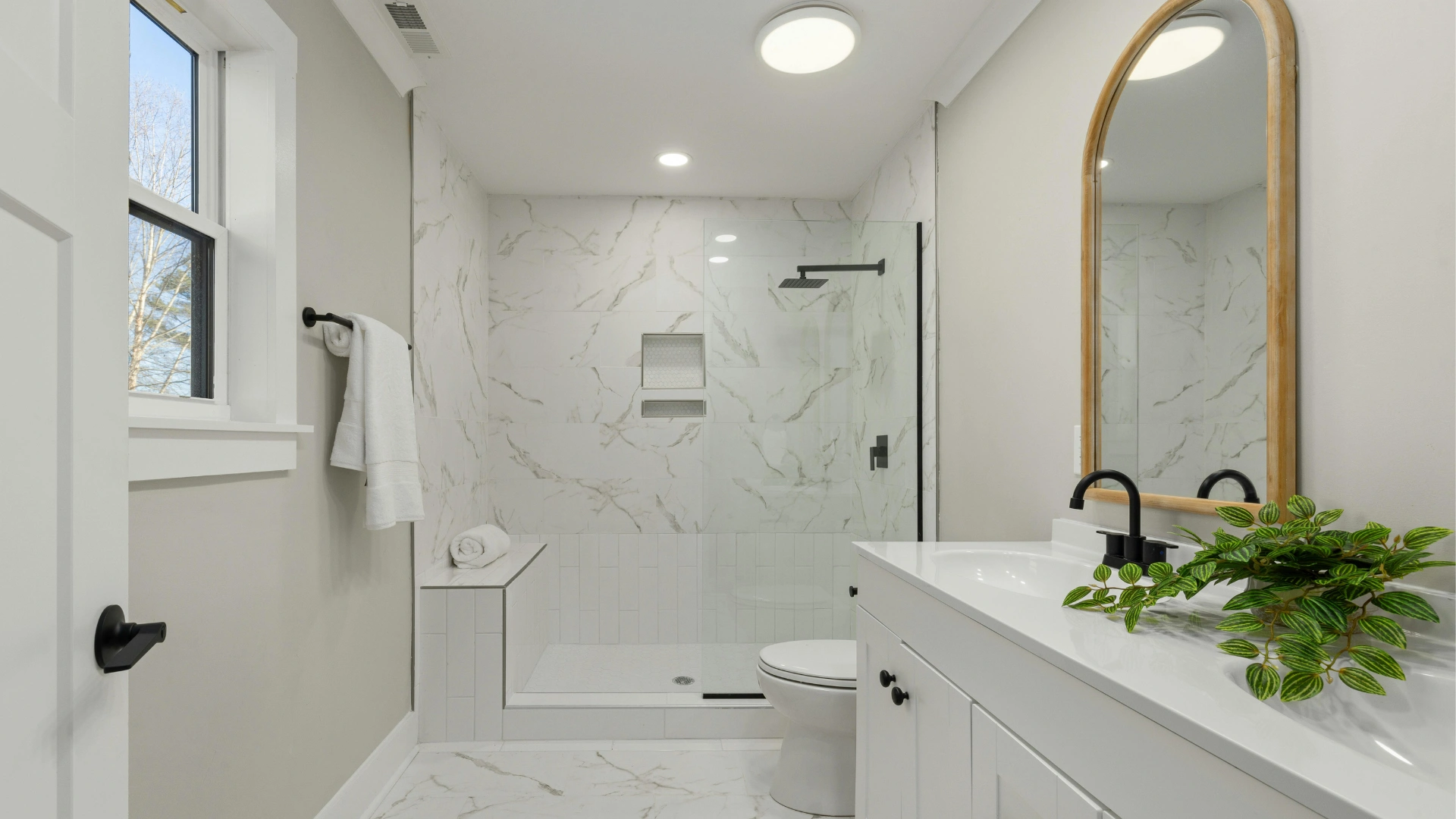
Adding an en suite to an attic conversion is extremely common and adds €8,000 to €18,000 to the overall cost depending on specification. This includes extending the soil stack, running hot and cold water supply, installing a shower enclosure, toilet, basin, tiling, and all associated plumbing and waterproofing. A well-designed en suite significantly increases the value of the conversion from a resale and rental perspective.
4. Insulation Standard
Building Regulations set minimum energy performance standards, but many homeowners, particularly those improving a BER rating ahead of sale or rental, choose to go beyond the minimum. Upgrading to Passivhaus-adjacent insulation levels or installing mechanical heat recovery ventilation (MHRV) will increase costs but deliver better energy performance and comfort year-round.
5. Access and Location Within Dublin
Working in tight urban areas, particularly on Victorian and Edwardian terraces in south Dublin adds cost. Scaffold over a public footpath, skip permits from Dublin City Council, restricted crane access, and parking limitations for contractors all affect the final price. This is rarely factored into ballpark estimates but can add €2,000 to €5,000 on a complex inner-city project.
📊 Data Point: According to the Society of Chartered Surveyors Ireland (SCSI) House Extension and Conversion Report, attic conversions deliver an average return of 12–15% on property value in Dublin, typically one of the highest ROI home improvements available.
How Planning Permission Can Affect Attic Conversion Costs
Planning permission is not always required for an attic conversion, but when it is, it adds both time and cost to the project. Architectural drawings, planning applications, and any revisions typically add €1,500 to €4,000 to the overall budget, and the process adds eight to twelve weeks to the timeline before work can begin on site.
Whether permission is required depends on the type of conversion and what it does to the external appearance of the property.
Rooflight (Velux) conversions
Involve no change to the roof profile are generally exempt from planning permission under Class 2 of the Planning and Development Regulations, provided the rooflights do not exceed 0.6m above the existing roof surface. No planning cost, no delay.
Dormer conversions
Rear of the property usually qualify as exempted development, subject to a maximum area of 40m² and compliance with setback conditions. A rear dormer on a standard Dublin semi-detached typically proceeds without planning. A dormer to the front elevation almost always requires full planning permission, adding the €1,500 to €4,000 cost above.
Hip-to-gable and mansard conversions
Involve material alterations to the roof structure and require full planning permission from your local authority, whether that is Dublin City Council, South Dublin County Council, Dún Laoghaire-Rathdown, or Fingal. Factor this cost into your budget from the outset.
⚠️ Important: Even where planning permission is not required, a Commencement Notice must be submitted to your local Building Control Authority before works begin on most attic conversions. Your contractor should handle this as a matter of course if they do not, ask why.
Attic Conversion vs Extension Costs in Ireland
An attic conversion is not always the right solution. Here is how it compares to other popular ways to add space in a Dublin home.
| Option | Typical Cost | Space Added | Planning | Disruption |
| Attic Conversion | €20,000–€60,000 | 15–40m² | Often exempt | Low–Medium |
| Single-Storey Rear Extension | €35,000–€65,000 | 15–40m² | Often exempt | Medium |
| Two-Storey Rear Extension | €70,000–€120,000 | 30–60m² | Usually required | High |
| Garage Conversion | €15,000–€35,000 | 15–25m² | Usually exempt | Low |
Frequently Asked Questions
How much does an attic conversion cost in Ireland?
An attic conversion in Dublin costs between €20,000 and €60,000 for most residential properties. A standard rooflight conversion in a semi-detached house runs from €20,000 to €30,000, while a dormer conversion with en suite sits in the €40,000 to €55,000 range. These figures reflect Dublin market rates, which run 10–15% higher than the national average due to labour costs and access constraints.
What is the cheapest type of attic conversion in Ireland?
A rooflight (Velux) attic conversion is usually the most affordable option. Because the existing roof structure remains unchanged, the work mainly involves strengthening the floor, installing stairs, insulation, and roof windows. In Ireland, this type of conversion typically costs between €20,000 and €30,000.
Why are attic conversions expensive in Ireland?
The main cost drivers are structural steel installation, staircase construction, insulation upgrades, and labour. Irish Building Regulations require reinforced floor joists, fire safety measures, and proper insulation standards, all of which add to the total project cost.
How much value does an attic conversion add to a house in Ireland?
A professionally completed attic conversion can increase a property’s value by approximately 12–15%. In Dublin and other high-demand areas, this can add €40,000 to €80,000 or more to a home’s market value, often exceeding the cost of the conversion itself.
What factors affect the cost of an attic conversion in Ireland?
Several factors influence the final cost, including the size of the attic, roof structure, head height, type of conversion (rooflight or dormer), staircase location, and whether an en suite bathroom is added. Labour costs and access constraints can also increase the overall price.