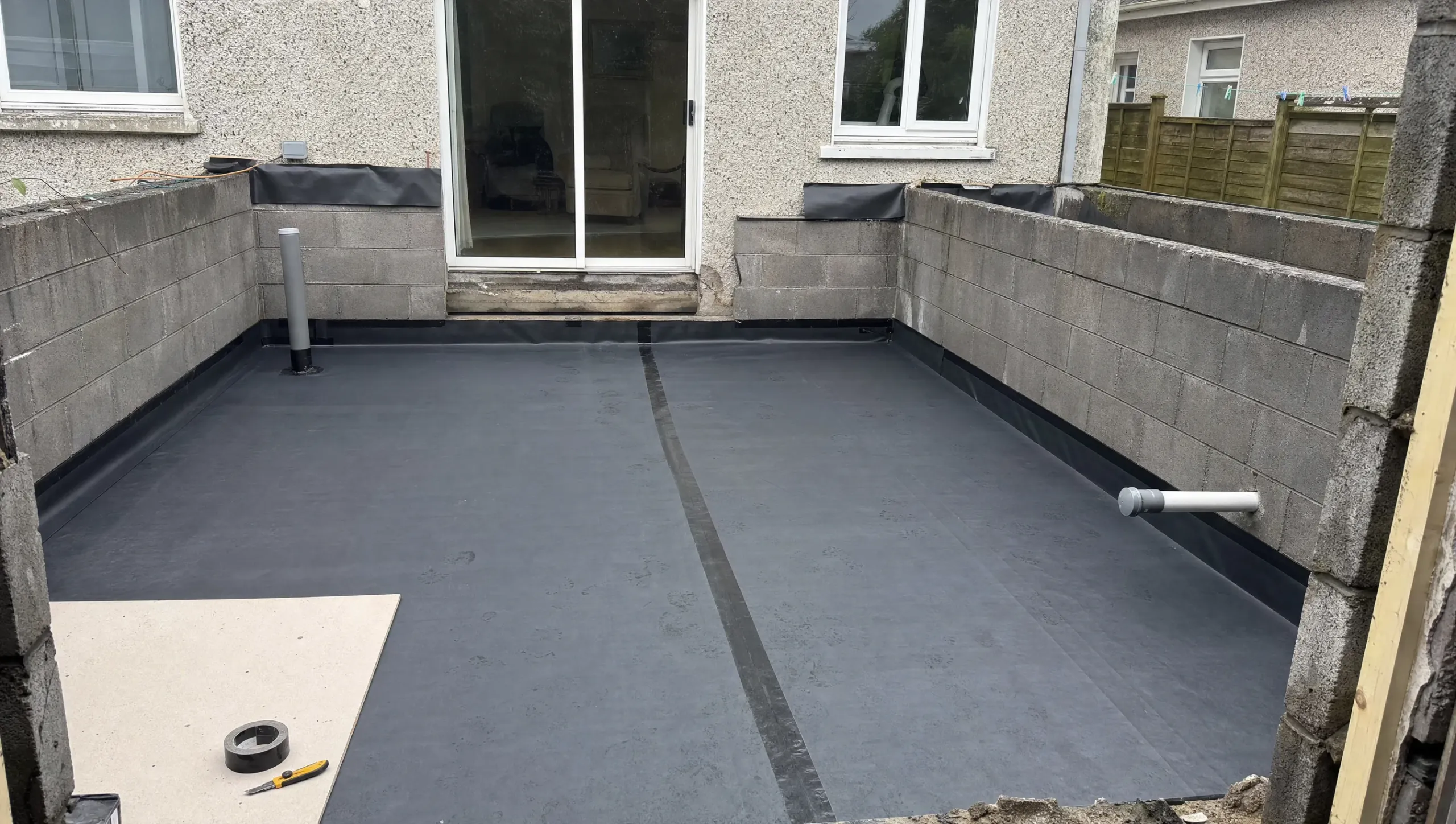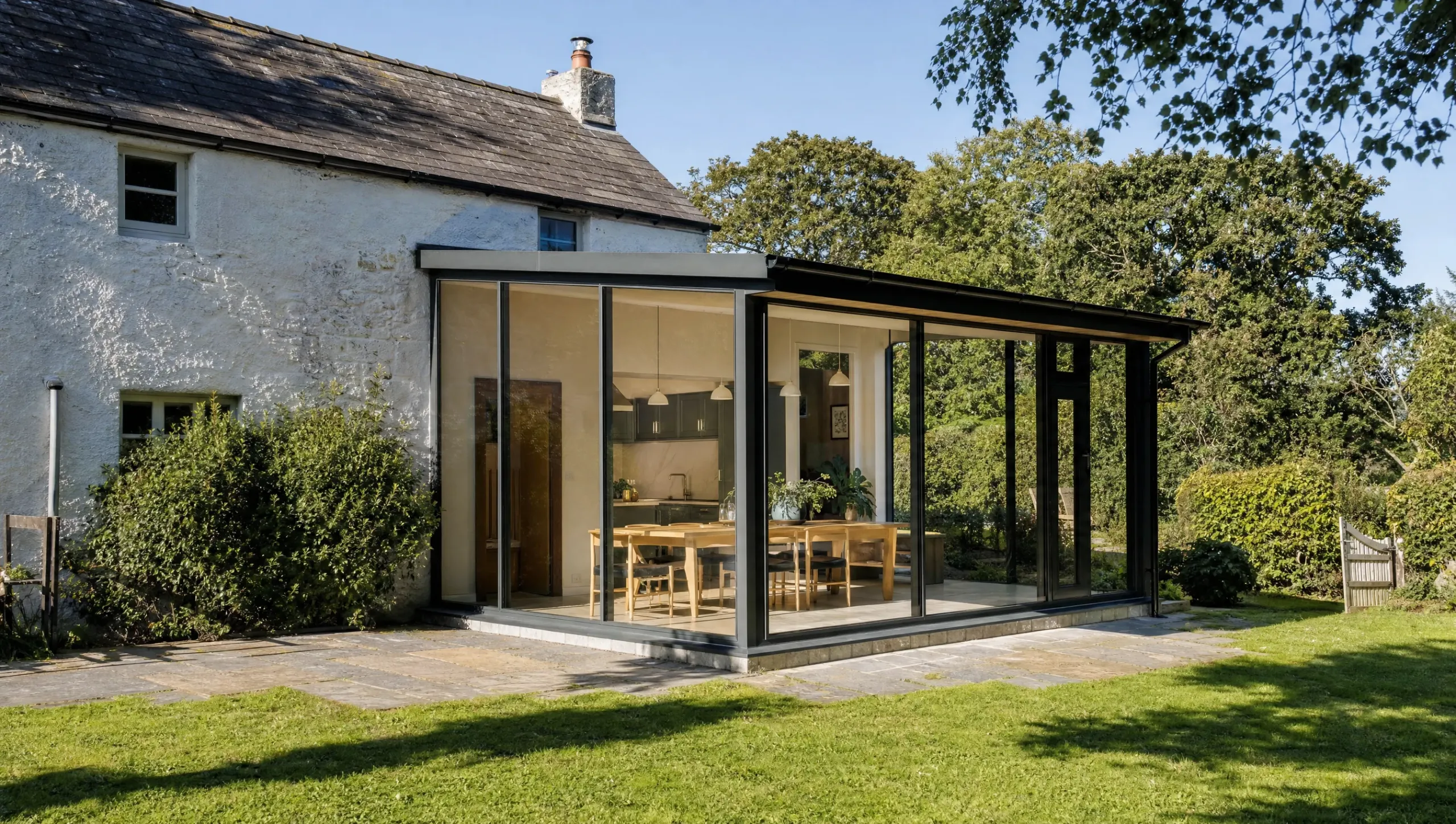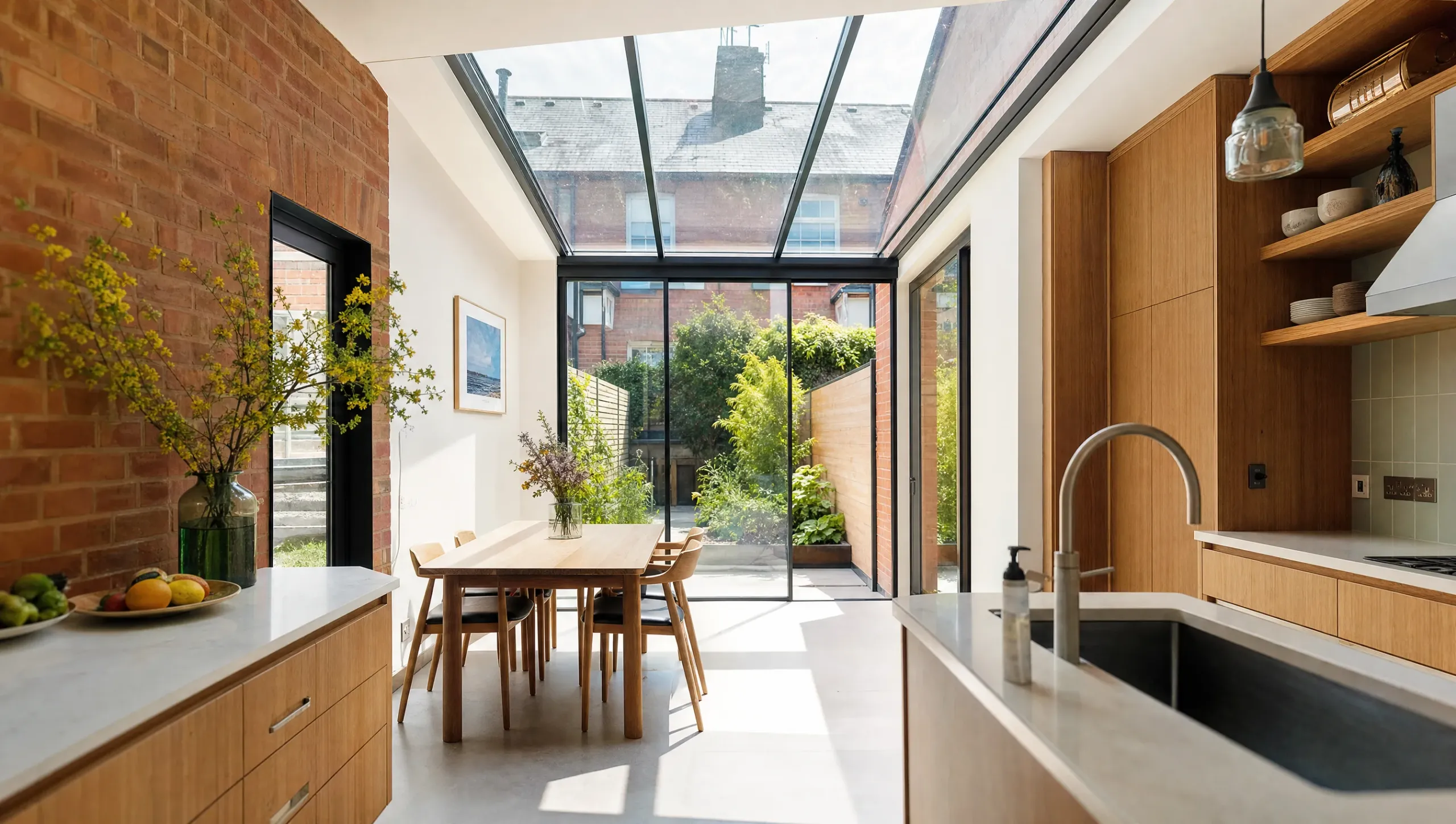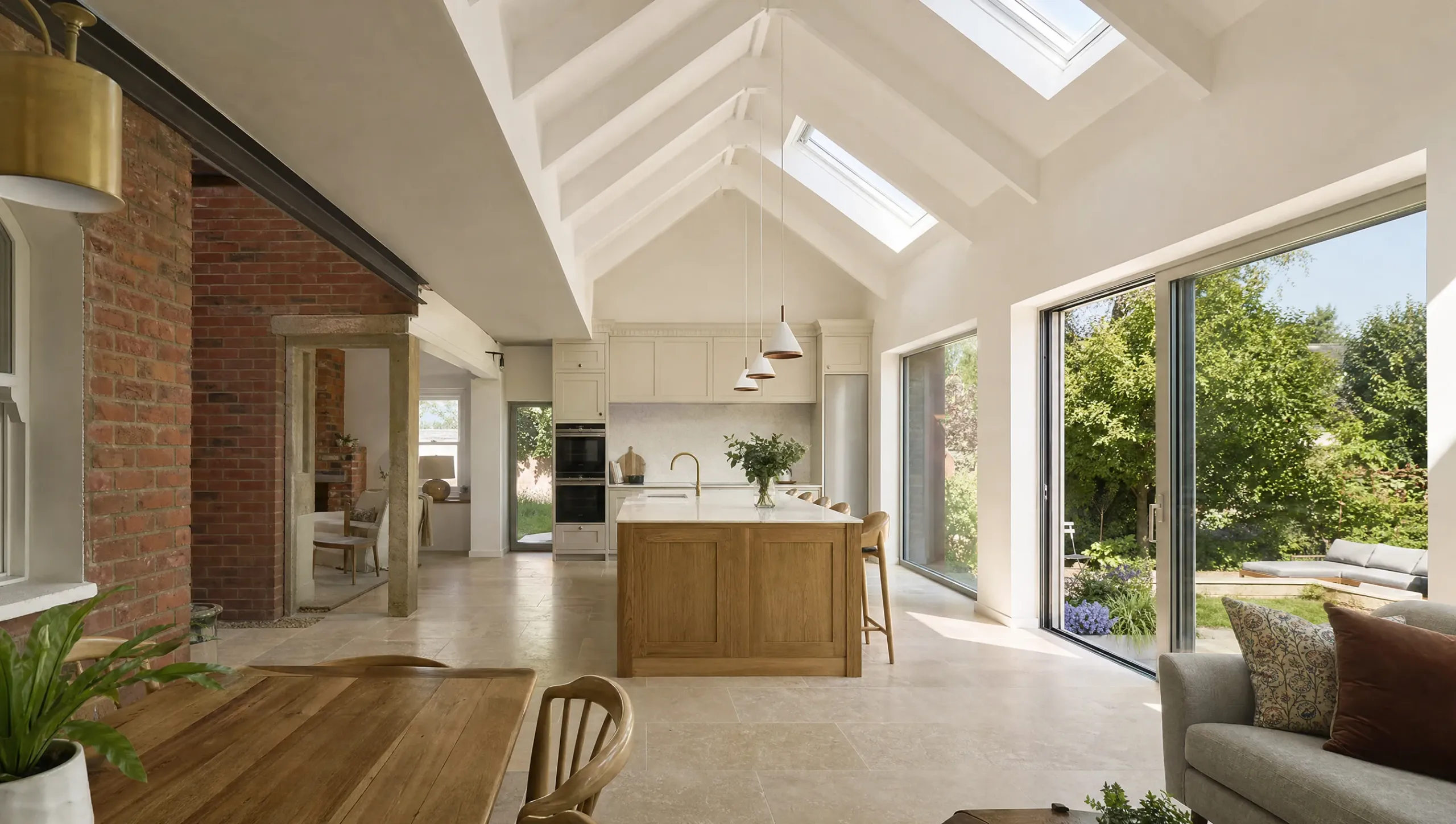

House extensions cost between €40,000 and €100,000+ depending on size and spec, making them one of your biggest property investments. Get it wrong and you’ll face expensive remedial work, planning enforcement, or spaces that don’t actually work for your family.
We’ve watched homeowners make the same avoidable mistakes. Some assumed they didn’t need planning permission and faced enforcement orders. Others went with cheap quotes and spent €15,000 fixing botched structural work.
Many underestimated costs by 30-40% because they forgot about professional fees, VAT, and finishes.This guide covers 30 critical things you need to know before starting.
Planning & Legal Essentials
1. Not All Extensions Need Planning Permission
This surprises many homeowners, but Irish planning regulations include exemptions for certain residential extensions. You can typically build without planning permission if your extension:
- Doesn’t exceed 40 square metres (and you haven’t used exemptions before)
- Is at least 2 metres from any boundary
- Doesn’t extend beyond the front building line
- Meets specific height restrictions
However, and this is crucial, these exemptions only apply if your property isn’t in a conservation area, an Architectural Conservation Area (ACA), or if your house isn’t a protected structure. Even if you’re exempt from planning permission, you still need to comply with building regulations. Get this confirmed in writing from your local planning authority before assuming you’re exempt.
2. Boundary Rules Matter More Than You Think
The 2-metre setback from boundaries trips up more homeowners than any other rule. That rear extension you’re picturing flush to your property line? You’ll need planning permission.
Side extensions are stricter again – you’ll need substantial setbacks, and planners will scrutinise overshadowing, privacy loss, and whether your extension fits the streetscape.
Building closer than 2 metres means planning permission and potentially a legal agreement with neighbours. Dublin City Council take boundary breaches seriously – ignore the setback and you could face enforcement action ordering demolition.
3. Your Local Authority Can Interpret Rules Differently
Dublin has four local authorities (Dublin City Council, Dún Laoghaire-Rathdown, Fingal, and South Dublin), and they don’t all interpret planning regulations identically. What gets approved in Ranelagh might face objections in Clontarf.
Before you finalise any designs, arrange a pre-planning consultation with your local authority. It typically costs €60-80 and can save you thousands. The planner will review your proposal, highlight potential issues, and indicate whether they’re likely to support it. This feedback is invaluable – it lets you adjust your design before spending money on full planning applications and architectural drawings.
Conservation areas are particularly strict. Period properties in areas like Rathmines, Drumcondra, and Blackrock often require additional considerations for extensions, even relatively modest ones.
4. Building Regulations Still Apply – Always
Even if your extension is exempt from planning permission, it must comply with building regulations. These cover:
- Structural stability (Part A)
- Fire safety (Part B)
- Site preparation and moisture prevention (Part C)
- Conservation of fuel and energy (Part L)
- Drainage and waste disposal (Part H)
Part L (energy efficiency) has become particularly stringent. Your extension needs proper insulation, efficient heating, adequate ventilation, and appropriate glazing. U-values (heat loss measurements) are checked, and your Building Control Management System (BCMS) submission must demonstrate compliance.
Non-compliance isn’t just illegal – it affects your building insurance, makes future sales difficult, and can render your home unsafe.
5. Certificates & Documentation Protect Your Investment
When you sell your property, your solicitor will request documentation proving your extension was built legally. You’ll need:
- Planning permission grant (if applicable)
- Commencement Notice confirmation from the local authority
- Structural engineer’s inspection reports
- Completion Certificate or Certificate of Compliance on Completion
- Electrical Safety Certificate (if applicable)
- Building Energy Rating (BER) certificate
Missing documentation can delay or collapse property sales. Buyers’ solicitors will require proof of compliance, and mortgage providers won’t approve lending on properties with unauthorized works. Getting retrospective approvals is possible but expensive, time-consuming, and sometimes impossible if the work doesn’t meet current standards.
Budget & Financial Reality
6. Extension Costs Go Beyond Construction
First-time extenders often focus solely on the builder’s quote, but your actual spend includes:
- Architect or architectural technician fees (8-12% of build cost)
- Structural engineer fees (€1,500-3,000 typically)
- Planning application fees (€80 for exemption confirmation, €200-300 for full permission)
- Building Control Management System fees (€200-400)
- Party wall agreements if applicable
- Site investigations or surveys
- Connection to services (drainage, electricity, water)
- Internal finishes (flooring, painting, tiling)
- Kitchen or bathroom fittings if applicable
- Furniture and window treatments
A €40,000 construction quote can easily become €55,000 once professional fees, finishes, and fixtures are included.
7. Always Budget for the Unexpected
Every extension encounters unexpected costs. Ground conditions might require additional foundation work. Existing drainage could need rerouting. The structural connection between old and new might be more complex than anticipated.
Budget at least 10-15% contingency. On a €50,000 project, that’s €5,000-7,500 set aside for surprises. This isn’t pessimism – it’s realism. The homeowners who have the smoothest projects are those who’ve planned for contingencies.
Common unexpected costs include:
- Upgrading existing electrical systems to handle new loads
- Asbestos removal if disturbing older materials
- Additional steel requirements discovered during structural opening
- Drainage complications requiring pumped systems
- Ground contamination or poor soil conditions requiring enhanced foundations
8. VAT and Professional Fees Add Up
Construction work on existing residential properties in Ireland is subject to 13.5% VAT. Professional fees from architects and engineers are subject to 23% VAT. These aren’t optional extras you can negotiate away – they’re legal requirements that increase your total spend significantly.
On a €50,000 construction contract, you’ll pay €6,750 in VAT. If professional fees total €6,000, you’ll pay €1,380 in VAT on those. That’s over €8,000 in VAT alone on a mid-sized extension project.
9. Cheap Quotes Can Cost More Later
The lowest quote is rarely the best value. Building an extension requires specialist skills – tying new structures into existing buildings, managing structural openings, ensuring weathertight connections, achieving proper finishes at junctions between old and new.
Inexperienced builders create expensive problems:
- Poor weatherproofing that causes damp issues
- Structural movement where new meets old
- Floor level mismatches that look amateurish
- Inadequate insulation leading to cold spots and condensation
- Non-compliant work requiring correction
Correcting cowboy work costs more than hiring qualified builders initially. Check references, visit previous projects, verify insurance and building expertise. The €5,000 you “save” with a cheap quote can easily become €15,000 in remedial work.
10. Financing Can Affect Your Timeline
If you’re borrowing money for your extension, understand how payment terms work. Most builders require staged payments:
- Deposit upon contract signing (usually 10-15%)
- Foundation stage payment (20-25%)
- First floor/roof stage (25-30%)
- Weathertight stage (20-25%)
- Completion payment (remaining balance)
Your mortgage provider or loan facility needs to release funds to match this schedule. Delays in securing finance can halt work, and builders may charge storage costs if materials are purchased but work stops due to payment delays.
Home improvement loans typically offer quicker access to funds than remortgaging, but interest rates vary significantly. SEAI grants are available for energy-efficient improvements but require applications before work starts.
Design & Layout Decisions
11. Design Around How You Actually Live
The most successful extensions reflect how families genuinely use their homes, not magazine ideals. Before you finalise layouts:
- Track which rooms you actually use daily
- Note where traffic bottlenecks occur
- Consider your cooking, eating, and entertaining patterns
- Think about homework spots, work-from-home needs, storage frustrations
Open-plan kitchen-dining-living extensions are popular, but they’re not right for everyone. If you value separate spaces for noise control, formal dining, or traditional cooking setups, don’t force an open layout just because it’s trendy.
Families with young children often benefit from sightlines between kitchen and play areas. Home workers might prioritize quiet zones separated from family activity. Empty nesters might want entertaining spaces distinct from everyday living.
12. Natural Light Changes Everything
Light transforms how spaces feel. A dim, north-facing extension will feel smaller and colder than its actual size, whilst a well-lit space feels generous and welcoming.
Consider:
- Roof lights for top floor or single-storey extensions
- Glazed doors or large windows facing gardens
- Light wells or internal glazing borrowing light from adjacent rooms
- Skylights in corridors or bathrooms
- Sun path and orientation (south-facing glazing maximizes light and warmth)
Balance light with heat management. Excessive south or west-facing glazing can cause overheating in summer. Proper specification includes solar control glass, adequate ventilation, and shading strategies.
13. Flow Between Old and New Spaces Matters
The junction where your extension meets your existing house is critical. Poor transitions feel awkward and reduce both spaces’ usability.
Avoid:
- Narrow doorways creating bottlenecks
- Floor level changes requiring steps (trips hazard, accessibility issue)
- Ceiling height mismatches that feel jarring
- Corridors that waste space or create dead zones
Successful integration often means sacrificing some existing space (removing parts of walls, reconfiguring internal layouts) to create generous openings and smooth circulation.
14. Ceiling Height Impacts Comfort
Standard ceiling heights are 2.4 metres, but extensions often benefit from increased height. Rooms feel more spacious, light penetrates deeper, and resale appeal improves.
Ground floor extensions can accommodate 2.7-3 metre ceilings relatively easily. First floor extensions are more constrained by existing roof heights but can still incorporate vaulted or raised ceilings.
Be cautious about going too low. Extensions with 2.3 metre ceilings feel oppressive and can hurt resale value. If you’re working with tight height restrictions due to planning constraints, invest in design features that create perceived height – roof lights, full-height glazing, light colours.
15. Storage Should Be Designed In – Not Added Later
Built-in storage is more efficient, better integrated, and higher quality than furniture added afterwards. Plan for:
- Coat and shoe storage near entrances
- Utility or pantry space if extending kitchens
- Under-stair storage if adding steps
- Wardrobes in bedroom extensions
- Dedicated spots for specific items (bikes, sports equipment, recycling)
Retrofitting storage into completed extensions means freestanding furniture that clutters floor space, reduces room sizes, and looks makeshift. Designed storage is recessed, efficient, and adds value.
Structural & Technical Considerations
16. Foundations May Need Reinforcement
Irish properties, particularly older Victorian and Edwardian houses, often have shallow foundations – sometimes just 450-600mm deep. Modern extensions require foundations that comply with current regulations, typically 1 metre minimum and deeper if ground conditions dictate.
The connection between old and new foundations is structurally complex. Your structural engineer will specify whether you need:
- Underpinning existing foundations
- Separate foundations with movement joints
- Piled foundations if ground conditions are poor
- Enhanced foundations if building on filled ground or near trees
Tree roots are a particular concern in established Dublin neighbourhoods. Large trees (especially willows, oaks, and poplars) can be 10-15 metres from your extension and still affect foundation design. Clay soils shrink when trees extract moisture, causing movement that can crack structures.
17. Drainage Can Complicate Layouts
Existing drainage – both foul sewers and surface water – constrains extension layouts more than most homeowners anticipate. You typically cannot build over inspection chambers or main sewer runs without expensive rerouting.
Before finalising layouts:
- Locate existing drains (your architect can arrange CCTV surveys if locations are unclear)
- Confirm whether manholes need repositioning
- Establish whether new connections are feasible
- Check if separate surface water drainage is required
Extensions sometimes require pumped drainage if gravity falls can’t be achieved. This adds cost and ongoing maintenance but might be your only option if extending below existing drainage levels.
18. Insulation Standards Are Higher Than You Expect
Part L building regulations demand far better insulation than your existing house provides. New extensions must achieve:
- Wall U-values of 0.21 W/m²K or better
- Roof U-values of 0.16 W/m²K or better
- Floor U-values of 0.21 W/m²K or better
- Windows and doors meeting minimum performance standards
This means thick insulation layers that affect internal dimensions, structural design, and junction details. A well-insulated external wall might be 350-400mm thick total. Your architect needs to accommodate these thicknesses without compromising room sizes.
Thermal bridging (where heat escapes through structural elements) must be minimized. Poorly detailed junctions between walls, floors, and roofs can fail BER assessments even if individual elements meet specifications.
19. Heating & Ventilation Must Be Rebalanced
Adding square metres to your home changes heating loads and airflow patterns. Your existing boiler might lack capacity for additional radiators. Ventilation systems require rebalancing to maintain adequate air changes.
Part L requires mechanical ventilation with heat recovery (MVHR) or equivalent in airtight new builds. Extensions don’t always need MVHR, but they do need compliant ventilation – either mechanical extract fans or passive systems meeting minimum air change rates.
If you’re extending a kitchen or bathroom, extractor fans must meet minimum extraction rates specified in building regulations. Under-specified ventilation causes condensation, mould growth, and poor air quality.
20. Structural Integration Is Critical
Connecting new structures to existing buildings requires specialist knowledge. The junction where new foundations meet old, where new walls tie into existing walls, and where new roofs connect to existing structures are all potential failure points.
Common structural challenges:
- Forming large openings in existing walls (requires steel beams and proper support)
- Preventing differential settlement between old and new
- Tying new roofs into existing without compromising weatherproofing
- Maintaining structural stability during construction
- Supporting existing upper floors when removing ground floor walls
Your structural engineer designs these connections, but execution quality determines success. Experienced builders understand how to form clean openings, install steelwork correctly, and create weathertight junctions. Inexperienced builders bodge critical details, creating structural movement, damp penetration, and costly failures.
Builder Selection & Project Management
21. Extensions Require Specialist Experience
General builders might excel at new builds or renovations but struggle with extension-specific challenges. Tying into existing structures, managing occupied buildings, and creating sympathetic finishes require different skills.
When evaluating builders, ask specifically about:
- Recent extension projects (not just general building experience)
- How they handle structural openings and connections
- Their approach to weatherproofing junctions
- Experience with occupied properties
- Managing dust, noise, and access in lived-in homes
Visit completed projects if possible. Look at junctions between old and new, internal finish quality, external weatherproofing details, and whether spaces feel professionally integrated or obviously added on.
22. Contracts Protect Both Sides
Written contracts prevent disputes by clarifying:
- Exact scope of works (everything included and excluded)
- Payment schedule tied to completion stages
- Project timeline with realistic milestones
- How variations and changes are handled
- Defects liability period
- Insurance requirements
- Access arrangements and site management
Standard form contracts exist (CIF or RIAI contracts are common), but many builders use simplified versions. Whatever format you choose, ensure everything is documented. Verbal agreements lead to disagreements about what was actually promised.
23. References Tell the Real Story
Ask builders for three recent references, ideally extension projects. Contact these homeowners and ask:
- Did the project finish on time and on budget?
- How did the builder handle problems or changes?
- Was the site kept safe and reasonably tidy?
- Would they hire this builder again?
- What would they do differently?
Also check online reviews, but recognize that exceptional or terrible experiences are over-represented. Personal references from verified past clients give more balanced insights.
24. Communication Determines Project Success
Regular communication prevents small issues becoming major problems. Establish:
- How often you’ll receive progress updates
- Preferred communication methods (site meetings, phone, WhatsApp)
- Who your primary contact is (site foreman, project manager, owner)
- How quickly you need to respond to queries
- Decision-making processes for variations
Expect to make numerous decisions during construction – material selections, fixture choices, minor layout adjustments. Delayed decisions slow projects and sometimes cost more if materials or tradespeople are waiting.
25. Insurance Coverage Is Non-Negotiable
Your builder must carry:
- Public liability insurance (minimum €6.5 million coverage)
- Employers liability insurance if they have employees
- Contract works insurance covering the project value
Request certificates of currency (proof insurance is active) before work starts. Also notify your own home insurance provider about the extension work. Your policy might exclude damage related to construction, require additional coverage, or need a short-term adjustment.
If something goes wrong – accidental damage to your property, injury on site, defective work – proper insurance protects everyone involved. Working with uninsured builders exposes you to significant financial risk.
Living Through the Build
26. Your Home Will Become a Worksite
Construction is disruptive. Dust spreads through your entire home despite protective measures. Noise starts early (typically 8am) and continues throughout the day. Access routes track mud and dirt inside. Strangers are constantly present.
Practical strategies:
- Seal off work areas with heavy-duty plastic sheeting
- Establish clean boot removal zones
- Use air purifiers in lived-in areas
- Accept that deep cleaning won’t happen until after completion
- Plan activities away from home when possible
- Maintain separate kitchen facilities if extending kitchen areas
Families with young children or anyone working from home need extra consideration. Noise levels make video calls challenging. Dust exacerbates asthma or allergies. Temporary relocations might be necessary during particularly disruptive phases.
27. Timelines Often Shift
Most extensions take 12-16 weeks from commencement to practical completion, but delays happen frequently due to:
- Weather (particularly affecting foundations, roofing, and external works)
- Material supply issues
- Inspection scheduling conflicts
- Unexpected structural complications
- Homeowner decision delays
Build in timeline buffers for important deadlines. If you’re planning around a specific event (baby due date, family gathering, starting new job), aim for completion 4-6 weeks earlier than you actually need it.
28. Access Routes Affect Daily Life
Builders need clear access to deliver materials, remove waste, and move equipment. This often means:
- Vehicles parking on your driveway or street
- Heavy materials stored in gardens
- Skip bins in front of your property
- Paths through your home if rear access isn’t available
- Temporary fencing or barriers
Discuss access logistics before work starts. Properties with narrow side passages or no rear garden access present particular challenges. Sometimes materials must come through your house, requiring floor protection, door removal, and significant inconvenience.
29. Decision Delays Slow Everything Down
Builders need timely decisions to maintain progress. Typical decision points include:
- External finish selections (brick, render, cladding)
- Window and door styles and colours
- Internal finishes (flooring, tiling, paint colours)
- Electrical and lighting layouts
- Kitchen or bathroom specifications
- Heating system choices
Prepare by:
- Creating a Pinterest board or ideas folder early
- Visiting suppliers to see actual materials and finishes
- Making provisional decisions before construction starts
- Keeping a running list of outstanding choices
- Responding quickly when builders request decisions
30. The End Phase Requires Patience
The final weeks often feel longest. Major work is complete, but finishing touches – painting, tiling, fixing trim, installing fixtures – take longer than expected. Snagging lists (identifying minor defects or incomplete work) can be frustrating when you’re eager to move in.
Practical completion means the extension is substantially finished and usable, but some minor items might remain outstanding. Don’t make final payment until you’re genuinely satisfied – it’s your leverage for ensuring all work is completed properly.
Final Thoughts – Start Smart, Build Once
The homeowners who have the smoothest projects share common traits:
- They research thoroughly before committing
- They hire qualified architects and engineers
- They budget realistically with contingencies
- They select builders based on relevant experience, not lowest price
- They communicate clearly and make decisions promptly
- They maintain patience during construction phases
The right extension, built properly, is an investment you’ll value every day for decades. Start smart, plan thoroughly, and build once – the right way.